
Original briefings. Zero spin.
Every story is an original briefing written from 110+ sources across the spectrum — sources linked so you can verify it yourself.
 health
Notable (6/10)
Event date: August 24, 2026
health
Notable (6/10)
Event date: August 24, 2026
Type O Blood Patients Face Higher Transfusion Reaction Risk in Tick-Disease Hotspots, Dartmouth Study Finds
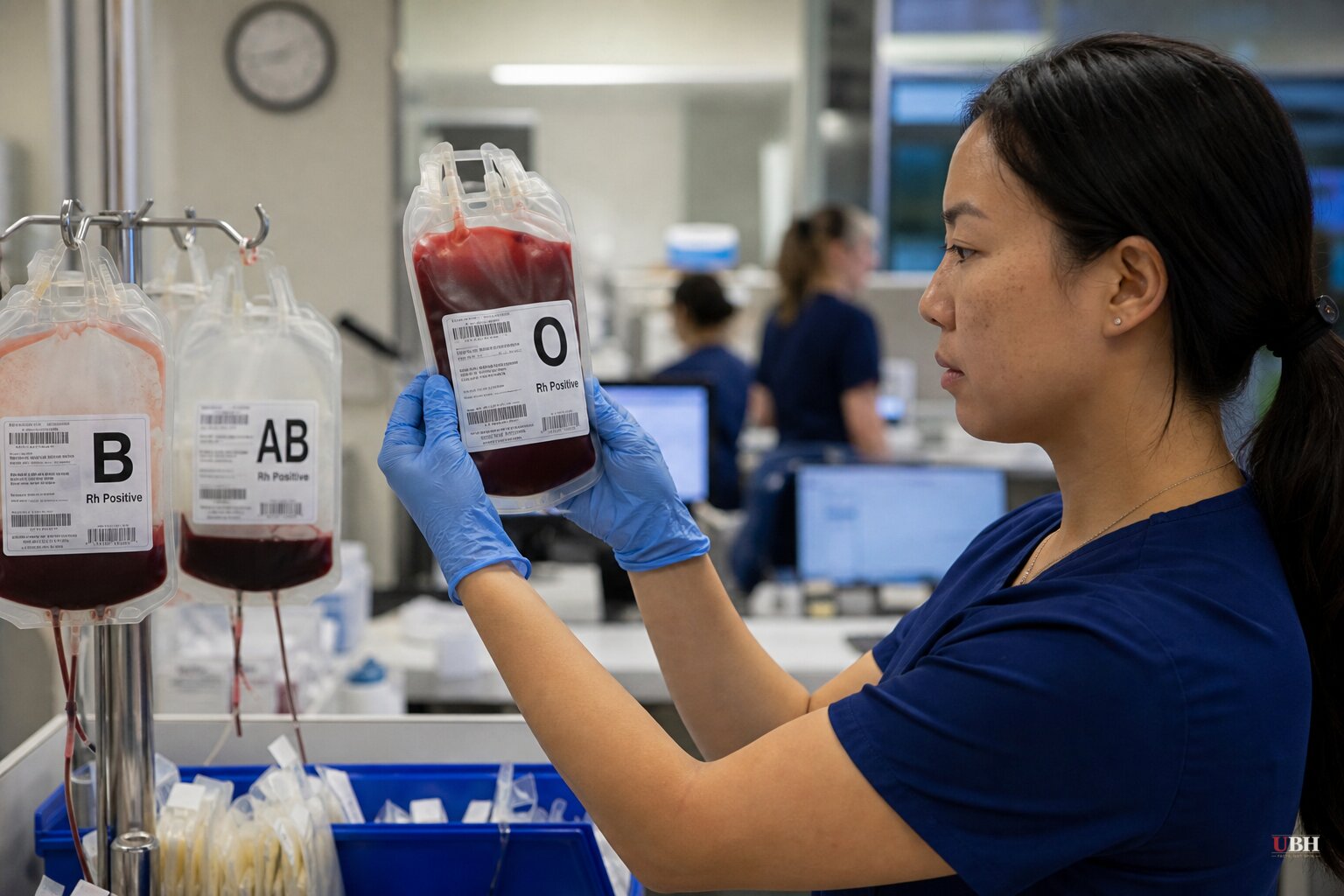
A study published August 24 in JAMA Internal Medicine gives doctors a new reason to think twice about which blood type goes into which patient, at least in parts of the country where lone star ticks run thick.
Researchers led by Richard Kaufman, MD, and Nancy Dunbar, MD, of Dartmouth Hitchcock Medical Center in Lebanon, New Hampshire, found that in regions with high rates of alpha-gal syndrome (AGS), patients with type O blood who received platelet or plasma units from type B or AB donors were nearly four times more likely to suffer an allergic transfusion reaction than O patients who got O units. The risk ratio was 3.93, according to the study.
Crucially, that elevated risk didn't show up in low-AGS regions. Type O patients there who got B or AB units had no significant increase in reaction risk (RR 1.06), according to the same JAMA Internal Medicine study. That gap is what convinced researchers they'd found something real, not statistical noise.
AGS is a red meat allergy triggered by bites from the lone star tick, which is common across the Northeast, Southeast, and Midwest, according to MedPage Today. The tick transmits a sugar molecule called alpha-gal, found in most mammals but not humans. Once a person is sensitized, eating beef, pork, lamb, or products like dairy and gelatin can trigger delayed allergic reactions two to six hours later, ranging from hives to rare but fatal anaphylaxis.
The connection to transfusions comes down to chemistry. Alpha-gal's structure closely resembles the B antigen found on human red blood cells, platelets, and other tissue, according to Dartmouth Health. That similarity means antibodies built up against alpha-gal from tick bites can cross-react with B antigen in transfused blood, producing the same kind of allergic cascade AGS patients get from eating a steak.
Researchers are calling this transfusion-related alpha-gal syndrome, or TRAGS. The study, which analyzed more than 550,000 platelet and plasma transfusions across 40 sites in five countries, is described by its authors as the strongest evidence yet that TRAGS is a real and distinct clinical phenomenon, according to Dartmouth Health.
DHMC didn't wait for the paper to publish before acting. The hospital has already stopped giving B or AB platelet transfusions to type O patients to avoid the risk, Kaufman said in a Dartmouth Health release. B or AB units are sometimes given to O patients during bleeding emergencies or simply to avoid wasting inventory, which is exactly the practice this study is pushing hospitals to reconsider in tick-heavy regions.
"We anticipate that this will change transfusion practices in the U.S., at least in AGS high-prevalence regions," Kaufman said.
An editorial accompanying the study, written by Marie Hollenhorst, MD, PhD, of Brigham and Women's Hospital and Harvard Medical School, backed that assessment, calling the paper the strongest evidence yet that TRAGS exists. But Hollenhorst's editorial also included an important caveat: the actual number of confirmed allergic reactions tied to alpha-gal remains, in her words, "vanishingly" small in absolute terms. This is a real risk worth managing. It is not a reason to panic about the blood supply.
The Dartmouth findings landed the same day Health and Human Services Secretary Robert F. Kennedy Jr. announced new federal actions on Lyme disease and other tick-borne illnesses, joined by actor Dennis Quaid, according to Breitbart. Kennedy said HHS is investing millions in AI-powered diagnostic tools and pointed to nearly half a million Americans diagnosed with Lyme disease annually.
Quaid, appearing as a patient advocate, recounted how his late friend Kris Kristofferson spent years with an Alzheimer's diagnosis before doctors correctly identified Lyme disease in 2016, according to Breitbart's account of the announcement.
Kennedy's push builds on a May rollout at the New Hampshire State House that included a CDC tick-control pilot and up to $2.5 million in innovation challenges aimed at cutting Lyme cases 25% by 2035 compared with 2022 levels, according to Breitbart, citing the Washington Examiner for the detail that 10% to 20% of treated Lyme patients remain symptomatic for years.
None of the sources tie the Dartmouth transfusion study directly to Kennedy's announcement or HHS funding. They are two separate developments in the same broader story about the country's rising tick-borne illness burden, driven by what Dunbar called "the changing climate and ensuing greater proliferation of ticks."
The study doesn't establish how blood banks nationwide should screen for AGS antibodies before a transfusion, or whether testing every donor and recipient for alpha-gal sensitivity is practical or affordable. Dartmouth's own policy change, halting B/AB platelets to type O patients, is a blunt instrument rather than a targeted fix. Whether the FDA or American Red Cross will issue new national guidance, and on what timeline, remains an open question the study itself doesn't answer.
Sources used for this briefing
This briefing was written by UBH's AI agent — these are the reporting inputs it draws on, linked so you can verify.


