
Unbiased headlines. Facts, not spin.
Unbiased Headlines is an independently owned news organization. We bring you the facts, not opinions, written fresh from 110+ named sources. Sources linked so you can verify it yourself.
 politics
Major Story (8/10)
Two of three 9th Circuit judges question DOJ demand that California set aside 20,000 mail ballots
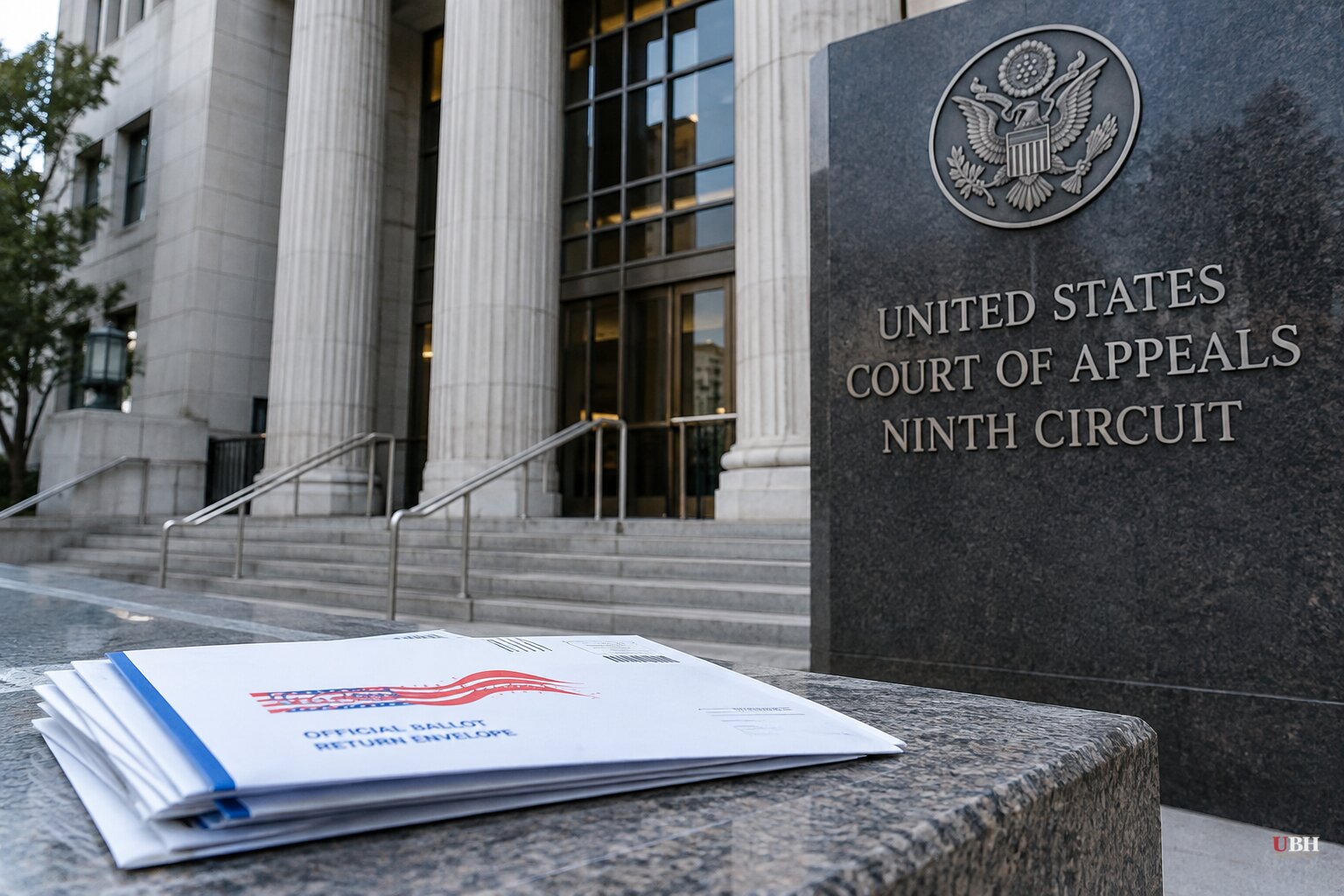
A federal appeals court heard the Trump administration's emergency bid to halt counting of 20,000 California ballots on Sunday, Oct. 25. Two of the three judges sounded unconvinced.
The 9th U.S. Circuit Court of Appeals panel did not rule after a 105-minute videoconference hearing. A decision is expected soon because of the emergency posture.
What DOJ is asking for
The Justice Department sued California and Los Angeles County on Oct. 15, one week after mail ballots went out to all registered voters. The suit asks a court to order Secretary of State Shirley Weber and LA County Registrar-Recorder Dean Logan to set aside ballots from about 20,000 voters the administration calls "likely" noncitizens. Those ballots would stay uncounted until citizenship is confirmed.
The complaint says California missed a 48-hour deadline to review the names. The department also sent letters to county election offices statewide on Friday, Oct. 23, demanding they segregate ballots from voters it believes are not citizens.
The district judge set a hearing for Tuesday, Oct. 27, and declined a DOJ request to impose its own ruling deadline. DOJ skipped ahead and asked the 9th Circuit for an expedited injunction.
DOJ attorney Matthew Donnelly told the panel that California is causing irreparable harm "by allowing noncitizens to vote in violation of their own state laws." He said the damage is "irreversible and irrevocable." He added that federal criminal law and California law both bar noncitizen voting, "but the problem is that California isn't interested in enforcing that provision."
The judges push back
Judge Mark Bennett, a Trump appointee, went straight at jurisdiction. "How do we have jurisdiction when the district court has said it's going to rule expeditiously?" he asked, and later said, "I don't see how we have jurisdiction."
Bennett also pressed the timing. DOJ chose to file about two and a half weeks before the election, he said, and "certainly knew that there was, in your mind, a problem well before that."
On the merits he invoked the Elections Clause, which gives state legislatures authority over the manner of congressional elections. "It seems to me that you want us to issue an injunction that is entirely inconsistent with the law the California Legislature has adopted pursuant to the Elections Clause," he said. The executive branch may be "unhappy" with that law, he said, but Congress has not changed it, though it could.
Judge Gabriel Sanchez, a Biden appointee, raised the Tenth Amendment. His question was whether Washington would be commandeering the state to enforce a federal law that makes noncitizen voting a misdemeanor.
Donnelly answered that the government is only asking California to enforce its own ban, and that the state's refusal is "frustrating the purpose" of the federal one.
The third judge, Patrick Bumatay, also a Trump appointee, sounded friendlier to DOJ. He questioned California and LA County lawyers about how noncitizens on voter rolls are investigated. He also asked about DOJ's argument that failing to segregate the ballots would keep California from ever learning whether noncitizens voted.
The state's answer, and the list
Sam Siegel, representing California, called the emergency "an emergency of their own making." He said the request "would sow confusion and risk disenfranchising voters, and it has no basis in law or in fact."
Seth Waxman, representing Logan, told the panel the federal list is unreliable. He said pulling ballots for review would effectively disenfranchise eligible voters.
Bennett and Sanchez also pressed Donnelly on how the 20,000 names were chosen. DOJ has said the data came from a purchased list of voters that third parties analyzed. Los Angeles County has already processed more than 300,000 midterm ballots.
Noncitizen voting is rare, a point made in AP's reporting on the hearing. The administration has made finding it a priority this year.
The verification fight
The underlying dispute is about how California checks citizenship. Registrants attest under penalty of perjury that they are citizens. They are not required to provide documentary proof.
Sen. Alex Padilla said eligibility is "determined on the front end, when people register to vote." U.S. Attorney Bill Essayli answered on X: "Attestation is not verification. Ensuring only citizens vote isn't political, it's enforcing state and federal law."
Stephen Richer, a Cato Institute legal fellow and former Maricopa County recorder, framed the legal question. Can DOJ say it suspects certain voters "and therefore these individual voters need to substantiate their citizenship in a manner that is not required of all other California voters?" Richer said he thinks it "very unlikely" DOJ gets what it wants. UCLA law professor Rick Hasen wrote Sunday that the court seemed "very likely to reject" the appeal.
What is at stake
California has 52 House seats, and results there could help decide House control. DOJ has also sued in Alaska to block certification of the U.S. Senate race if Republican incumbent Dan Sullivan loses, because a candidate named Daniel J. Sullivan is also on the ballot. Democracy Docket reports DOJ has threatened similar suits in other states.
The next step comes Tuesday, Oct. 27, when the district judge hears DOJ's request. The 9th Circuit may rule before then. If it holds that it lacks jurisdiction, the Elections Clause question goes back to the district court with ballots still being counted.
Sources used for this briefing
8 links from 8 independent newsrooms (syndicated copies of the same report count once)
These are the sources it draws on, linked so you can verify.


