
Unbiased headlines. Facts, not spin.
Every story is an unbiased news briefing written from 110+ sources across the spectrum — sources linked so you can verify it yourself.
 health
Notable (6/10)
August 2, 2026 at 04:30 PM
health
Notable (6/10)
August 2, 2026 at 04:30 PM
Two Firefighting Helicopters Collide Mid-Air Near Athens as Wildfires Rage Across Greece, France and Spain
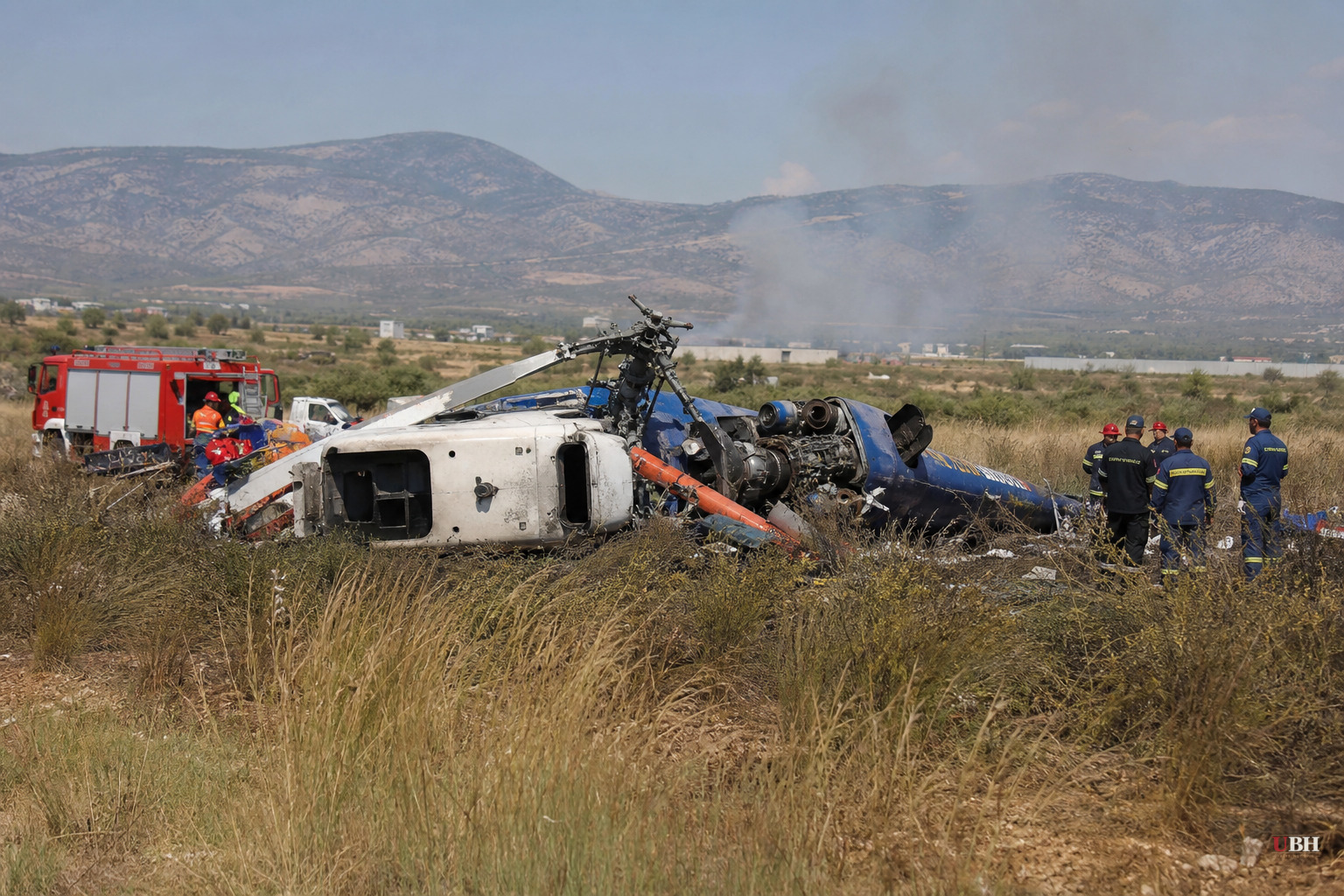
Collision Caught on Camera
Two firefighting helicopters clipped rotors and crashed while battling a wildfire near Psatha, west of Athens, on Sunday, August 2. Video obtained by Kefalonia Press and reported by the NY Post shows one aircraft's rotor strike the other, sending it into flames before it plunged to the ground.
Both helicopters had two crew members aboard, according to the Greek fire department. All four were recovered after the crash. Two were pulled out safely. The other two were unconscious, the fire department said, according to reporting from PBS and the South China Morning Post, which cited Greek broadcaster ERT.
A search and rescue operation was launched near the village, roughly 34 miles from Athens. The cause of the collision is under investigation. No further details on the crew's medical condition had been released as of Sunday night.
Why Psatha Mattered
The helicopters were leased by the local fire department to fight a blaze that has already forced evacuations and threatened an industrial district near Megara, according to Al Jazeera. Gale-force winds drove the fire through dry forest and, at points, prevented aircraft from reaching the sea to refill their water tanks, the South China Morning Post reported, citing the roughly 500 firefighters and 23 aircraft deployed to the region.
Flames reportedly crossed into a military firing range near Porto Germeno, activating unexploded ordnance, according to Al Jazeera. That area sits close to Mati, the site of Greece's 2018 wildfire that killed 104 people, the deadliest blaze in Europe this century. PBS and the South China Morning Post both noted that grim history as context for how dangerous conditions have become in Attica this week.
A Continent on Fire
Greece is not fighting this alone. France's largest wildfire this year forced roughly 224,000 people to flee, according to PBS, in what may be the country's largest civilian evacuation outside of wartime. That fire, in the Gironde region, remains held within a scorched perimeter covering 420 square kilometers, about four times the size of Paris, with nearly 3,000 firefighters deployed against it and a second uncontained blaze in Provence.
Spain's major fires have stopped advancing, PBS reported, but the damage is done. Combined, France and Spain have displaced close to a third of a million people from homes and vacation areas at the peak of the European summer travel season.
On Kefalonia, a separate fire broke out late Saturday in the Pastra area. A 44-year-old man was arrested Sunday on suspicion of deliberately starting it, according to the Greek ANA news agency, as cited by Al Jazeera. On Crete, fires burned thousands of acres and forced the temporary evacuation of more than 8,000 people, according to the NY Post.
The Climate Context, Stated Plainly
Scientists at World Weather Attribution found that human-caused climate change made the extreme fire-weather conditions behind this year's French blazes at least twice as likely, according to PBS. The European Union's Copernicus Climate Change Service says Europe has warmed more than twice the global average since the 1980s, making it the fastest-warming continent on record.
Mediterranean Europe has always had a wildfire season, driven by dry summers, wind patterns, and, in cases like Kefalonia, arson. Warming trends are stacking the deck toward bigger, faster fires, and individual blazes still often trace back to a spark, a downed line, or a person with a lighter. The Kefalonia arrest is a reminder that not every fire is a climate story first.
Europe entered 2026 fresh off its worst wildfire year on record, with more than 10,000 square kilometers burned in 2025, according to the European Environment Agency, which also links wildfires to nearly 800 deaths across the continent over the past four decades.
What's Unresolved
The identities and full medical status of the four helicopter crew members had not been released by Sunday night. Greek authorities have not said whether pilot error, mechanical failure, or the violent wind conditions battering Attica caused the mid-air collision. That investigation is ongoing, and no findings have been announced.
Meanwhile, the fire near Megara remained active, with crews trying to stop it from reaching the coastal town outright. Protothema, the Greek daily cited by Al Jazeera, estimated more than 10,000 hectares had likely burned in that fire alone. Whether Attica sees a repeat of the winds that grounded aircraft and fed the flames will determine how the next several days go for firefighters and for the four crew members recovered from Sunday's helicopter collision.
Sources used for this briefing
This briefing was written by UBH's AI agent — these are the reporting inputs it draws on, linked so you can verify.


