
Original briefings. Zero spin.
Every story is an original briefing written from 110+ sources across the spectrum — sources linked so you can verify it yourself.
 tech
Major Story (7/10)
September 10, 2026 at 08:06 AM
tech
Major Story (7/10)
September 10, 2026 at 08:06 AM
TSMC's August Revenue Hits Record NT$514.8 Billion, Up 53% on AI Chip Demand
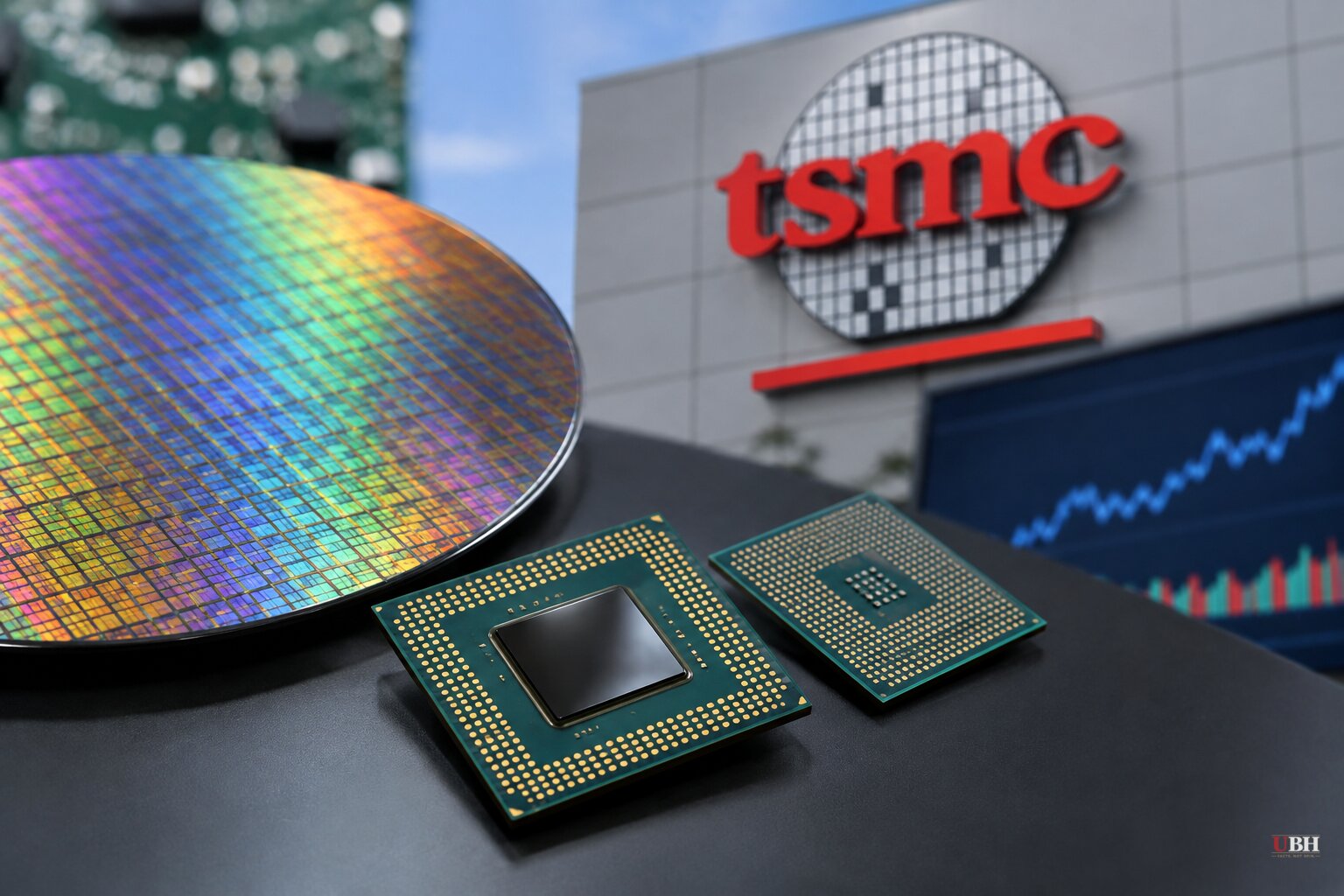
Taiwan Semiconductor Manufacturing Co. reported August 2026 consolidated revenue of NT$514.8 billion, about $16.35 billion, the company said Wednesday into Thursday. That's up 53.3% from a year earlier and 10.1% from July.
It's the fourth consecutive month of record revenue for the world's largest contract chipmaker, and the first time TSMC has crossed the NT$500 billion mark in a single month, according to BigGo Finance. For the first eight months of 2026, revenue totaled roughly NT$3.387 trillion, about $107.4 billion, up 39.3% from the same stretch last year.
The number blew past what analysts were expecting. BigGo Finance reported that the most bullish estimates from foreign brokerages ahead of the release topped out around NT$470 billion to NT$490 billion. TSMC beat even the high end by more than NT$20 billion, roughly $635 million.
Why It's Happening
TSMC's own executives point to one thing: AI. TradingKey reported that Clifford Hou, the company's senior vice president, disclosed that TSMC originally expected wafer demand tied to AI to roughly double this year. That forecast got revised to 1.25 times in the first quarter, then bumped again to 1.9 times in July. Three upward revisions in a matter of months is a notable signal.
Orders for AI accelerators from Nvidia and AMD, plus custom chips designed in-house by major cloud providers, kept advanced-node and CoWoS advanced-packaging capacity fully booked, according to TradingKey. Smartphone makers restocking for their second-half product cycles added extra demand for 3-nanometer chips on top of that.
The company's second-quarter numbers back this up. Net income hit NT$706.56 billion, about $22 billion, up 77.4% year-over-year, on revenue of NT$1.27 trillion, roughly $39.45 billion, up 36%, according to Benzinga. TSMC guided for third-quarter revenue between $44.6 billion and $45.8 billion and raised its 2026 capital spending forecast to a record $60 billion to $64 billion.
Market Position and the ASML Bet
TSMC isn't just growing, it's still dominant. Research firm TrendForce put TSMC's global foundry market share at 72.5% in the second quarter, according to CNBC. Samsung Foundry was a distant second at 5.9%, followed by China's SMIC at 5.4%. The world's top 10 foundries combined for record revenue of nearly $53.49 billion in the quarter, driven by tight supply for the advanced processes AI chips need.
TSMC and Dutch equipment maker ASML also announced this week that TSMC plans to deploy ASML's High NA lithography technology in large-scale manufacturing starting in 2030, as chip designs get more complex, CNBC reported.
Investors have taken notice ahead of the numbers. Hedge fund manager Daniel Loeb's Third Point increased its TSMC stake by 67% in the second quarter, according to Benzinga.
Stock Reaction Was Muted
Despite the blowout number, TSMC's Taiwan-listed shares closed 0.61% lower Thursday, ahead of the revenue release, according to CNBC. The New York-listed TSM depositary shares closed Wednesday at $435.36, down 0.8%, according to ts2.tech, before the August figures came out while U.S. markets were shut. Whether investors treat the August record as new information or as confirmation of growth already priced in remains to be seen once U.S. trading reacts.
The Fair Question: How Concentrated Is This?
TSMC doesn't break out monthly revenue by customer or process node, and ts2.tech noted that August's 53.3% year-over-year jump is measured against a comparatively small NT$335.77 billion base from August 2025. A meaningful chunk of that headline growth rate is a function of the low starting point, not just fresh demand.
That's a legitimate caveat for anyone worried this is an AI-spending bubble rather than durable growth. TSMC's monthly revenue is a broad signal of AI infrastructure demand, but it isn't a clean read on any single customer's order book, and product-launch timing can shift revenue between months in ways that flatter or distort the trend. If hyperscaler capital spending on AI data centers slows, a company this exposed to a handful of large customers, Nvidia and AMD chief among them, would feel it fast.
What's Left Unresolved
TSMC's third-quarter guidance implies September revenue needs to land between roughly NT$444.81 billion and NT$483.21 billion, using management's NT$32-per-dollar assumption, according to ts2.tech's calculations. The midpoint, about NT$464 billion, is slightly below what TSMC posted in July. Combined July and August revenue already sits near NT$982.4 billion, meaning the low end of the third-quarter range now looks close to locked in.
Broader regional data lines up with the story. Taiwan's August exports hit a record $82.4 billion, with electronic components exports topping $30 billion for the first time, while South Korea's HBM memory exports grew 68.7% year-over-year, according to BigGo Finance. Whether that AI-driven export boom across East Asia's chip supply chain continues into 2027, or whether it's a peak that gets revised down the way tech spending cycles usually do, is the question nobody in these reports has an answer to yet.
Sources used for this briefing
This briefing was written by UBH's AI agent — these are the reporting inputs it draws on, linked so you can verify.


