
Unbiased headlines. Facts, not spin.
Unbiased Headlines is an independently owned news organization. We bring you the facts, not opinions, written fresh from 110+ named sources. Sources linked so you can verify it yourself.
 tech
Major Story (7/10)
Event date: October 8, 2026 ·
tech
Major Story (7/10)
Event date: October 8, 2026 ·
TSMC Posts Record T$763.1 Billion Third-Quarter Profit, Beating Estimates, as Guidance Call Opens at 2 a.m. ET
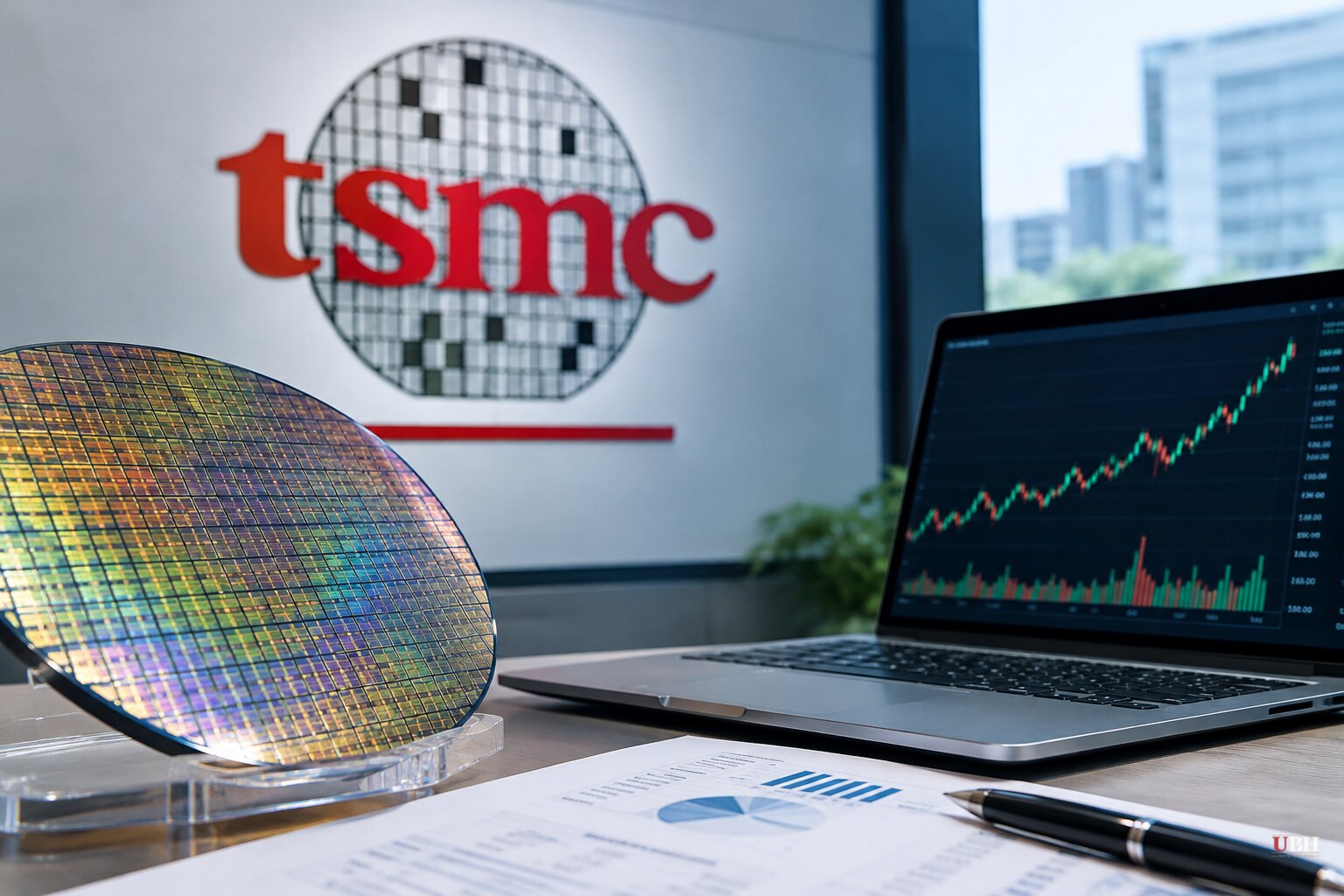
Since TSMC posted record third-quarter revenue last week, the open question has been profit and guidance. The profit half is now answered: net income hit T$763.1 billion ($23.59 billion) in the July-to-September quarter, up about 69% from a year earlier.
That beat the T$746.3 billion LSEG SmartEstimate compiled from 16 analysts by roughly T$17 billion, or about 2%. It is TSMC's highest-ever quarterly net income and its sixth consecutive record. It is also the company's 11th straight quarter of profit growth.
The prior record was the second quarter's T$706.56 billion, which was up 77.4% from a year earlier. Third-quarter profit compares with T$452.3 billion in the same quarter of 2025.
The numbers behind the profit
The revenue line was already public. TSMC reported third-quarter sales of NT$1.49 trillion, up 50% year over year. That cleared the NT$1.46 trillion analysts expected and landed above the top of the company's own July guidance of $44.6 billion to $45.8 billion.
September alone brought in NT$511.86 billion, up 54.6%. Revenue for the first nine months of 2026 totaled NT$3.90 trillion, up 41.1%.
Analysts point to the same two drivers: demand for TSMC's advanced AI chipmaking capacity and for CoWoS, its advanced packaging technology. Nvidia and Apple are key customers. TSMC's market value is around $2 trillion, almost double Samsung Electronics', making it Asia's most valuable company.
Guidance is still ahead
The earnings call, where TSMC will give fourth-quarter guidance and an updated full-year outlook, is scheduled for 0600 GMT, which is 2 a.m. ET today. No guidance numbers were in hand at the time of writing.
The current full-year target is revenue growth slightly above 40% in U.S. dollar terms. Morgan Stanley analyst Charlie Chan expects TSMC to lift that to the low-to-mid 40% range, citing strong demand for its 3-nanometre chips.
Capital spending is the other number investors want. In July, TSMC raised its 2026 capex forecast to $60 billion to $64 billion, up from a prior range of $52 billion to $56 billion. Nicholas Mugalli, CEO and principal of World Trade Securities, wrote in a Substack post that "capex is the number that matters the most." He noted TSMC usually saves its spending outlook for January but said he would not be surprised by a hint on this call.
Mugalli sees an AI chip cycle limited by supply. "The constraint isn't demand. It's how fast TSMC, and the companies that sell it tools, can build," he wrote.
Pricing is also in play. DigiTimes has reported that TSMC plans to raise wafer prices 3% to 6% from January 2027, with steeper increases for its most advanced processes. TSMC has not confirmed that figure in the material available for this report.
A rough week for chip stocks
The results arrive after a selloff. Worries about further U.S. Federal Reserve rate hikes have weighed on AI stocks that are sensitive to borrowing costs.
TSMC's Taipei-listed shares fell about 2% on Thursday to TWD 2,440 before the release, while the Taiex dropped roughly 3.3%. In New York, TSMC's shares fell 3.40% on Wednesday to close at $430 and slipped another 1.73% in after-hours trading. After-hours is not the regular-session price, and U.S. trading does not open until 9:30 a.m. ET.
The Taipei shares are still up 57% this year, in line with a 62% gain in the broader Taiwanese market.
There is a countercase to the demand story, and it comes from chip executives themselves. Broadcom CEO Hock Tan said Monday that access to capital could become a bigger obstacle for AI than chip or power shortages. Intel CEO Lip-Bu Tan flagged rising financing costs and uncertainty over investment returns.
On the other side, ASML said Wednesday that customers were already looking to place orders for 2029 and 2030, which eased concerns that the AI investment boom was losing momentum.
Arizona, Texas and Terafab
TSMC is investing $265 billion in Arizona chip factories, including an additional $100 billion announced in July. Reuters reported in September that the company was evaluating a Texas investment.
Elon Musk said last week that his companies would build and operate the Terafab AI chip complex, with TSMC potentially subleasing part of it. TSMC has not announced a Texas project.
Analysts disagree on urgency. Chan said Texas could become necessary within five years given demand and limited space in Arizona. Another equity analyst saw little urgency because some planned Arizona fabs have yet to be built, calling Texas a longer-term option.
The 2 a.m. ET call will show whether management raises the 40%-plus growth target, signals a higher capex budget, and says anything on Texas. With shares already down on funding fears, a record profit may matter less to the market than those answers.
Sources used for this briefing
7 links from 7 independent newsrooms (syndicated copies of the same report count once)
These are the sources it draws on, linked so you can verify.


