
Unbiased headlines. Facts, not spin.
Unbiased Headlines is an independently owned news organization. We bring you the facts, not opinions, written fresh from 110+ named sources. Sources linked so you can verify it yourself.
 tech
Major Story (8/10)
tech
Major Story (8/10)
TSMC Reports Early Thursday After Chip Index Sheds $1.5 Trillion in Six Sessions
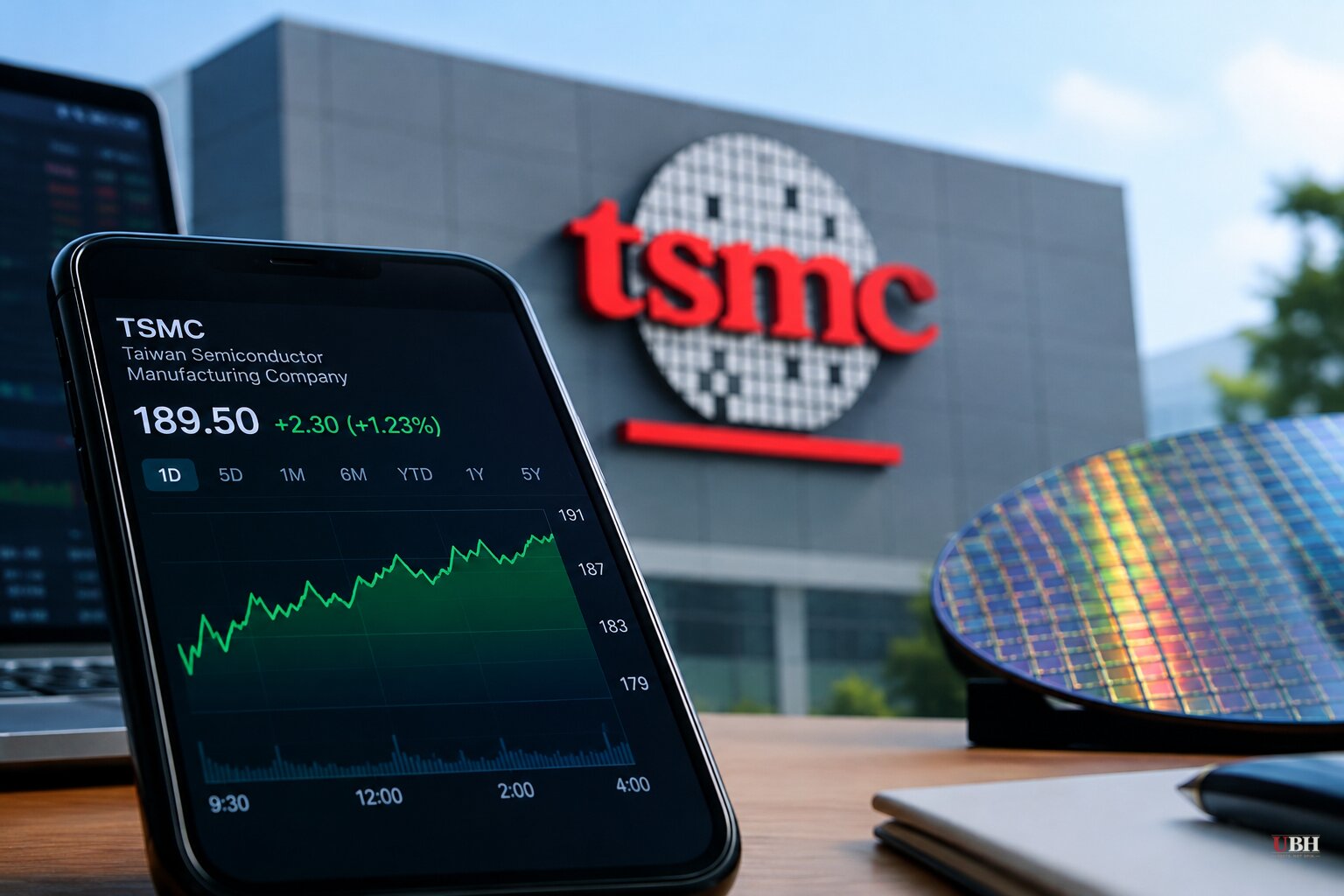
Since TSMC disclosed record September sales on Oct. 8, chip stocks have slid hard, and the world's largest contract chipmaker now reports earnings into that selloff. The company is scheduled to post third-quarter results slightly before 2 a.m. Eastern on Thursday, Oct. 15, with its earnings call at 06:00 GMT.
The Philadelphia Semiconductor Index has shed more than $1.5 trillion in market value over the past six sessions, Bloomberg calculated. Bloomberg tied the drop to worries about interest rates, financing for the AI buildout and how long the chip cycle can last.
The numbers already on the table
TSMC reported September revenue of NT$511.86 billion, up 54.6% from a year earlier but down 0.6% from August. Third-quarter revenue came to about NT$1.49 trillion, up roughly 51% year over year and about 17% from the prior quarter. That is a record.
In dollars, the quarter works out to roughly $46.5 billion. The company's own guidance was $44.6 billion to $45.8 billion. Exchange rates matter here: the gap between the NT dollar and dollar figures depends on which rate is assumed.
Revenue for the first nine months reached NT$3.89873 trillion, up 41.1%.
What Wall Street expects
The LSEG SmartEstimate, compiled from 16 analysts, puts third-quarter net profit up 65% to about NT$746 billion, or $23 billion. Anything above roughly NT$707 billion would be TSMC's highest quarterly profit ever. It would also be the 11th straight quarter of growth.
The consensus earnings-per-share forecast is NT$28.89, against NT$17.44 a year ago. Gross margin guidance was 65% to 67%, and consensus sits near 66.4%.
Margins are where the pressure is. TSMC management has said the 2nm ramp will cut gross margin by about 3 to 4 percentage points in the second half. It has also said overseas fabs add dilution that could reach 3% to 4% in later stages.
Guidance is the test
TSMC currently expects full-year 2026 revenue growth of slightly more than 40% in dollar terms. Morgan Stanley's Charlie Chan expects the company to raise that to the low-to-mid 40% range on demand for 3-nanometre chips.
Capital spending is the other number to watch. In July TSMC raised its 2026 budget to $60 billion to $64 billion.
The longer-range forecasts are bullish. JPMorgan's Gokul Hariharan sees demand growing into 2028, with TSMC revenue up 30% that year. Citigroup's Laura Chen sees AI revenue growth almost doubling in 2027 as customers like Nvidia and Advanced Micro Devices expect faster growth.
AJ Bell's Russ Mould wrote that confirmation of TSMC's commitment to expanding capacity "will signal confidence that growth rates have not peaked."
Why the stock hasn't followed the business
TSMC's New York-listed shares are up about 49% this year, but they are down almost 9% since Oct. 5, according to MarketWatch's tally. The ADRs have traded in the low-to-mid $440s in recent sessions, below the 52-week high of $487.47. The average analyst target is $555.01.
The skeptics' argument is about the price, not the product. 24/7 Wall St. wrote that TSMC keeps raising its own growth targets while its share price moves the other way. It said a margin miss or a softer guide would point toward further downside.
Bloomberg reported that strong earnings from other chip majors have failed to lift the AI trade. Investing Live put it this way: with TSMC shares broadly matching the market's rally this year, "the bar for a positive reaction is high."
Management itself has said it is unsure whether demand will dip along the way, even as it expects strong demand to last to roughly 2029 or 2030. A14 pilot production is set to begin in 2027.
The risks the company lists are not small. 24/7 Wall St. pointed to customer concentration, Chinese competition and Taiwan geopolitical risk. High-performance computing made up 66% of second-quarter revenue.
The Texas question
Analysts also expect questions about U.S. expansion. TSMC is investing $265 billion in Arizona chip plants. Reuters reported in September that it was evaluating a Texas investment.
Elon Musk said last week that his companies would build and operate the Terafab AI chip complex, with TSMC potentially subleasing part of it. Chan said Texas could become necessary within five years given demand and limited space in Arizona. Another equity analyst saw little urgency, since some planned Arizona fabs have yet to be built, and called Texas a longer-term option.
The call lands before U.S. markets open Thursday. The open question is whether TSMC's fourth-quarter outlook and full-year raise can match what analysts like Chan already expect, after a week in which strong results elsewhere in the sector did not stop the selling.
Sources used for this briefing
7 links from 7 independent newsrooms (syndicated copies of the same report count once)
These are the sources it draws on, linked so you can verify.


