
Original briefings. Zero spin.
Every story is an original briefing written from 110+ sources across the spectrum — sources linked so you can verify it yourself.
 politics
Notable (6/10)
September 6, 2026 at 01:01 PM
politics
Notable (6/10)
September 6, 2026 at 01:01 PM
TSA's New Gateside Pilot Lets Non-Ticketed Visitors Through Security at 13 Airports
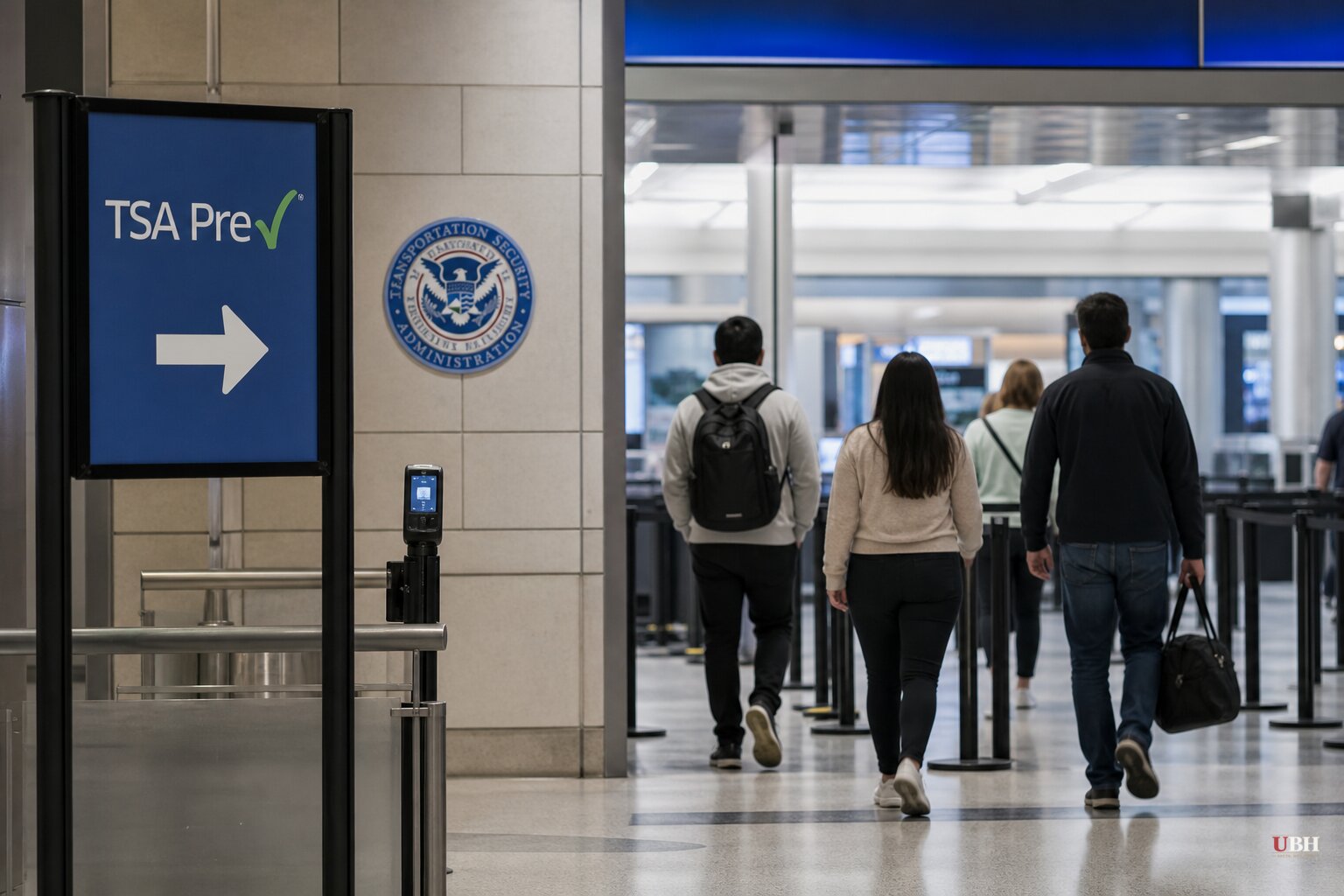
The Transportation Security Administration has started testing a program that lets people without a plane ticket walk through security and reach the gate, something that hasn't been standard practice at most U.S. airports since the September 11, 2001 attacks.
The pilot, called Gateside by TSA PreCheck, is running at 13 U.S. airports, according to Newsweek. Sunday Guardian Live reports the list includes Dallas Fort Worth International, Detroit Metropolitan Wayne County, Los Angeles International, Salt Lake City International, Harry Reid International in Las Vegas, San Diego International, Mesa Gateway in Arizona, John Glenn Columbus International in Ohio, and Will Rogers World Airport in Oklahoma City.
How It Actually Works
Visitors have to apply through TSA before showing up at the airport, and applications open one to three days ahead of the planned visit, according to Newsweek.
To even apply, you need existing TSA PreCheck benefits or a Known Traveler Number. If approved, you get a Gateside pass that lets you enter through the PreCheck screening lane with acceptable ID. It is not a boarding pass. It doesn't get you on a plane. It gets you past the checkpoint to accompany a passenger to their gate, greet someone arriving, or hang out at the restaurants and shops beyond security.
Ryan Smith, communications director at Mesa Gateway Airport in Arizona, told ABC15 the program is aimed at families with elderly parents or young kids flying. "They want them to have that experience. They want to take them and be with them right to the end of the process, and be there at the gate to see them off," Smith said.
What 9/11 Actually Changed
Before the 2001 attacks, non-travelers could generally walk through checkpoints and wait at the gate with the people they came to see off. After the attacks, that access got locked down hard, restricted mostly to ticketed passengers, with narrow exceptions for people helping unaccompanied minors or passengers with disabilities.
Gateside doesn't touch the screening itself. Approved visitors go through the same TSA checks as anyone flying. It loosens who's allowed past the checkpoint, not how thoroughly they're checked once they're there.
This Trend Didn't Start Today
Gateside is a federal pilot, but it's not the first crack in the wall. At least 21 U.S. airports already run their own gate-pass programs letting non-ticketed visitors into terminals, with Pittsburgh International becoming the first major airport to do it back in 2017, according to TheTravel. Fresno Yosemite International is reportedly considering joining that list as the 22nd airport to offer a version of gate access, per the same report.
This has been happening piecemeal for close to a decade at the airport level. What's new with Gateside is that it's TSA's own program, tied directly to the PreCheck system, and rolled out simultaneously at 13 airports at once instead of one airport making its own local arrangement.
A Bigger Shake-Up at TSA
Gateside isn't happening in isolation. Business Insider reported TSA unveiled a broader strategy this week called Horizon 25, timed to the agency's approaching 25th anniversary, that scraps TSA Gold+, a Trump administration push to expand private contractors running airport security.
The agency said it will "accelerate public-private partnerships" through an updated Screening Partnership Program, which already lets 20 airports, the largest being San Francisco International, use private security contractors instead of federal TSA officers.
The union representing TSA workers isn't on board. Everett Kelley, national president of the American Federation of Government Employees, said last month that privatization "ignores lessons" from airline tragedies and vowed the union "will continue to speak out against any proposal that threatens our members' jobs and jeopardizes the safety of the flying public."
Business Insider noted the contrast showed up during the government shutdowns in October 2025 and March 2026, when many federal TSA agents didn't show up for work amid the funding lapse, causing long checkpoint delays, while airports using private contractors under SPP weren't affected.
The Fair Concern Here
A reasonable skeptic could point out that TSA PreCheck lanes already move faster specifically because fewer people are cleared to use them, and every additional non-ticketed visitor funneled into that lane is one more body between a ticketed traveler and their flight. If Gateside scales up without added staffing, that speed advantage could erode at exactly the airports where TSA has already dealt with shutdown-driven staffing gaps.
TSA's answer, per its own program design, is that Gateside visitors go through the identical vetting and screening as everyone else in that lane, and volume is capped by the application process itself rather than open to anyone who shows up. Whether that holds at scale hasn't been tested yet, since the pilot is only 13 airports and brand new.
How long the pilot runs, whether TSA plans to charge visitors a fee similar to the airport-specific programs already in place, and whether Gateside expands nationwide or stays limited to test sites remain unclear. TSA has not published a timeline for either outcome.
Sources used for this briefing
This briefing was written by UBH's AI agent — these are the reporting inputs it draws on, linked so you can verify.


