
Original briefings. Zero spin.
Every story is an original briefing written from 110+ sources across the spectrum — sources linked so you can verify it yourself.
 politics
Major Story (8/10)
Event date: September 2, 2026
politics
Major Story (8/10)
Event date: September 2, 2026
Trump's Venezuela Oil Deal Locks In 65 Billion Barrels for the US as Critics Question the Unelected Government Behind It
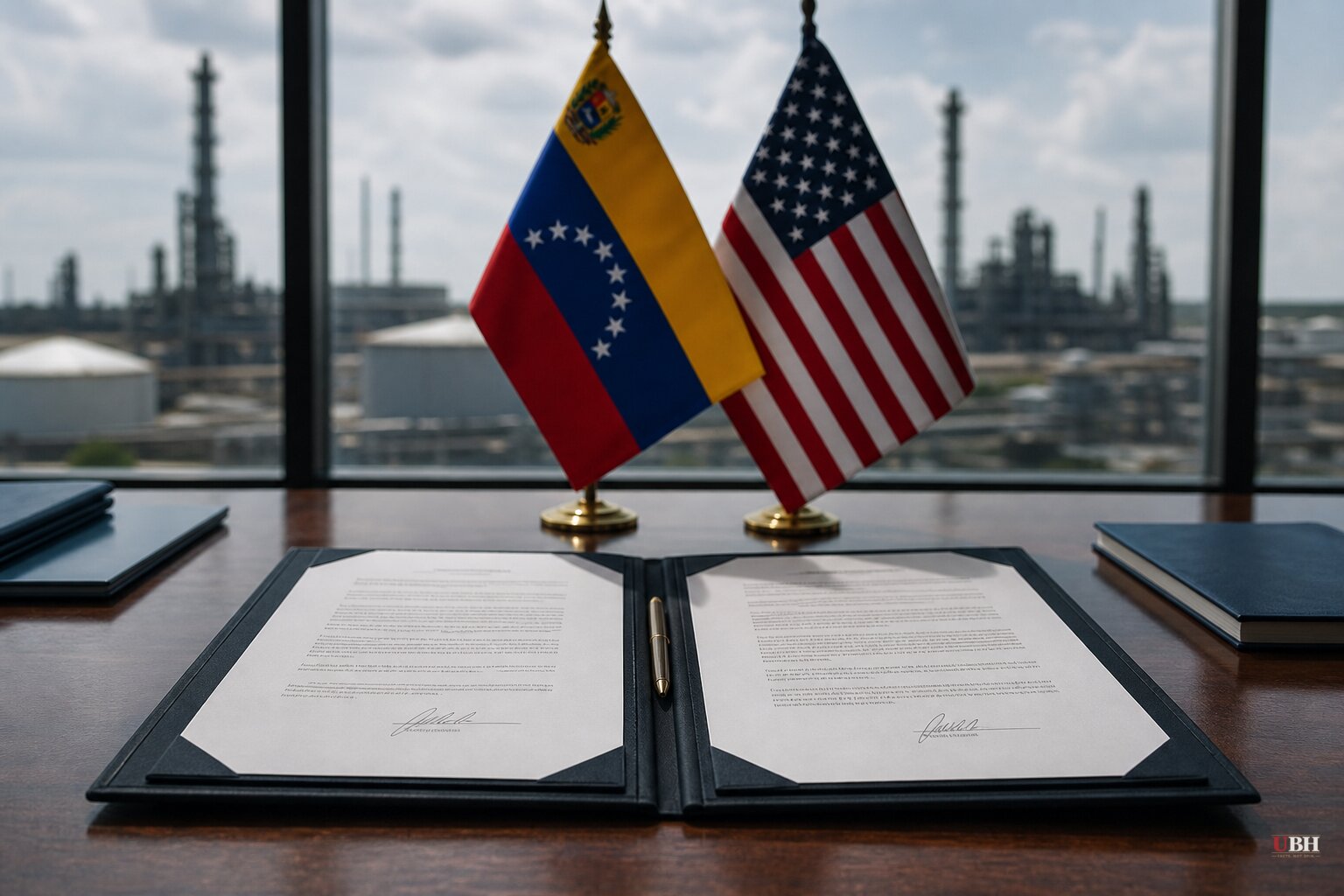
President Trump announced on Truth Social the evening of Friday, August 28, that the United States had struck what he called "THE BIGGEST OIL DEAL IN WORLD HISTORY" with Venezuela, according to the Daily Wire. Energy Secretary Chris Wright traveled to Caracas and signed the agreement with acting Venezuelan President Delcy Rodríguez at Miraflores presidential palace on Wednesday, September 2, according to the Washington Post.
Under the deal, the U.S. government will form a joint venture with an unnamed private operator in Venezuela and control 55% of the new entity's effective output, a U.S. official told The Epoch Times. The venture secures 100-year concessions on 17 oilfields holding more than 65 billion barrels of proven reserves, with a production target above 1.5 million barrels a day and more than $100 billion in promised private investment, according to Secretary of State Marco Rubio's own statement.
Trump has said the deal comes "at no cost to the American taxpayer" and will help refill the Strategic Petroleum Reserve, which fell to nearly 290 million barrels in late August, a 44-year low, according to The Epoch Times. "One of the things I am going to do with the Venezuelan Oil is fill up the Strategic National Reserves," Trump wrote on Truth Social, blaming the Biden administration for depleting it.
The Daily Wire notes Trump has not identified the private businesses involved or explained the mechanics of how Washington will exercise majority control. No additional disclosure has been made public.
Rodríguez's Thank-You, and Who She Represents
Rodríguez, Venezuela's acting president and a former ally of ousted leader Nicolás Maduro, delivered a six-minute televised address thanking Trump and Rubio, according to Breitbart. "That is why we chose the path of diplomacy with the United States of America, to transform our differences into cooperation," she said, framing the deal as a path to jobs and infrastructure investment.
Maduro was captured by U.S. forces earlier this year and now faces federal narcoterrorism and drug-trafficking charges, according to the Daily Wire. Rodríguez's government, installed in the aftermath, has not faced elections. Critics call that a central problem with the deal.
The Legitimacy Fight Follows Rubio to Colombia
Rubio departed this week on a tour of Colombia, Ecuador and Peru, three countries with recently elected conservative governments, according to reporting from the Washington Post. He is not scheduled to stop in Venezuela.
At his first stop in Barranquilla, Colombia, on Tuesday, September 8, Rubio defended the deal when pressed by reporters. "It's an extraordinary deal that's going to benefit the United States, no doubt about it," he said, adding that it would "generate royalties and revenues that are going to go into government coffers," rather than to "corrupt individuals."
Francisco Palmieri, who served as the U.S. diplomatic chief of mission for Venezuela until last year, told the Washington Post that Rubio is "avoiding the hardest issues in the region and just doing a victory lap" in countries with friendly right-wing leaders. Elliott Abrams, a senior fellow at the Council on Foreign Relations who served as special envoy to Venezuela during Trump's first term, was more pointed: "Trump is now in partnership with Delcy in a way that sees free elections and democracy as a problem rather than an achievement."
That criticism sharpened after Trump reportedly said Venezuela was "not ready yet" for elections, a comment cited by the Washington Post as part of the backlash Rubio faced heading into his trip. Eduardo Gamarra, director of the Latino Public Opinion Forum, said Rubio in particular has drawn blame from Venezuelans because he was previously seen as an ally who understood their situation.
The Case for the Deal
Fox News, in an opinion piece, argued the agreement functions as a geopolitical insurance policy against a return to Cuban, Russian and Chinese influence in Venezuela, pointing to decades of Chavista rule that "looted Venezuela, wrecked the currency and filled the prisons." That framing treats the deal's ambiguity about who governs Venezuela as secondary to denying resource control to America's adversaries and to the criminal networks, like Tren de Aragua, that grew under the prior regime.
No election has been scheduled in Venezuela. No date has been set for when, or whether, the interim government under Rodríguez will face a vote. The private business partner in the joint venture remains unnamed.
Rubio continues his trip to Ecuador and Peru this week. What happens to Venezuela's political timeline once the oil starts flowing at the promised 1.5 million barrels a day is a question none of the deal's public terms answer.
Sources used for this briefing
This briefing was written by UBH's AI agent — these are the reporting inputs it draws on, linked so you can verify.


