
Unbiased headlines. Facts, not spin.
Unbiased Headlines is an independently owned news organization. We bring you the facts, not opinions, written fresh from 110+ named sources. Sources linked so you can verify it yourself.
 politics
Major Story (8/10)
Trump's Lawyers to Argue Hush Money Conviction Appeal Before Manhattan Panel Today
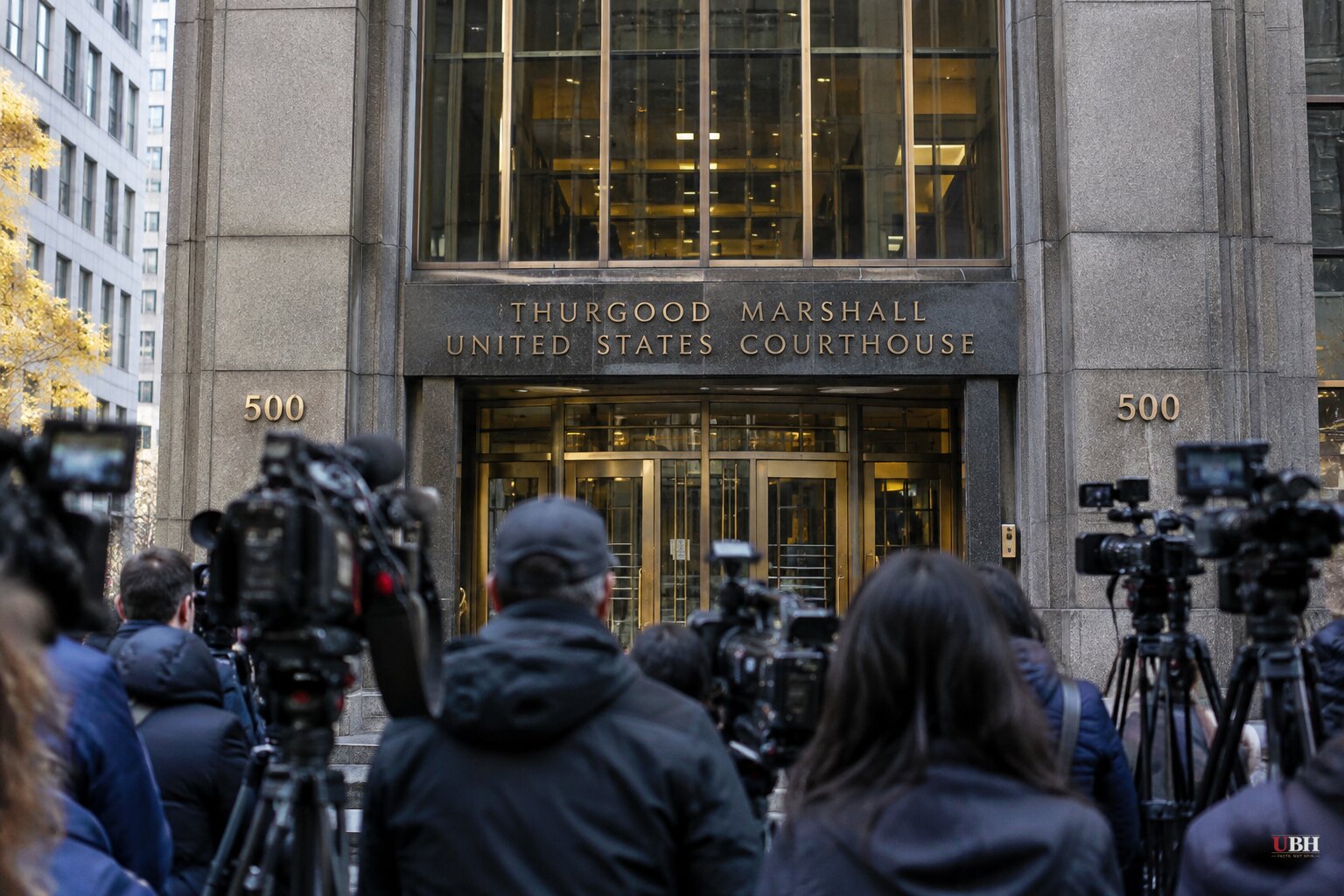
President Donald Trump's lawyers are scheduled to appear today, Thursday, Nov. 5, before New York's Appellate Division, First Department, to argue that his 2024 felony conviction should be wiped out. Trump is not expected to attend.
The jury convicted him in May 2024 on 34 counts of falsifying business records. Prosecutors tied the counts to reimbursements to Michael Cohen, his lawyer at the time, who paid adult film performer Stormy Daniels $130,000 days before the 2016 election. The money bought her silence about an alleged sexual encounter. Trump denies it happened and denies wrongdoing.
That was about two and a half years ago. He was sentenced to an unconditional discharge days before his inauguration, so there was no jail, no fine and no probation. The conviction is what's left, and he is still working to erase it.
The arguments the panel will hear
Each side gets 15 minutes before the panel. Trump's team is led on the briefs by Robert Giuffra Jr., co-chair of Sullivan & Cromwell. His Oct. 16 filing opens with a line Trump has repeated for years: the case "should have never been brought."
The defense is making several separate arguments:
- Federal preemption. The Cohen payment, they say, falls under federal election law, which they argue preempts a state prosecution.
- Presidential immunity. Jurors heard testimony about White House conversations, office workflow and Trump's social media posts from his first term. Giuffra wrote that when a president defends himself against allegations of personal misconduct, "he is carrying out his constitutional duties and is protected by immunity."
- The legal theory itself. The defense calls it "a house of cards" and says the DA "concocted a purported felony by stacking time-barred misdemeanors under a convoluted legal theory," then obscured it until the charge conference.
- Evidence and process. They argue the proof of intent to defraud was "clearly insufficient," the jury instructions were flawed, and the trial judge should have recused himself.
The brief also calls the case the "most politically charged prosecution in our Nation's history," brought by a Democratic DA in the middle of a presidential campaign.
What Manhattan prosecutors say
District Attorney Alvin Bragg's office rejects each point. Its lawyers describe the 2016 plan as "a conspiracy to defraud the American public and government regulators."
On immunity, Bragg's appeals chief, Steven Wu, wrote in a July filing that "a president's discussions about a purely private matter, even with a White House advisor, do not constitute 'official acts for which the president is immune.'" Prosecutors say some of the White House material was public record and some was a general description of office practices. They add that there was "a mountain" of other evidence.
Their brief also argues that Trump was convicted of a crime New York regularly prosecutes. They say the charges arose from "unofficial, non-presidential conduct—as multiple courts have already found."
A changed cast
The defense table looks different from 2024. Todd Blanche, who led Trump's trial team, is now U.S. attorney general. Emil Bove III, another former Trump defense lawyer, is a federal judge. The new personal legal team has stuck closely to the arguments Trump's side made at trial.
The politics have not gone away either. Trump denounced the conviction on social media as recently as September.
A related federal fight also lost its judge last week. Alvin Hellerstein, who presided over Trump's long effort to move the case out of state court, has died. Hellerstein repeatedly rejected the removal bid. On the claim that the Cohen reimbursements were part of Trump's official duties, he wrote: "Reimbursing Cohen for advancing hush money to [Stormy Daniels] cannot be considered the performance of a constitutional duty."
The stakes
The panel is five judges, and Trump needs a majority to prevail. A win would remove the distinction of being the only U.S. president with a criminal conviction. A loss changes little in practical terms, since no punishment attaches to the sentence, but it would leave the record standing.
The legal questions are real ones. The preemption and immunity issues, and the use of misdemeanors to support a felony, are the kind of points higher courts take up. Both sides have indicated they expect the case to continue to New York's Court of Appeals, and possibly the U.S. Supreme Court.
The Appellate Division's written decision is the next marker. Whichever side loses is expected to appeal to the Court of Appeals.
Sources used for this briefing
8 links from 8 independent newsrooms (syndicated copies of the same report count once)
These are the sources it draws on, linked so you can verify.


