
Unbiased headlines. Facts, not spin.
Unbiased Headlines is an independently owned news organization. We bring you the facts, not opinions, written fresh from 110+ named sources. Sources linked so you can verify it yourself.
 politics
Major Story (7/10)
Foreign Leaders Welcome Democratic Midterm Sweep as China Watchers Focus on Taiwan Arms, Tariffs and Trump-Xi Meetings
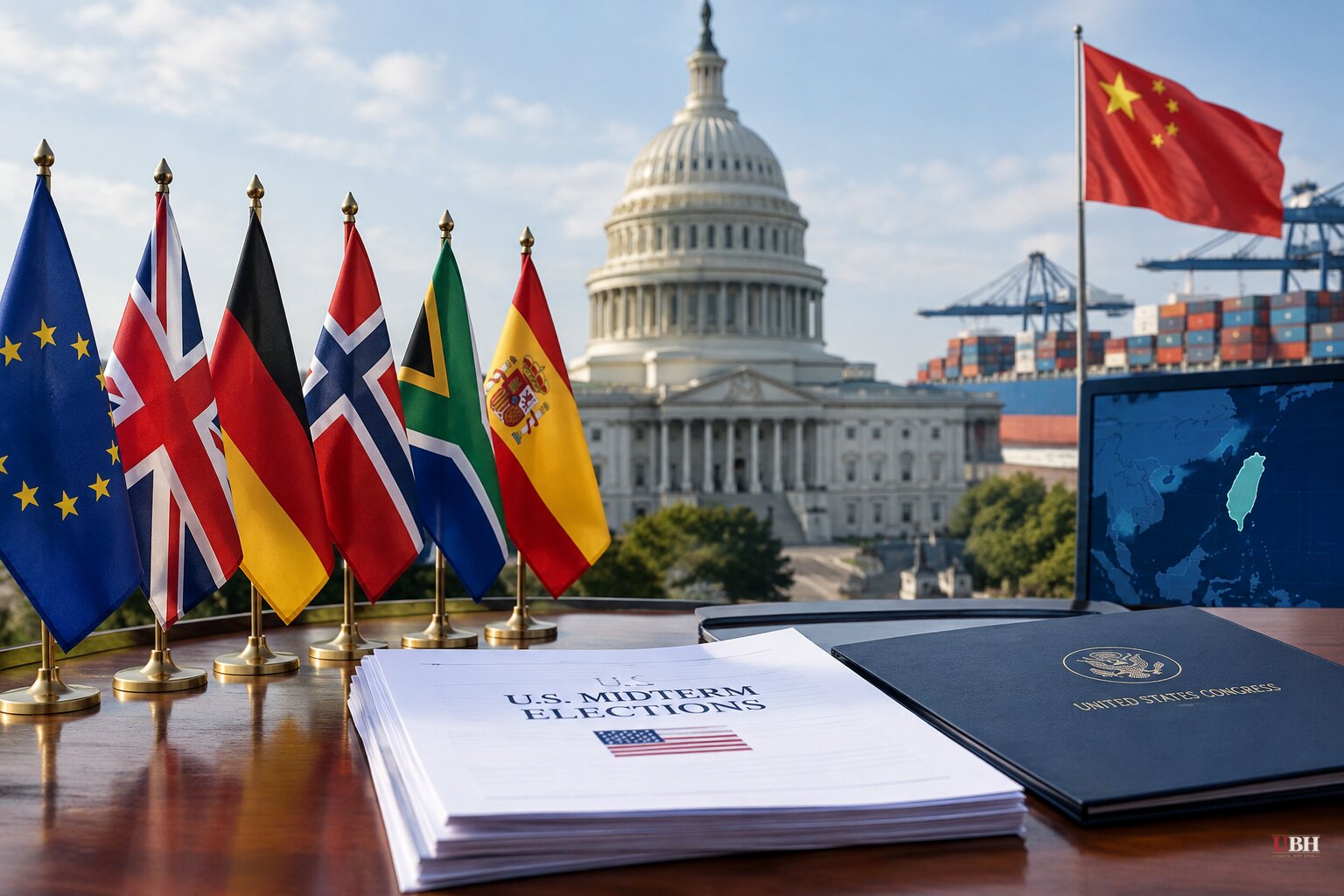
Foreign governments spent Wednesday, Nov. 4, reading the Democratic sweep of Congress as a signal about Washington's direction. Democrats took the House and Senate on Tuesday and flipped governorships in places like Texas, Nevada and Iowa. As of Wednesday afternoon, they were projected to win at least 54 Senate seats and 234 House seats, with two Senate races and more than 60 House races still uncalled. Most winners do not take office until January.
Capitals weigh in
Spanish Prime Minister Pedro Sánchez was the most openly partisan. "Yesterday, American society voted against policies that only make people poorer. Against hate. Against sexism. Against climate denial and against elite privilege," he wrote on X. He tied the result to Brazil's October reelection of Luiz Inácio Lula da Silva and predicted the same in Spain, which votes Nov. 29.
Sánchez has been a sharp critic of the U.S. and Israeli operations against Iran and has feuded with Trump over NATO defense spending. He is also a candidate in a national election in under four weeks.
South African President Cyril Ramaphosa said the result would "introduce a new era in world relations." He spoke days after the U.S. ended South Africa's duty-free access to its market. He said Pretoria hopes for "a coming together of minds" on geopolitics, trade and investment.
German Defense Minister Boris Pistorius called it a "historic victory" for Democrats. Norwegian Prime Minister Jonas Gahr Støre said "voices are now emerging in American politics that are closer to us than the president and the administration have stood for," citing climate, foreign policy and development aid.
European Parliament Vice President Christel Schaldemose said she was "cautiously optimistic" that the result could help support for Ukraine and the green transition. British Prime Minister Andy Burnham said the world has a chance to "unite around" the cost of living. He added that he cannot bring it down in the U.K. until the Iran and Russia-Ukraine wars are resolved.
Moscow was cooler. Kremlin spokesman Dmitry Peskov said Trump "remains in office" and that Russia hopes his mediation continues, adding that another round of trilateral talks "will be held very soon." Deputy Foreign Minister Sergei Ryabkov said the Democratic Party's activist wing takes an "extremely negative" approach to Russia. He said Russian policy "does not depend on the fluctuations of the political barometer in other countries."
What Beijing and its watchers expect
The China question splits analysts. Scott Kennedy of the Center for Strategic and International Studies said Democrats "may nudge the U.S.'s China policy in a more hawkish direction through hearings and legislation," especially on economic security and Taiwan. He cautioned that any effort will be "constrained by the executive branch's wide range of latitude."
George Chen of The Asia Group called Taiwan "the area where a Democratic Congress is most likely to challenge Beijing." He noted Congress has pursued Taiwan initiatives even when administrations were more cautious.
Taiwan has a concrete marker. In May, Trump said U.S. arms sales to Taiwan could be a bargaining chip in talks with China. His administration has since delayed a $14 billion weapons package for months. Neil Shearing of Capital Economics called Taiwan a potential "game changer." He warned Beijing could press harder on the island if it judges Washington distracted or Trump willing to agree terms not to intervene.
Xi warned during Trump's May Beijing visit that mishandling Taiwan would put relations in "great jeopardy."
Tariffs are the other pressure point. CNBC has learned that removing Trump's tariffs is high on the Democratic agenda, as part of a broader push on domestic inflation. Fudan University's Wu Xinbo said limits on Trump would leave him "less able to leverage a tariff card" with China. The U.S.-China trade truce is set to expire in January.
Drew Thompson of Singapore's S. Rajaratnam School of International Studies cautioned that Democrats still have to tread carefully. He said the tariffs are "popular with unions, blue-collar workers and small businesses," historically a Democratic base. Patricia Kim of the Brookings Institution said Congress will be "less inclined" to back measures that risk higher costs for American consumers or raise the chance of conflict.
Chinese scholars see little change
The opposing read comes from Chinese academics interviewed by Lianhe Zaobao's Sim Tze Wei. They argue American voters were focused on the cost of living and prices, not China. In their view the result is a political setback for Trump but unlikely to change the general course of U.S.-China relations. American academics in the same interviews expect greater political constraints on Trump's China policy and a deeper split between the White House and Congress over Taiwan, technology and economic security.
Markets in China moved. The Shanghai Composite rose 2.2% on Nov. 4, its biggest one-day gain in seven months. Reuters cited Chinese government support measures as one factor in the rally.
The window before January
Teneo's Gabriel Wildau says Trump, "as a lame duck" focused on his legacy, may resist pressure for confrontation and continue pursuing "strategic stability" with Beijing. CNBC reports Trump and Xi will likely meet twice before the new Congress is seated: in Shenzhen this month, around the APEC summit, and in Miami in December.
The Credendo risk consultancy adds a darker reading for the same window. It says the absence of a near-term electoral constraint could make Trump more willing to escalate in the Middle East before Democrats take over. The outgoing Republican Congress, it argues, may be less likely to block additional defense funding.
Whether the $14 billion Taiwan package moves before the Shenzhen meeting is the first test of which pressure wins out.
The truce expiry in January lands just as the Democratic Congress is sworn in.
Sources used for this briefing
7 links from 7 independent newsrooms (syndicated copies of the same report count once)
These are the sources it draws on, linked so you can verify.


