
Unbiased headlines. Facts, not spin.
Unbiased Headlines is an independently owned news organization. We bring you the facts, not opinions, written fresh from 110+ named sources. Sources linked so you can verify it yourself.
 politics
Major Story (8/10)
Event date: November 4, 2026 ·
Trump's DOJ Pursues Criminal Probes of Alaska Senate Recruitment and Supreme Court Leak as Courts Reject Its Election Suits
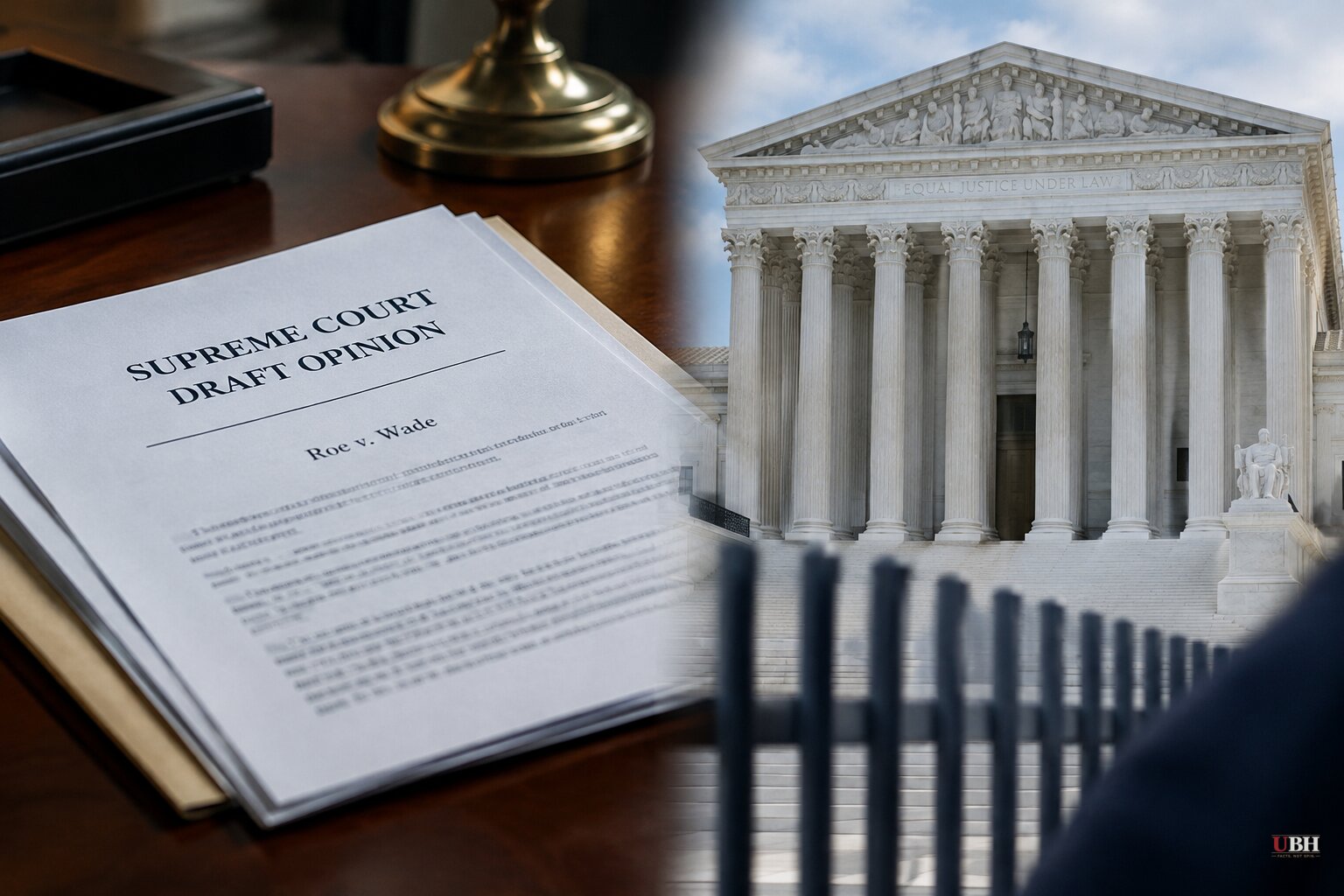
The Justice Department is investigating two very different matters this week. Both involve elections or the Supreme Court. Neither has produced a charge.
The Supreme Court leak
Federal prosecutors have issued grand jury subpoenas and are seeking information from people who worked at the Supreme Court when the draft opinion overturning Roe v. Wade reached Politico, according to the New York Times. Fox News separately reported, citing multiple people briefed on the matter, that U.S. Attorney Jeanine Pirro's Washington office is leading the probe.
The leak came in May 2022, nearly two months before the court issued its ruling in Dobbs v. Jackson Women's Health Organization. Chief Justice John Roberts ordered an internal investigation. According to the Times, court investigators interviewed 97 staff members and clerks. The justices were consulted but not formally interviewed.
The court closed that inquiry in January 2023 without naming a suspect. It did flag weaknesses in its own security procedures.
A DOJ spokesperson declined to confirm anything. "The Department does not comment on the existence of ongoing investigations or lack thereof," the spokesperson said.
The legal footing is murky. Unauthorized disclosure of national security information carries criminal penalties, but no federal statute specifically protects the Supreme Court's internal deliberations. Prosecutors could look at whether anyone made false statements during the court's own inquiry. No charges have been announced.
Some potentially applicable statutes are approaching five-year limitations periods, according to Newsweek. President Trump demanded in July that the leaker be found, joining other conservatives who have pushed for exactly this.
Alaska's two Dan Sullivans
The Alaska matter is further along and far louder. Republican Sen. Dan Sullivan faces Democrat Mary Peltola. Also on the ballot is Dan J. Sullivan, a retired teacher with no party affiliation.
The Alaska Supreme Court ruled in June that he has the right to run. Alaska's Republican Party had backed an earlier state-court effort to keep him off.
The criminal inquiry, according to AP's sources, had been unfolding quietly for months. It accelerated after a New York Times report on emails and texts suggesting people associated with Peltola's campaign tried to recruit candidates who could pull votes from Sullivan. NPR has not independently confirmed that report.
Peltola says she knew nothing about it. "I am not interested in tricking voters," she said. The Democratic Senatorial Campaign Committee denies involvement, and Dan J. Sullivan has long said he is running on his own initiative.
People briefed on the probe told AP that DOJ has issued more than 100 subpoenas and sent preservation letters. They also said the department has sent target letters to Democratic attorney Marc Elias and others, and that FBI agents visited donors to Dan J. Sullivan's campaign. A target letter does not necessarily mean an indictment will follow. CBS News, citing multiple sources, reports the subpoenas also hit several Democratic officials believed to be tied to the recruitment.
Alaska's U.S. Attorney, Michael Heyman, said the Times report triggered a "significant surge of law enforcement assets to Alaska." He added: "I'm not making any assumptions on whether a crime has been committed or not."
A DOJ official told reporters the possible statutes are 18 U.S.C. Sections 241 and 242, the civil rights conspiracy and color-of-law laws. The official said prosecutors might examine whether there was a coordinated effort to trick voters, and pointed to the Douglass Mackey prosecution over misleading 2016 election messages.
Nobody has been charged.
The civil suit failed
Separately, the Trump administration sued to stop Alaska from certifying the Senate result if Sullivan loses over "voter confusion." Trump said he ordered the suit. U.S. District Judge Sharon Gleason, an Obama appointee, threw it out. She found the federal government cannot bring the case.
She also wrote that the requested relief would likely violate Alaskans' right to a secret ballot. "The absence of any explanation from the United States as to how its requested relief could redress its alleged injury while simultaneously maintaining the secrecy of the ballot is telling," she wrote.
DOJ spokesperson Kiersten Pels said the department will appeal. "Alaskan voters deserve a fair election, not to be misled in an attempt to rig outcomes," she said. DOJ also amended its complaint to describe a "conspiracy to undermine the integrity of the electoral process."
The ACLU's Sophia Lin Lakin called the suit "a reckless waste of taxpayer money aimed at silencing hundreds of thousands of Alaska voters."
Republican Gov. Mike Dunleavy has ordered his own investigation. He has indicated the state may not certify the race depending on what it finds.
The AP also notes that recruiting spoiler candidates is a tactic both parties have used for decades without criminal scrutiny. DOJ says it takes this case seriously anyway.
California ballots
On Monday, Nov. 2, the eve of the midterms, the Supreme Court denied the administration's emergency request to force California to set aside ballots from people DOJ believes are noncitizens. The order was one sentence, with no explanation and no noted dissents. The justices did not request a response from California.
Solicitor General D. John Sauer told the court the government had identified more than 20,000 people who appear to be registered in California but are likely not citizens. He argued the federal government has a constitutional interest in ensuring only citizens vote, and that California's failure to investigate frustrates enforcement of the federal ban on noncitizen voting. He called setting aside the ballots a "modest remedy."
California and voting rights groups say the federal government's past noncitizen-voting claims have not withstood scrutiny. According to CNN, every lower court to consider this case rejected it. Gov. Gavin Newsom called the denial a slap-down of a "baseless attack."
The justices also rejected, in September, a Trump plan to change how mail ballots are sent to voters.
The concern behind the California request, that only citizens should vote and that rolls should be checked, is mainstream. Courts have so far found the specific remedies DOJ chose unworkable or beyond its authority.
DOJ has said it will appeal in Alaska, and Dunleavy's decision on certification is still ahead. In the leak case, prosecutors have not said what offense they are pursuing, and the five-year limitations periods Newsweek describes are close.
Whether either investigation produces a charge is unknown. If one does, a court will decide whether the statutes DOJ has named fit the facts.
Sources used for this briefing
7 links from 7 independent newsrooms (syndicated copies of the same report count once)
These are the sources it draws on, linked so you can verify.


