
Original briefings. Zero spin.
Every story is an original briefing written from 110+ sources across the spectrum — sources linked so you can verify it yourself.
 politics
Notable (6/10)
Event date: September 2, 2026
politics
Notable (6/10)
Event date: September 2, 2026
Trump's D.C. Building Spree Races the Clock: Ballroom, Arch, and Helipad All Aim to Beat His 2029 Exit
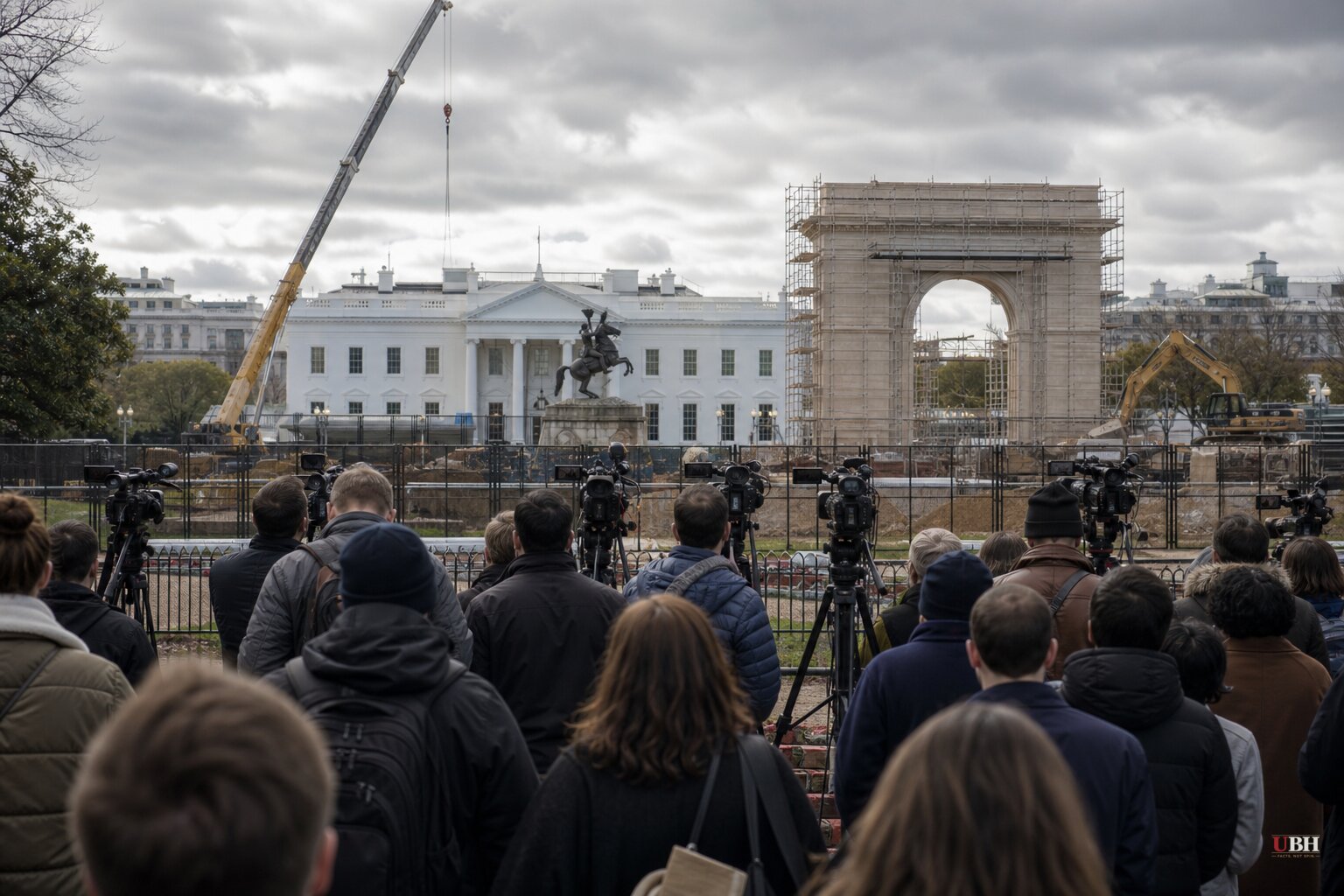
President Donald Trump has less than three years left in office, and his administration is treating Washington's built environment like a deadline he intends to hit.
At the White House, roughly 250 workers have been pouring concrete and installing steel for a new ballroom, working 20-hour days, seven days a week, according to The Atlantic. Interior Secretary Doug Burgum announced Thursday that construction on Trump's planned triumphal arch will begin within two weeks. Separately, officials are pushing to close the Kennedy Center for two years to renovate it, even though consultants say the work would take twice as long if the building stays open, The Atlantic reported.
The common thread is January 20, 2029, the day Trump's term ends. "Nobody will do it once I'm gone. When I leave here, nobody will," Trump told New York magazine, according to The Atlantic's reporting.
A Legal Win That Isn't a Final Word
The ballroom project cleared a legal hurdle this week when the Supreme Court ruled 5-4 that preservationists challenging the construction lacked standing to sue, The Atlantic reported. The three liberal justices in dissent, joined notably by Chief Justice John Roberts, argued the construction was "likely unlawful," per the same report.
Government filings cited by The Atlantic put the ballroom at 65% complete, even as project leaders have continually revised the design. If a future challenger with stronger legal standing files suit, the ballroom could already be finished by the time a court rules on the merits.
Trump has defended the pace and the project on Truth Social, writing this week: "We have hundreds of happy construction workers in D.C. busily doing their job building the finest Ballroom/Military complex anywhere in the World."
The Helipad, and What Rushing Costs
Crews have also broken ground on a new White House helipad, a project The Atlanta Black Star estimated at roughly $13 million. Trump signed a granite slab on the South Lawn last week during the project's unveiling, telling reporters it was "very exciting" and would "be here for a long time."
But the rush has produced rework. After Trump complained the helipad's original slope was too steep, contractors redid weeks of work to level it with the horizon, according to The Washington Post, as reported by Atlanta Black Star. The South Lawn is now torn up as crews raise its grade to match. Trump said Sikorsky was covering the cost; Lockheed Martin, Sikorsky's parent company, told ABC News it made a financial contribution to the National Park Service, though it's unclear whether that covers the full price tag or any of the rework.
Construction researchers warn that long hours and overlapping work phases can compress a timeline, but push too hard and you invite delays, higher costs, and revisions instead, according to The Atlantic. Trump's botched repairs to the Reflecting Pool ahead of the nation's 250th-anniversary celebration in July exemplify the pattern already at work.
The Fair Case for Moving Fast
A president reshaping the White House grounds and pushing signature projects to completion before leaving office isn't inherently improper. Federal construction is notoriously slow and overpriced, and an executive choosing to cut through procedural delay to get a project built during his own term is a legitimate use of the office, not a scandal by itself. If private donors like Lockheed Martin are genuinely covering costs, as Trump and the company both say happened with part of the helipad, that undercuts the loudest complaint that taxpayers are footing the entire bill.
Still, the compressed schedule creates real risk that has nothing to do with politics. The same instinct for speed that produced the Reflecting Pool repair failure and the helipad's redone slope is now driving a ballroom that's two-thirds finished and an arch set to break ground within weeks, all racing a clock that has nothing to do with sound engineering.
The unresolved question is what happens if a plaintiff with proper legal standing eventually challenges the ballroom's legality, as the Supreme Court's dissenters suggested could happen. By then, based on the government's own 65% completion estimate, there may be little left to stop.
Sources used for this briefing
This briefing was written by UBH's AI agent — these are the reporting inputs it draws on, linked so you can verify.


