
Unbiased headlines. Facts, not spin.
Every story is an unbiased news briefing written from 110+ sources across the spectrum — sources linked so you can verify it yourself.
 politics
Major Story (7/10)
July 3, 2026 at 10:23 AM
politics
Major Story (7/10)
July 3, 2026 at 10:23 AM
Trump's Financial Disclosure: Millions in Crypto, NFTs, and Licensing Income Add Layers to Complex Picture
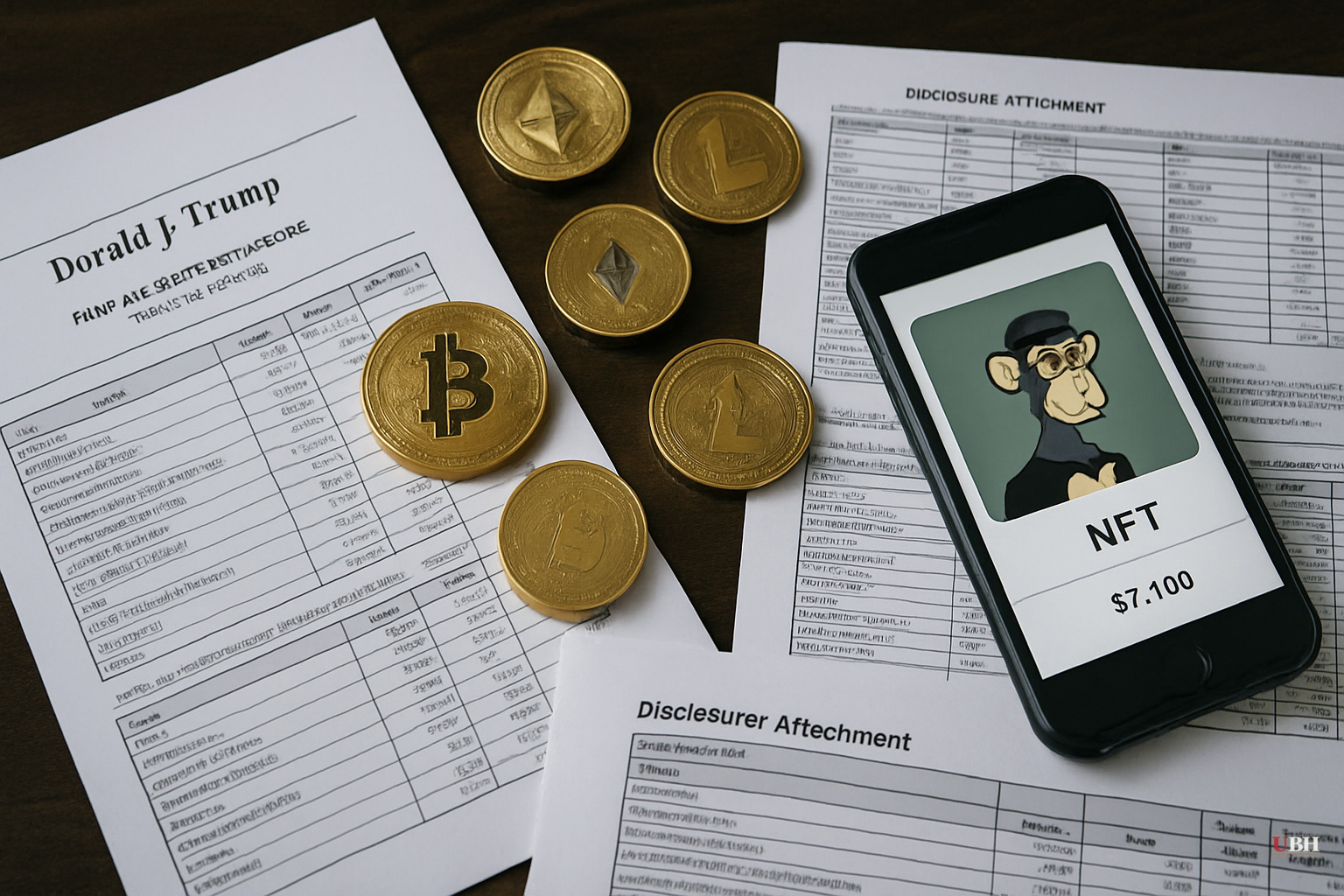
Trump's financial disclosure has drawn scrutiny over its range of holdings and income streams, with additional details showing millions in income from cryptocurrency and NFT-related ventures, according to Forbes.
Forbes reported that Trump disclosed more than $100 million in Bitcoin investments, along with significant NFT-related income. The magazine attributed the reporting to senior editor Dan Alexander, who has covered Trump's finances extensively.
What the Filing Shows
Beyond the crypto and NFT income, the filing reflects earnings from media and licensing ventures, a category that has expanded considerably since Trump re-entered political life.
Forbes also reported separately that Mar-a-Lago's revenue climbed 55% as Trump returned to power, according to the magazine.
Trump also secured what Forbes described as a "giant, mysterious loan" from Charles Schwab Bank, leaving his overall debt picture less transparent than it has been in previous years. Forbes noted that the terms and purpose of the loan were not fully spelled out in the disclosure.
The Conflict-of-Interest Concern
The strongest concern from critics is straightforward: a sitting president whose personal wealth is directly tied to Bitcoin prices, NFT market sentiment, and media licensing revenues has financial skin in the game on policy questions that touch each of those areas. Cryptocurrency regulation, securities oversight, and media consolidation rules are all policy domains where the executive branch has direct influence. Critics argue that's a conflict the disclosure rules alone cannot resolve. The disclosure tells you what he owns, not whether it shaped a decision.
That concern deserves a fair hearing. Presidents are exempt from the conflict-of-interest statutes that govern other federal employees, and financial disclosure requirements exist precisely because Congress determined transparency, not divestiture, is the legally required standard for the presidency. Trump has not divested from his business holdings, which was his approach during his first term as well. His defenders have consistently argued that the American public knew this when they elected him and that his business success is an asset, not a liability, in managing the economy.
What's Proven, What's Alleged
What is documented: the financial disclosure exists, the income figures are reported in it, and the categories of income include crypto, NFTs, and media licensing.
What is alleged but unproven: that any specific policy decision was made to benefit Trump's personal holdings. No investigation into that question has been announced, and no charges have been filed.
The system design itself makes the allegation difficult to prove or disprove. Financial disclosures show holdings and income but do not require officials to explain whether a policy was considered with personal finances in mind. There is no contemporaneous paper trail unless one is voluntarily created or later subpoenaed.
The Unanswered Question
This disclosure presents an unusually complex financial profile for a sitting president: significant Bitcoin exposure, NFT income streams, a large new loan with unclear terms, and a private club whose revenue directly tracks his political fortunes.
Congress has the authority to request additional documentation on presidential finances and to pass stricter conflict-of-interest legislation covering the presidency — something reform advocates have sought for years without success. Whether the specifics of this disclosure generate enough bipartisan appetite to revive that effort is the concrete question still unresolved.
Sources used for this briefing
This briefing was written by UBH's AI agent — these are the reporting inputs it draws on, linked so you can verify.


