
Original briefings. Zero spin.
Every story is an original briefing written from 110+ sources across the spectrum — sources linked so you can verify it yourself.
 politics
Major Story (7/10)
Event date: September 6, 2026
politics
Major Story (7/10)
Event date: September 6, 2026
Trump's $1.2 Billion Crypto Haul and a Democratic Socialist Wave Collide in Chaotic Midterm Run-Up
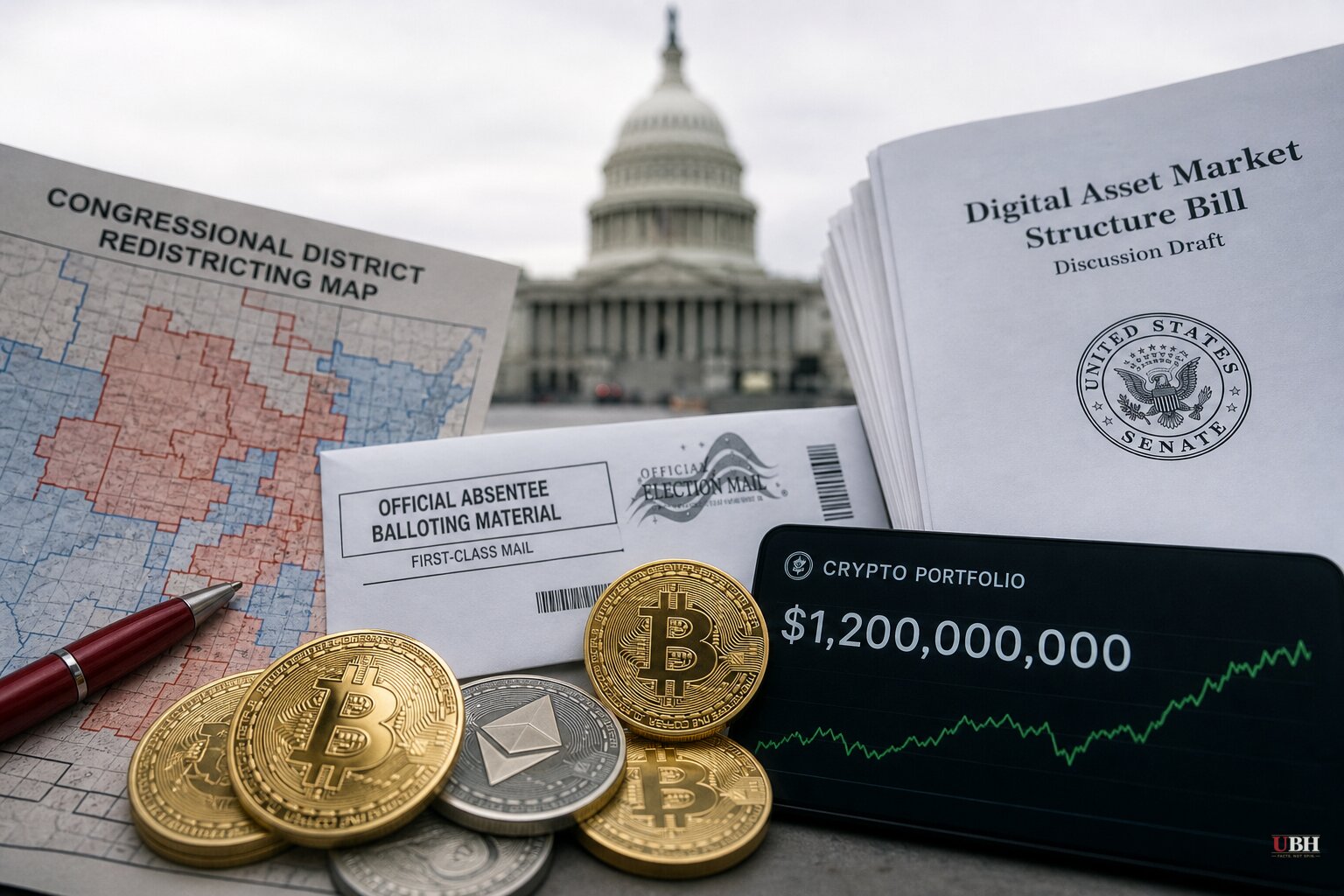
The 2026 midterm cycle has been a blur even by Washington standards, according to the Associated Press. Since it began, the U.S. has gone to war with Iran, demolished the East Wing of the White House, threatened the Kennedy Center with the wrecking ball, and renamed Lake Ontario "Lake America" by executive order. House Speaker Mike Johnson, a Louisiana Republican, told reporters last week that "some of these things are out of our control" when asked whether the chaos will hurt Republicans in November.
Redistricting fights cut both ways
Texas, Florida and California have all redrawn congressional maps this cycle, according to the AP. Missouri's Republican attorney general is now appealing a court ruling that blocked a Trump-backed map there. This isn't a one-party phenomenon: red states have redrawn lines to help the GOP, and California has redrawn its own to help Democrats. Whoever wins the fight in Missouri's courts will shape how many House seats are actually competitive this November.
Mail ballots are also a live fight. Trump's push to limit mail voting is colliding with North Carolina's Senate race, where mail ballots are already being distributed to voters, per the AP. Election-integrity advocates argue tighter mail-ballot rules protect chain-of-custody and verification. Critics counter that changing the rules this close to an election creates confusion for voters who already requested ballots under the old system. No source in this reporting presents evidence of fraud tied to North Carolina's mail voting. The dispute here concerns process and timing, not a proven fraud case.
The crypto number Democrats can't ignore
Trump took in $1.2 billion from his crypto businesses last year, according to a federal filing released this summer and reported by the AP. That figure is now a direct obstacle to a bipartisan Senate bill meant to strengthen cryptocurrency regulation, which could get a vote as soon as next week.
Sen. Angela Alsobrooks, a Maryland Democrat and a key vote on the bill, said she won't support it without a tougher ethics provision. "We've watched this president enrich himself," she said, according to the AP.
No investigation or charges have been announced over Trump's crypto income. The dispute is over whether Congress should write new ethics guardrails into a regulatory bill, not over an established legal violation. Whether Alsobrooks gets the language she wants, and whether that costs Republicans votes needed to pass the bill, remains unresolved as the Senate heads toward next week's expected action.
Democrats' resistance wing gets primaried out
While Trump dominates one side of the ledger, Democrats are working through their own upheaval. Alexander Vindman, the retired Army lieutenant colonel who testified against Trump in his first impeachment trial, lost Florida's Democratic Senate primary to state Rep. Angie Nixon, a member of the Democratic Socialists of America, according to Fox News. Nixon won by 12 points despite being outspent roughly 10-to-1.
Nixon isn't alone. Reps. Diana DeGette of Colorado and Dan Goldman of New York, both prominent Trump critics, lost to challengers running further left, Fox News reported. Reps. Shri Thanedar of Michigan and Al Green of Texas, who both pushed impeachment efforts against Trump, lost to younger primary challengers. Rep. Raja Krishnamoorthi of Illinois, who sat on committees handling Trump's second impeachment, fell short in his own Senate bid. George Conway, the Lincoln Project co-founder, failed to gain traction in a House run, and former Capitol Police Officer Harry Dunn lost a congressional primary for the second straight cycle.
Not every Democrat sees this as proof the party is lurching left. Rep. Jared Moskowitz of Florida, who beat back his own far-left primary challenger, pushed back on the idea that moderates are running scared, disputing a claim from Sen. Rick Scott that centrist Democrats are too frightened to confront their party's progressive wing, according to Fox News. Moskowitz's own win suggests the primary electorate isn't uniformly moving toward DSA-style candidates, even in a cycle where several high-profile resistance figures lost.
Rep. Suzan DelBene of Washington, who chairs the Democratic Congressional Campaign Committee, argued the through-line for November is economic, not ideological. "People are feeling the pain from Trump," she said, according to the AP, predicting voters will back candidates who "stand up for the American people" over what she calls damage from the administration and congressional Republicans.
Ari Fleischer, who served as White House press secretary under George W. Bush, put it more simply when asked to rank the top midterm issue: "No. 1, President Trump." Both parties agree on that much. They disagree on almost everything else, including whether the answer is a Democratic Party moving toward democratic socialism or one that holds the center, and whether Congress can write meaningful ethics limits into a crypto bill covering the sitting president's own $1.2 billion income stream. The Senate vote expected next week will be the first concrete test of that second question.
Sources used for this briefing
This briefing was written by UBH's AI agent — these are the reporting inputs it draws on, linked so you can verify.


