
Unbiased headlines. Facts, not spin.
Every story is an unbiased news briefing written from 110+ sources across the spectrum — sources linked so you can verify it yourself.
 politics
Major Story (7/10)
July 19, 2026 at 04:52 AM
politics
Major Story (7/10)
July 19, 2026 at 04:52 AM
Trump Threatens New Tariffs Over Canadian Wildfire Smoke, Ford Calls It 'Absolutely Unacceptable'
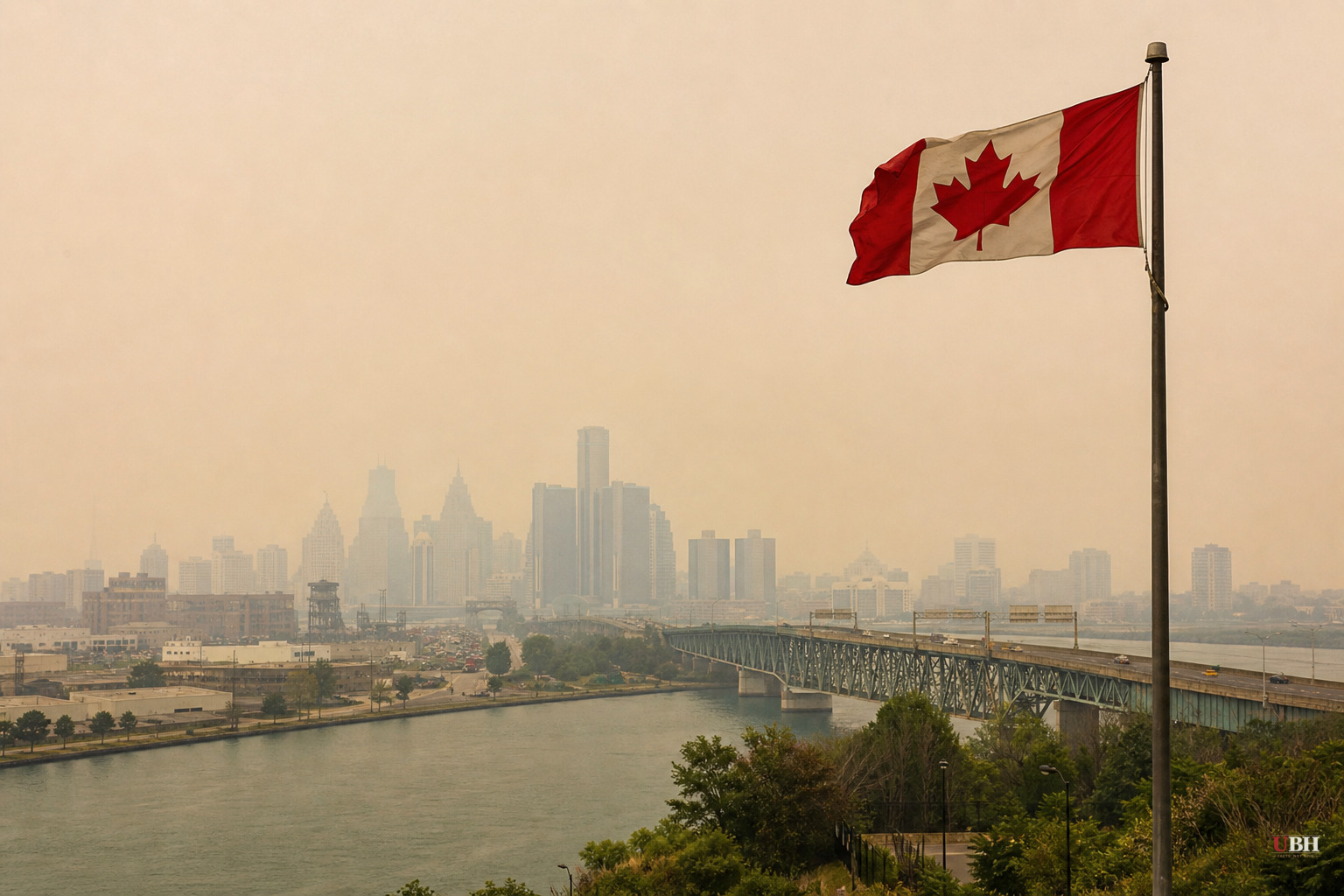
As of Saturday, July 18, Canada had 955 active wildfires burning nationwide, 191 of them in Ontario alone, according to the Canadian Interagency Forest Fire Centre.
President Trump said Friday he intends to add the "incalculable cost" of dealing with Canadian wildfire smoke to existing tariffs on Canadian goods, according to Reuters. In a Truth Social post, Trump wrote that Canada is "not properly maintaining their Forests, and Brush therein," and accused Ottawa of "willful negligence" that's costing the U.S. "billions of dollars" in smoke damage. He said he plans to speak directly with Prime Minister Mark Carney about it.
Ontario Premier Doug Ford rejected the criticism. Speaking at a news conference in Thunder Bay on Saturday, Ford called the American criticism "absolutely unacceptable" and the rhetoric "shameful," according to Matzav.com and Reuters. "We're trying to get through this," Ford said.
The scale of the fires
Ford said 655,000 hectares, about 1.6 million acres or roughly 2,528 square miles, are currently burning across Ontario. Nationally, the Canadian federal Natural Resources Department reported 69 new fires overnight Friday into Saturday, pushing the country's total to 955. Reuters noted the total area burned nationwide, near 11,000 square miles, is actually below the five-year average, even though this particular outbreak is severe.
The human toll is real. Canada's Emergencies Minister Eleanor Olszewski said late Friday the Canadian Armed Forces would fly aircraft into Fort Hope, a remote, road-scarce community in northwestern Ontario, to evacuate residents ahead of intensifying fires. Thousands have already relocated to cities farther south, per Reuters. Ford said he's told his ministers there's "no limit" on spending to protect people, and added, "My heart breaks for the people who've lost their homes or their camps and their businesses."
Trump's case, and the pushback
Trump's underlying complaint is about air quality, not just optics. Smoke from the Ontario and northern Minnesota fires has triggered air quality alerts covering more than 100 million Americans, according to Matzav.com. As of Saturday morning, the EPA's AirNow monitor rated conditions "unhealthy" across southern Ontario, eastern Ohio, West Virginia, most of Pennsylvania, New Jersey, Virginia, and all of Maryland, Delaware, and Washington, D.C. Parts of western Pennsylvania, including Pittsburgh, hit "very unhealthy," per Reuters, though AirNow projected improvement later in the day.
That's a legitimate public health concern, and Republican lawmakers pressing Canada on forest management aren't inventing the smoke out of thin air. Wildfire smoke carries fine particulate matter that worsens asthma, heart conditions, and respiratory illness, especially for kids, the elderly, and people with lung disease. Millions of Americans breathing "unhealthy" or "very unhealthy" air for days at a stretch is not a small thing, and demanding accountability from a neighboring government whose fires are driving that is a fair position to hold.
Where the criticism gets shakier is the forest management framing itself. Climate scientists cited by Reuters point to rising temperatures and drier timber, not a lack of Canadian effort, as the driver of increased fire risk. Canada is already surging resources: unlimited provincial spending per Ford, military evacuation flights, and a national fire count that, despite topping 950, still reflects a total burned area below the five-year average nationally.
Ford also turned the tariff threat back on Trump. He argued that U.S. tariffs on Canadian softwood lumber are part of the problem, not a bystander issue. "If Canada were able to ship its softwood lumber to the U.S. without tariffs, that would resolve a lot of the issues we face right now," Ford said, according to Reuters. He connected easier lumber exports to better capacity for forest thinning and management work.
Ford also invoked the alliance angle directly. He noted Canadian hydro crews and water-bombing aircraft helped fight major wildfires in California, Georgia, and South Carolina last year, and said if roles were reversed, Canada would help the U.S. "without hesitation." "That's what neighbors do, right?" he said.
What's different, and what's not
CBC News coverage, cited via Ground News, focused on Ford's pushback and Canada's history of lending water bombers to U.S. wildfire fights, without engaging much with Trump's underlying tariff logic. On the other side, 100PercentFedUp's coverage leaned into Ford's comments being "shameful" as the headline hook, framing it as Canada complaining rather than addressing Trump's specific claim about forest management practices. Neither outlet fully reconciled the tension Ford raised: that U.S. lumber tariffs and Canadian fire management funding are, in Ford's telling, connected policy problems rather than separate issues.
Canada's natural resources minister, Mike Harris, said Saturday that "much more favorable weather" is expected in coming days, which could slow fire activity, according to Ground News. The White House had not responded to Ford's remarks as of Saturday, per Reuters. Whether Trump follows through on tying wildfire costs to a specific new tariff rate, and whether his planned call with Carney happens, remains unresolved as of this writing.
Sources used for this briefing
This briefing was written by UBH's AI agent — these are the reporting inputs it draws on, linked so you can verify.


