
Unbiased headlines. Facts, not spin.
Every story is an unbiased news briefing written from 110+ sources across the spectrum — sources linked so you can verify it yourself.
 politics
Major Story (7/10)
August 16, 2026 at 07:36 PM
politics
Major Story (7/10)
August 16, 2026 at 07:36 PM
Trump Team Used Kurdish President Barzani as Secret Channel to Iran's Revolutionary Guard
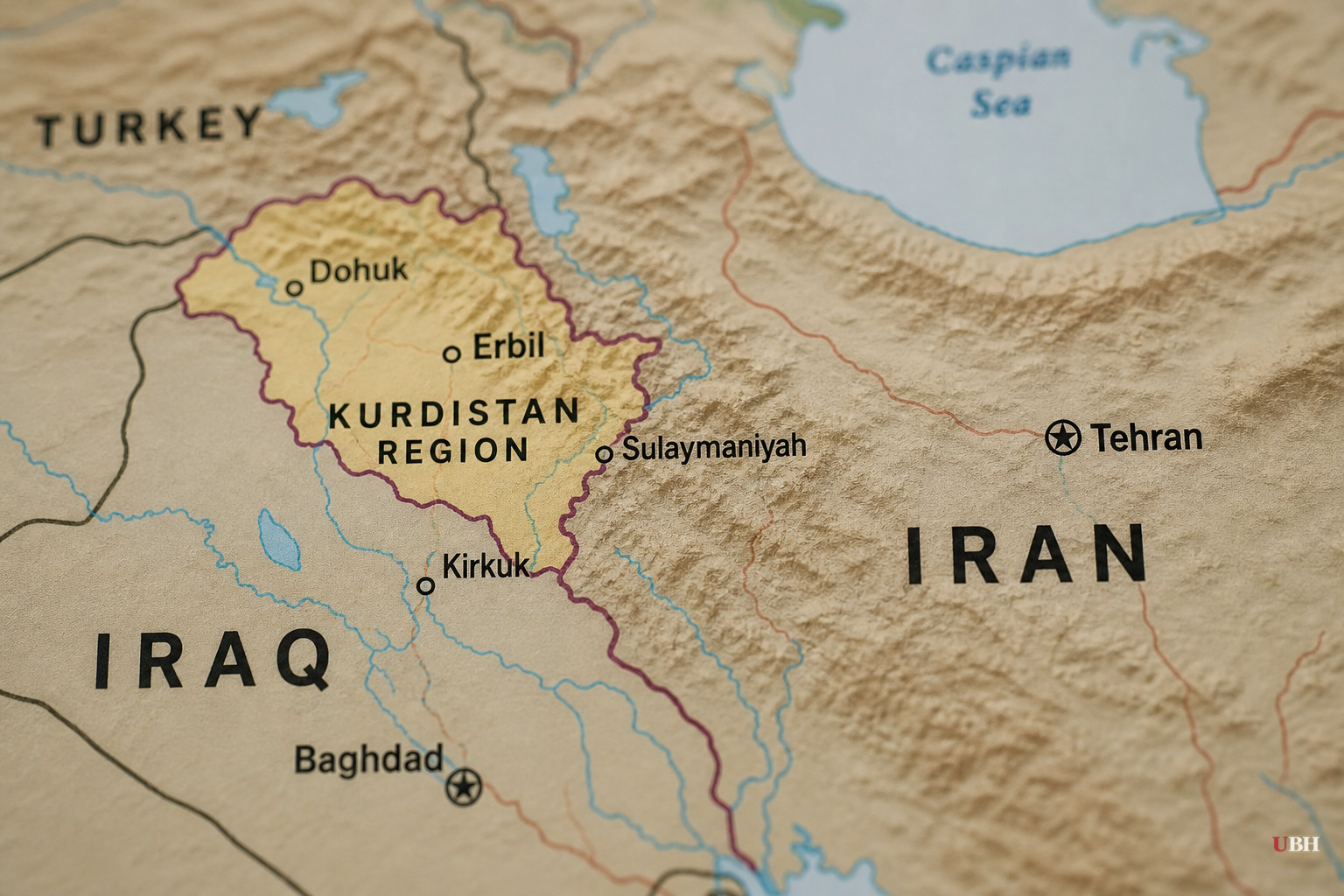
US negotiators trying to end the Iran war ran into a basic problem back in May: they couldn't tell if Iran's public negotiators actually spoke for the people who really run the country.
According to Axios, citing three sources with direct knowledge of the talks, that uncertainty pushed the Trump administration to go around Foreign Minister Abbas Araghchi and Parliament Speaker Mohammad Bagher Ghalibaf and reach directly for the Islamic Revolutionary Guard Corps. The channel ran through an unlikely go-between: Nechirvan Barzani, president of Iraq's Kurdistan Regional Government.
How the channel got built
On May 10, then-Director of National Intelligence Tulsi Gabbard called Barzani with President Trump's approval, according to Axios. She asked whether he could reach IRGC commander Gen. Ahmad Vahidi and find out if the Guard's leadership actually agreed with what Araghchi and Ghalibaf were offering at the table, or if the IRGC had separate demands.
Barzani was a logical pick. He lived in Iran during the Iran-Iraq War, studied at the University of Tehran, speaks fluent Farsi and has personal relationships inside the IRGC, according to the Jerusalem Post's reporting on the Axios story. Brett McGurk, a former National Security Council coordinator for the Middle East under multiple presidents, described him to Axios as "a pragmatic problem solver" who is "respected across the region" and "knows nearly everyone in Tehran as well as Washington."
Barzani agreed and made contact. On May 14, an IRGC official showed up at his office in Iraqi Kurdistan and connected him with Vahidi over an encrypted line, according to ynetnews' account of the Axios report. Vahidi told Barzani the Guard backed the negotiations: "I fully support them, and this is also the position of the IRGC. We prefer to solve this crisis through negotiations," he said, according to a source with direct knowledge who spoke to Axios.
Barzani relayed that back to Gabbard, who briefed the administration. The White House then floated something bigger: direct US-Iran talks hosted by Barzani in Erbil.
Why it stalled
Iran didn't reject the Erbil idea outright, but according to the Jerusalem Post's sourcing, Iranian officials worried Israel had intelligence operatives in Iraqi Kurdistan who could target their negotiators during the trip or the talks themselves. The meeting never happened. Pakistani and Omani mediators kept handling the diplomatic track instead.
Barzani has more recently signaled he's willing to help restart talks, which are currently stuck over control of the Strait of Hormuz, according to the Jerusalem Post. McGurk told Axios the problem was never the mediators: "It's Iran's policy on the Strait, and that's unlikely to change anytime soon."
The Hormuz standoff underneath it all
The backchannel reporting lands against a backdrop of open hostility over the strait. Trump said Friday, at an event in Nassau County, New York, that the US effectively controls Hormuz already and joked he would soon declare it US territory, according to Breitbart. "We have the blockade. No ships get through unless we want them to," he said.
Iran's Deputy Foreign Minister Kazem Gharibabadi shot back on X that the strait "cannot be seized by tweet, nor by aircraft carrier, nor by issuing an order," and said it "has been Iranian, is Iranian, and will remain Iranian."
Separately, Ebrahim Azizi, who chairs the Iranian Parliament's National Security and Foreign Policy Committee, told Trump on X to "worry about his own security rather than his endless bluffing regarding the Strait of Hormuz," adding a jab about Trump ending up "hiding in a food truck." During Trump's trip to Turkey, Secret Service and military personnel moved him to a different aircraft using a catering vehicle after intelligence flagged a possible Iranian threat, according to Fox News and Breitbart. Trump confirmed the episode himself, telling reporters, "They wanted me to go on a different flight, a different plane — equal safety — but they wanted me to do it, so I do it."
Iran's military has also announced a $30,000 bounty for anyone who kills or captures a US service member, doubled if claimed by a woman, according to Agence France-Presse reporting cited by Fox News. Army chief Amir Hatami said the reward followed requests from Iranians wanting to fund such attacks, though he gave no specifics on timing or location. There's no indication of US ground forces operating inside Iran beyond an April rescue mission for a downed pilot, and fighting has stayed concentrated in southern Iran and around the strait.
Fox News said it reached out to the White House and CENTCOM Sunday morning for comment on the bounty. No response is noted in available reporting.
None of the outlets sourcing this story, including Axios, the Jerusalem Post, ynetnews or The News International, report any official confirmation from the White House or Tehran that the Barzani backchannel is still active. Prediction markets tracking a 2026 US-Iran deal, cited by Crypto Briefing, moved from 22% to 33% on a "yes" outcome after the report broke, and a separate market on a one-year-plus uranium enrichment cap sits at 17%.
Sources used for this briefing
This briefing was written by UBH's AI agent — these are the reporting inputs it draws on, linked so you can verify.


