
Original briefings. Zero spin.
Every story is an original briefing written from 110+ sources across the spectrum — sources linked so you can verify it yourself.
 economy
Major Story (7/10)
Event date: August 22, 2026
economy
Major Story (7/10)
Event date: August 22, 2026
Trump Tariffs Have Cost the US $342 Billion Since January 2025, With Michigan Households Paying the Most
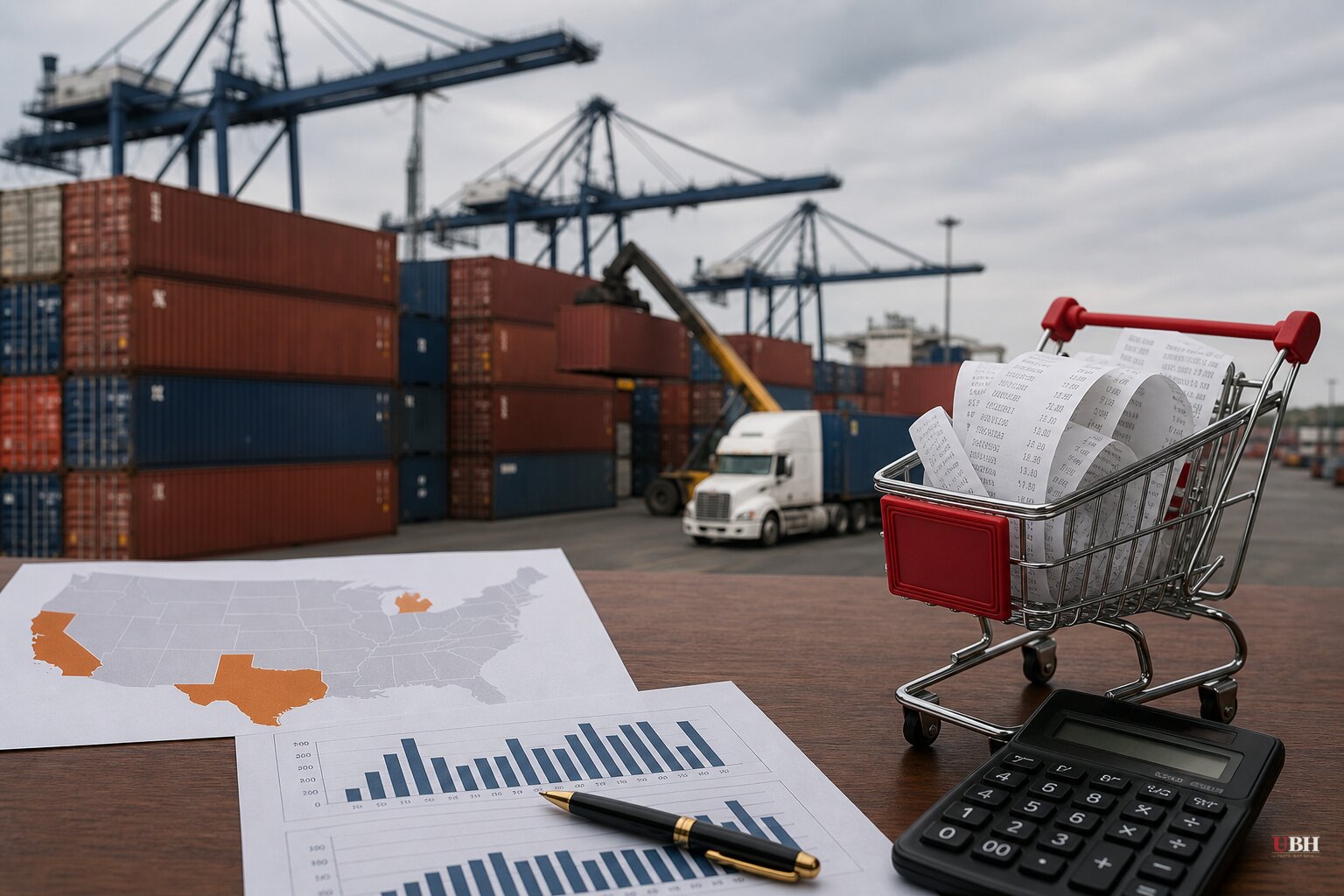
The tab for Donald Trump's tariff agenda has hit $342 billion since January 2025, according to the National Taxpayers Union Foundation's State Tariffs Tracker, built on estimates from Trade Partnership Worldwide. That's real money already flowing through the system, whatever happens next in the trade fight with Canada.
California has absorbed the largest single-state chunk, at roughly $63 billion, according to Newsweek's review of the tracker data, which Axios independently pegged at $62.8 billion. Texas is second at $37 billion, with 71% of that tied to manufacturing inputs like steel and aluminum. Michigan sits third at $23 billion, but its auto industry makes the burden sting worse per household. Michigan tops the list at $5,619 per household, ahead of Georgia at $4,771, per Newsweek's analysis.
At the other end, Alaska has faced about $115 million in added tariffs, while Montana and Wyoming have each faced roughly $107 million, the lowest totals of any states, according to the tracker.
The Price Tag Shows Up in the Data
Federal Reserve researchers estimated in April 2026 that tariffs imposed through November 2025 raised core goods prices 3.1% through February 2026 and lifted overall core personal consumption expenditure prices by 0.8%, according to Newsweek's reporting on the Fed's findings.
The Tax Foundation's tariff tracker, run by Erica York and Alex Durante, estimates the new tariffs now affect 54% of US goods imports in 2026, pushing the weighted average applied tariff rate from 1.5% in 2022 up to an estimated 11.7% this year. Before the Supreme Court intervened, that rate had peaked near 14.9%.
The Legal Mess Isn't Settled
The Supreme Court struck down Trump's sweeping IEEPA emergency-power tariffs on February 20, 2026, in Learning Resources, Inc. v. Trump, according to the Tax Foundation. The administration pivoted to a 10% blanket tariff under Section 122 authority, which ran from February 24 to July 24, 2026, before expiring.
A separate ruling from the Court of International Trade on May 7, 2026, declared the Section 122 proclamation invalid too, but didn't force US Customs and Border Protection to issue blanket refunds, according to Reed Smith's Trade Compliance Resource Hub. The government appealed. Importers seeking money back are now stuck in a system called CAPE, where CBP says electronic refunds generally take 60 to 90 days to process, assuming the case even qualifies. Refunds on entries that have already finally liquidated remain tied up in litigation, with the government fighting to limit who gets paid back.
Canada Escalation Adds a Political Wrinkle
Canada's industry minister Melanie Joly announced retaliatory tariffs of up to 50% on $20 billion in American goods in late August, and she wasn't shy about the strategy behind it. "We are picking products that will target states in the U.S.," Joly said, according to CBS News. "We're being wise and strategic to put political pressure."
CBS News reported the targeting appears aimed at states with competitive midterm races, hitting dairy producers in Wisconsin and Vermont and manufacturers in Michigan and Indiana particularly hard. Trump had already imposed 50% tariffs on Canadian imports after negotiations broke down, and announced 50% tariffs on Canadian autos and steel that would take effect January 1, 2027, absent a deal.
The White House pushed back on the framing that Midwest states are simply collateral damage. "America's heartland states like Michigan and Indiana have been some of the worst hit by unfair foreign trade practices, including by Canada," White House spokesman Kush Desai told CBS News, arguing Canada rejected "the best trade deal of any trading partner" to keep one-sided market access.
Ohio's Democratic Party has seized on the fight ahead of November's midterms, with party chair Kathleen Clyde arguing Trump promised to lower costs "on day one" but is instead "squeezing Ohio families with reckless and deeply unpopular tariffs." Republican Rep. Max Miller has countered that the economy is "actually doing very well right now." Both are contested political claims from officials with an obvious stake in November's outcome, not settled economic findings.
Copper Adds Another Layer of Uncertainty
Separately, copper prices have surged to historic highs, driven partly by the Democratic Republic of Congo's ban on copper concentrate exports and weak output from Chile and Peru, according to UBS. Julius Baer's Carsten Menke says the White House has stayed silent on whether to impose copper import tariffs, with options ranging from 15% starting January 2027 to 30% starting January 2028, or doing nothing at all. Menke argues that silence itself is driving speculative buying and inventory hoarding, calling the current shortage "artificial, not real."
Whether Trump moves on copper, and how the Canada standoff resolves before the January 2027 auto and steel tariff deadline, remain open questions that will shape next year's cost estimates just as much as this year's $342 billion tab.
Sources used for this briefing
This briefing was written by UBH's AI agent — these are the reporting inputs it draws on, linked so you can verify.


