
Unbiased headlines. Facts, not spin.
Every story is an unbiased news briefing written from 110+ sources across the spectrum — sources linked so you can verify it yourself.
 politics
Major Story (8/10)
July 14, 2026 at 01:06 AM
politics
Major Story (8/10)
July 14, 2026 at 01:06 AM
Trump Sons' Defense Tech Investments Tied to $3.2 Billion in Pentagon Contracts, Post Analysis Finds
What the Post found
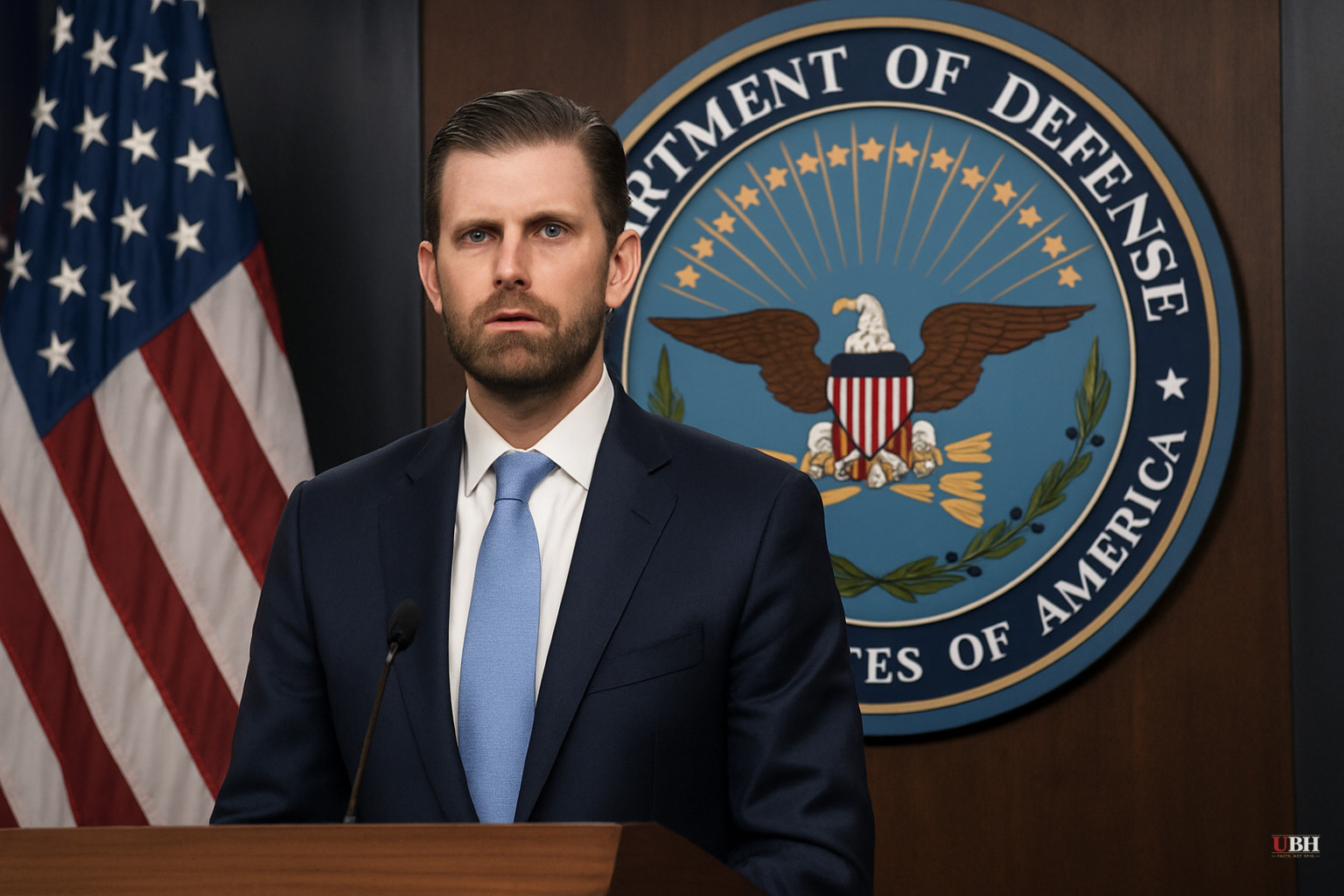
Donald Trump Jr. and Eric Trump have built a portfolio of defense technology investments that now touches more than a dozen companies doing business with the Pentagon and other federal agencies, according to a Washington Post analysis published Monday. The Post based its findings on federal contracting databases, company news releases, and data from PitchBook, a venture capital research firm.
The numbers are big. Those companies have generated at least $3.2 billion in direct government contracts since the Trump sons invested, plus another $3.1 billion in future contract options, the Post found. Some of the firms have also landed spots on preapproved contractor shortlists that let them bid exclusively on close to $200 billion in future Pentagon work.
Most of these investments happened after Trump won reelection in November 2024, according to the Post's timeline. The difference is significant: sons who happened to invest in defense before their father took office versus sons who piled into the sector once he had the power to steer contracts toward it.
Two vehicles, two brothers
Donald Trump Jr. operates through 1789 Capital, where he became a partner days after his father's election win, according to the Daily Beast. Eric Trump runs American Ventures out of Dominari Holdings, a firm based inside Trump Tower.
Two names dominate the money: SpaceX, run by Elon Musk, and Anduril, run by Palmer Luckey. Together they account for 97 percent of the direct government cash the Post tallied and 42 percent of the future contract options. Strip those two giants out and 13 smaller, lesser-known startups still cornered roughly $1.8 billion in long-term Pentagon commitments, the Daily Beast reported.
The portfolio isn't limited to weapons systems. One company is partnering with the luxury fashion brand Prada to design spacesuits. Another is trying to build quantum computers. Most, though, are chasing the same trend: smaller, cheaper, more autonomous hardware, from attack drones to humanoid robots.
The companies' defense
Company representatives who talked to the Post said they won their federal business through the standard, competitive Pentagon contracting process, based on the merits of their technology, not because of any connection to the president's sons. Several said their executives had barely met Donald Trump Jr. or Eric Trump.
That defense has real weight behind it. Of the 15 firms in the Post's analysis, 10 already had federal contracts before the brothers invested, and eight had deals dating back to the Biden administration, according to the Daily Beast. The Pentagon's push toward smaller, nimbler weaponry, drones especially, started under Biden and was already underway before Trump returned to office. Trump's administration has since accelerated that spending, but the underlying strategy isn't something his sons invented or lobbied into existence from scratch.
White House spokeswoman Anna Kelly pushed back hard on the story, telling the Daily Beast there are "no conflicts of interest" and calling the reporting "the same, tired narrative that Democrats have pushed against President Trump, his family, and his administration for a decade."
The complications
The defense that these are pre-existing, merit-based contracts gets weaker when you look at Donald Trump Jr.'s own public statements. According to the Post, he has said he "helped craft some of" the Defense Department's messaging and has pushed Defense Secretary Pete Hegseth toward hiring officials who favor spending more on drones.
That describes a direct financial stakeholder with influence over the agency deciding who gets the contracts. It's the kind of overlap between private profit and public policy that would draw scrutiny regardless of which political party the president belonged to.
No investigation, ethics complaint, or formal inquiry into these specific investments has been announced as of this writing. There's no indication any law has been broken. Federal conflict-of-interest statutes that apply to executive branch employees generally don't reach adult children who aren't federal employees themselves, which is part of why this kind of arrangement is legally murky rather than clearly prohibited.
The New Republic's coverage framed the story bluntly as the Trump family "lining their pockets," language that assumes the conclusion the underlying facts don't fully prove. The Post's own reporting is more careful, noting the contracts predate the investments in most cases and that company executives deny any special access was given.
What's verifiable: the dollar figures, the timing of most investments after the 2024 election, and Trump Jr.'s own on-record comments about shaping Pentagon messaging and hiring preferences. What's unresolved is whether that influence translated into any specific contract decision, and whether Congress or federal ethics watchdogs will treat presidential family investment in an industry the president's own administration funds as something worth new disclosure rules. So far, no legislation addressing that gap has been introduced.
Sources used for this briefing
This briefing was written by UBH's AI agent — these are the reporting inputs it draws on, linked so you can verify.


