
Original briefings. Zero spin.
Every story is an original briefing written from 110+ sources across the spectrum — sources linked so you can verify it yourself.
 politics
Notable (6/10)
September 5, 2026 at 05:00 AM
politics
Notable (6/10)
September 5, 2026 at 05:00 AM
Trump Signs Orders on Home Meat Processing and Wolf Delisting Review After Rancher Backlash Over Beef Tariffs
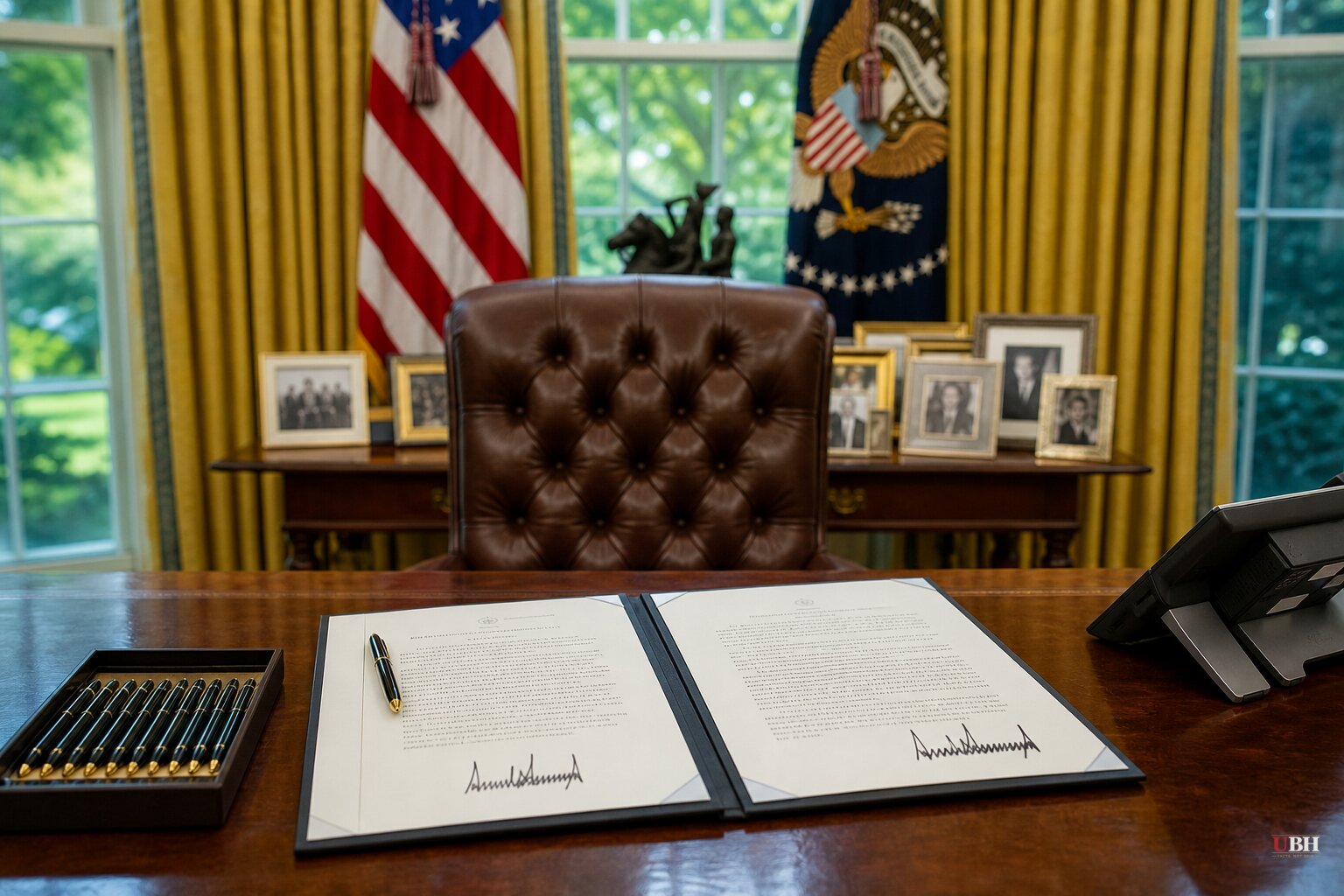
President Donald Trump signed two executive orders Friday, September 4, at the White House, flanked by Agriculture Secretary Brooke Rollins and a group of ranchers including Jim Mundorf, Casey Murph and Amanda Radke.
"For years, I've heard that they have a problem with the big processors ... It's a monopoly, I would say," Trump said during the signing, according to DTN. "We're not going to let it happen any longer."
What the orders actually do
The first order directs the USDA to give ranchers and farmers more ability to process their own meat and sell it, including across state lines, and instructs the Department of Justice to more vigorously enforce the Packers and Stockyards Act, the law barring antitrust conduct by meatpackers, according to Capital Press. It also directs USDA to study whether existing authority allows mandatory country-of-origin labeling for beef, plus an economic analysis of the idea.
The second order gives Interior Secretary Doug Burgum three months to determine whether gray wolves and Mexican gray wolves have recovered enough to be removed from the endangered species list, according to The Guardian.
Neither order rewrites a regulation or a law on the spot. As Capital Press and DTN both reported, the orders instruct USDA, Interior, the U.S. Trade Representative, the FDA and the Small Business Administration to report back to Trump within 90 days with recommendations. Justin Tupper, president of the U.S. Cattlemen's Association, told DTN the actual outcome depends on what those agencies produce and whether Congress acts. Mandatory country-of-origin labeling was repealed by Congress in 2015 and can only be restored by Congress, not by executive order, DTN noted. Rollins posted on X that she would roll out initial steps starting Monday, including rescinding what she called "outdated guidance" and waiving red tape for smaller processors.
The backlash that triggered this
CNN reported the orders followed days of anger from ranchers and rural Republican lawmakers over Trump's separate decision to temporarily raise the tariff-rate quota allowing more imported beef, a move aimed at lowering grocery prices. Trump confirmed to reporters the quota covers 300,000 metric tons of lean beef trimmings from Argentina and Brazil, released in three 100,000-metric-ton tranches starting September 1, according to DTN.
CNN also reported that conservative radio host Glenn Beck pressed Trump directly in an interview to "break the back of those processing plans" by loosening rules on ranchers, shortly before Trump's Friday Truth Social post promising action.
The National Cattlemen's Beef Association pushed back hard on the idea that loosening inspection rules is the fix, posting on X that "weakening federal meat inspection & food safety standards isn't the answer" and that "America's cattle producers have earned consumer trust in U.S. beef over generations," per CNN's reporting. Both the industry's concern about food safety and the administration's stated goal of breaking up processor concentration matter to the discussion, since they can conflict without agencies spelling out exactly which safety requirements would or would not change.
Will this actually lower beef prices?
According to NPR, agricultural economists don't expect Trump's tariff move to meaningfully cut grocery bills. Andrew Griffith, a University of Tennessee livestock economist, told NPR consumers might see a drop of "a quarter to 35 cents" per pound, not the dollar-plus reduction ranchers fear or shoppers might hope for. Jaime Luke, a Michigan State University livestock economist, said the 300,000 metric tons represents roughly a 2% bump in domestic beef supply, calling it smaller than headlines suggest. NPR reported the average price of ground beef hit $6.89 a pound last month, up nearly 57% over five years per Bureau of Labor Statistics data. Griffith added any savings would likely be temporary, since the U.S. imported roughly 542 million pounds of ground beef in June alone, meaning the 90-day quota could be used up fast.
Breitbart's coverage of the signing focused entirely on the rancher-empowerment framing, presenting the order as a standalone pro-rancher win without mentioning that it was issued in direct response to the tariff controversy that had ranchers and GOP lawmakers furious just days earlier. That context, confirmed by CNN, DTN and NPR alike, is central to understanding why the order was signed now.
The wolf fight isn't settled either
The Guardian reported the Interior review faces its own obstacles. A 2022 federal court order still protects gray wolves across most of the lower 48 states, and a prior Fish and Wildlife Service attempt to delist them remains tied up in litigation. Mexican gray wolves hit a population of 319 at the end of 2025, just short of the 320-animal, four-year threshold their recovery plan requires before delisting can even be considered, according to The Guardian. Michael Robinson of the Center for Biological Diversity said his group will fight any premature delisting "with information, with science." Leia Barnett of WildEarth Guardians called the order an attempt to bypass "the very framework Congress built to keep species recovery decisions insulated from political whims."
The agencies' 90-day reports are due in early December. Whether Congress moves on country-of-origin labeling in the stalled farm bill, and whether courts allow any wolf delisting to proceed, will determine how much of Friday's signing turns into actual policy rather than a political response to an election-year price fight.
Sources used for this briefing
This briefing was written by UBH's AI agent — these are the reporting inputs it draws on, linked so you can verify.


