
Unbiased headlines. Facts, not spin.
Unbiased Headlines is an independently owned news organization. We bring you the facts, not opinions, written fresh from 110+ named sources. Sources linked so you can verify it yourself.
 defense
Major Story (8/10)
Trump Says U.S. Destroyed Iranian Anti-Aircraft Site on Qeshm Island as CENTCOM Launches Task Force Iron Gate
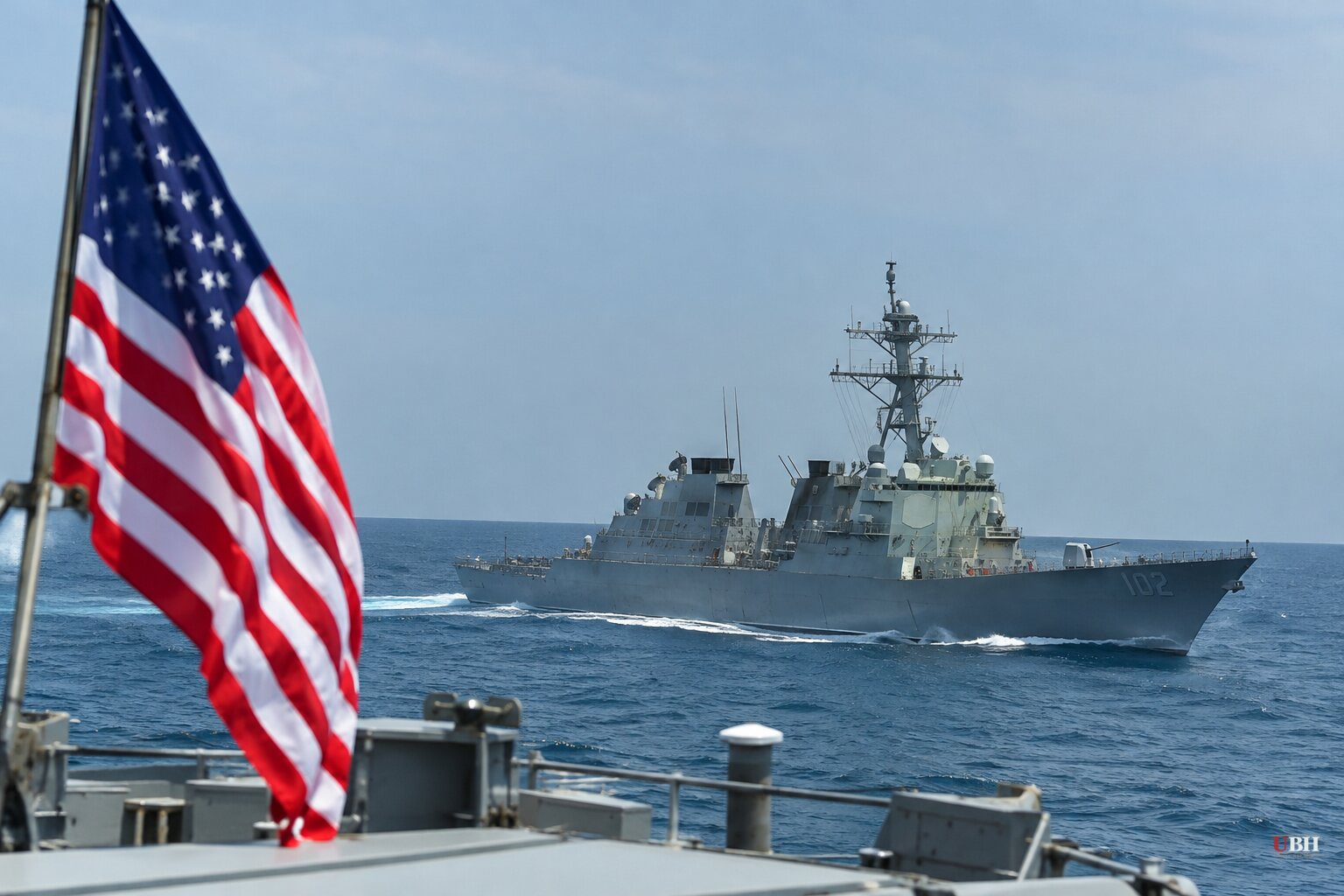
Since the U.S. launched Operation Epic Fury against Iran on Feb. 28, the fighting has settled into a pattern of blockade, limited strikes and on-and-off mediation. The past 24 hours added to all three.
Trump calls it a 'minor' strike
Speaking to reporters after landing in West Palm Beach, Florida, on Friday evening, Nov. 6, Trump confirmed a new round of limited U.S. strikes on Qeshm Island in the Strait of Hormuz.
"They built a little bit of an anti-aircraft device, and we knocked it out in about 15 minutes, maybe five," Trump said. He also said "we are not fighting."
Iranian state media reported two explosions in the Suza area of the island. Tasnim, a semi-official Iranian agency, said there was no official information on damage. U.S. Central Command described the situation around the island as "relatively calm" and gave no further detail.
This is the first reported U.S. action against Iran since Tuesday's midterm elections. It follows a Monday strike on the same island that U.S. officials described as defensive, after Iran fired a surface-to-air missile at an American aircraft. Trump said Tuesday that U.S. forces had watched the anti-aircraft site go up for about two months before destroying it shortly after completion.
Iran disputes the account
IRGC spokesman Hussein Moghadi said Iranian forces carried out defensive operations in which a U.S. aircraft was hit. He gave no details and offered no evidence. The U.S. has not confirmed any aircraft was struck.
He added that Iran is prepared to use "new capabilities" against enemy positions. "Our war is not symmetrical, and we can strike the enemy at a point where he does not expect it," Moghadi said.
Iranian media, citing the IRGC, also claimed air defenses destroyed a U.S. MQ-1 drone over Qeshm on Friday and an MQ-9 on Saturday. U.S. officials have not confirmed either claim.
The blockade widens
On Saturday, CENTCOM announced Task Force Iron Gate, which Adm. Brad Cooper said "reinforces the success of our ironclad blockade against Iran at sea." The task force is meant to stop advanced weapons, dual-use technology, sanctioned materials and illegal revenue from moving across Iran's land borders and the Caspian Sea.
It will have about 20 civilian and military personnel, based in the Tampa area, and will work with other U.S. agencies. CENTCOM did not say how it will enforce anything on land or on the landlocked Caspian, or whether military operations are involved.
The target is clear enough. With Iran's ports blockaded, China, its largest trading partner, has moved goods by rail across Central Asia. Russia trades with Iran over the Caspian. The U.S. says the blockade has kept some $25 billion in Iranian crude off the market.
CENTCOM also said a U.S. aircraft disabled the St. Kitts-flagged cargo ship M/V Huda in the Gulf of Oman on Saturday, firing munitions at its stern after the crew allegedly ignored repeated warnings. The command said the crew was told to leave the targeted spaces first. By CENTCOM's count, enforcement since July has redirected 147 commercial vessels and disabled five that refused to comply. It says U.S. forces have also destroyed 10 Iranian oil tankers tied to an IRGC shadow network.
Separately, CENTCOM posted a reward of up to $20 million and possible relocation for information on Iran's nuclear program, including facilities, equipment and personnel such as scientists.
Diplomacy and the decision ahead
Trump said Friday that "we're dealing with them now. They want to make a deal," and that the U.S. has made "a lot of progress." Iran's public position has been that it can reopen Hormuz within two days if Washington meets seven demands. Iranian officials say those include lifting the blockade, releasing frozen assets and ending the war "on all fronts." The U.S. rejects Iran's claim of authority over the waterway, and Trump insists the nuclear issue be settled in any deal.
Qatar, the main mediator, denied reports that talks had failed. Its International Media Office called them "false and misleading." Foreign ministry spokesman Majed al-Ansari said such claims "serve only those seeking to prolong the war and destabilise the region." Qatar's prime minister said both sides continue to work toward an agreement. Hegseth spoke Friday with Qatari Defense Minister Sheikh Saoud bin Abdulrahman Al Thani, and Turkish President Recep Tayyip Erdoğan told Trump by phone that the conflict should be resolved through diplomacy, according to Erdoğan's office.
At the White House on Thursday, senior national security officials gave Trump options for the next phase, including expanded military operations. Other advisers argued for continued negotiations and economic pressure. Trump said he would decide "soon" whether more force is needed to keep Tehran from rebuilding its nuclear capability.
"I would rather not destroy the rest of the country if possible, but maybe I'll have to," he said.
That decision is the open question. Trump has said publicly he would hold off on any major escalation until the elections were over. They are now over.
Saudi Arabia said early Saturday that its air defenses intercepted a Houthi cruise missile fired toward the Riyadh area, a reminder that the conflict is not confined to the Strait of Hormuz.
Sources used for this briefing
8 links from 8 independent newsrooms (syndicated copies of the same report count once)
These are the sources it draws on, linked so you can verify.


