
Unbiased headlines. Facts, not spin.
Unbiased Headlines is an independently owned news organization. We bring you the facts, not opinions, written fresh from 110+ named sources. Sources linked so you can verify it yourself.
 defense
Major Story (8/10)
CENTCOM Says U.S. Aircraft Disabled St. Kitts-Flagged Ship M/V Huda in Gulf of Oman
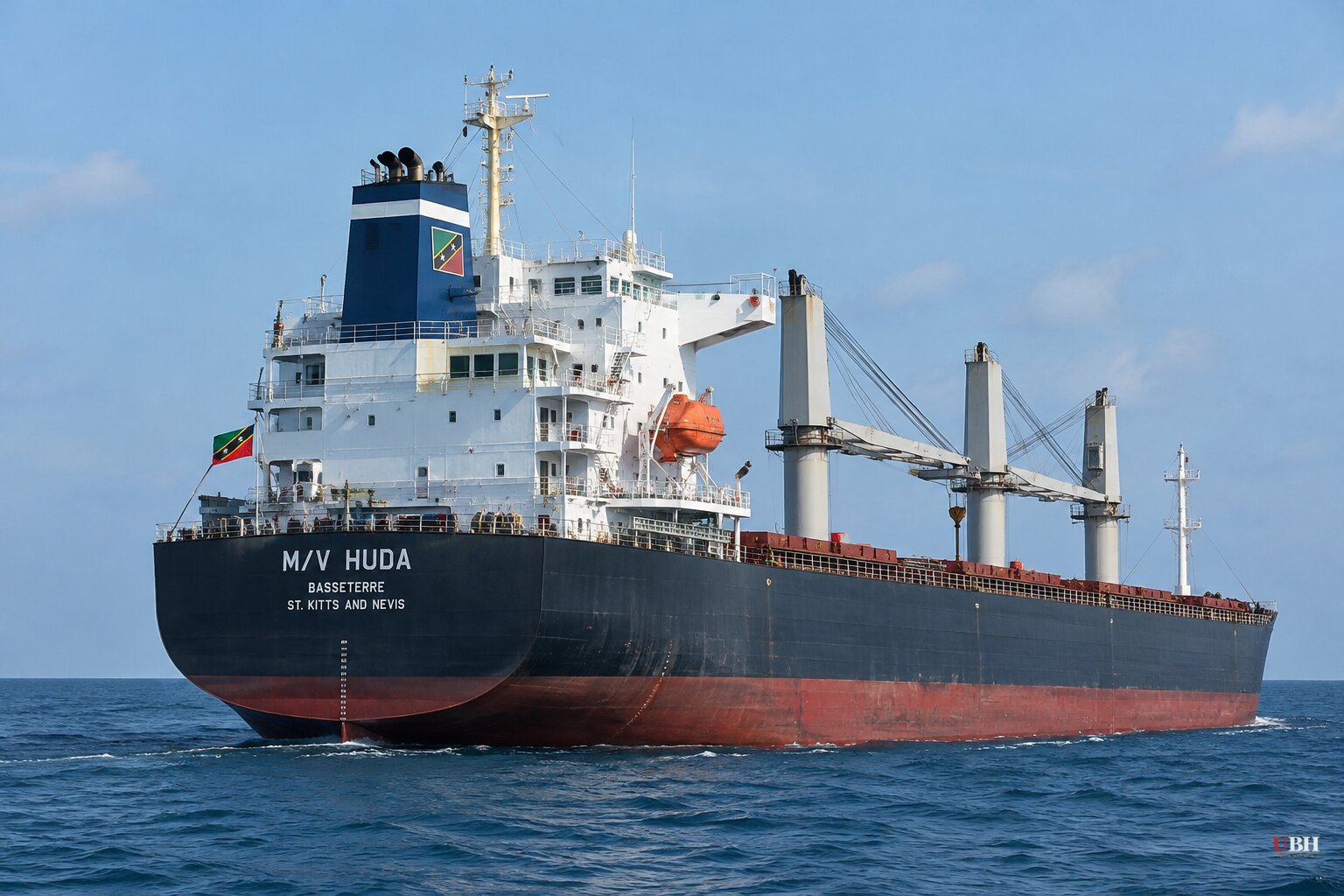
Since the U.S. launched Operation Epic Fury against Iran on Feb. 28, the Strait of Hormuz has been the pressure point of the war. The latest incident came late Saturday, Nov. 7, when U.S. Central Command said a military aircraft disabled a commercial vessel in the Gulf of Oman.
The ship was the St. Kitts-flagged M/V Huda. CENTCOM said the crew ignored repeated warnings and tried several times to violate the blockade. The vessel was trying to leave regional waters after visiting an Iranian port.
A U.S. aircraft fired precision munitions at the ship's stern. CENTCOM said the crew had been directed to abandon the targeted spaces first. The command also released video of the strike.
"All mariners transiting near Iranian coastal areas or surrounding waters are advised to heed blockade warnings from U.S. forces," CENTCOM said.
The blockade by the numbers
CENTCOM says enforcement actions since July have redirected 147 commercial vessels that complied and disabled five merchant ships that refused. Its count through the end of October was 144 redirected.
The command also says U.S. forces have destroyed 10 Iranian oil tankers it describes as part of a multibillion-dollar Islamic Revolutionary Guard Corps shadow network. Those figures come from CENTCOM alone.
CENTCOM estimates the blockade has kept more than $25 billion worth of Iranian crude off the market in recent months. Adm. Brad Cooper, the CENTCOM commander, has said the pressure constrains Iran's ability to finance terrorism, rebuild weapons factories and replenish its military.
The last confirmed U.S. strike on a cargo vessel came nearly a month ago, also in the Gulf of Oman, according to the Associated Press.
Ground routes added
On the same day, Cooper directed the formation of Task Force Iron Gate. It is a roughly 20-person civilian and military team based in Tampa. It is meant to choke off Iran's movement of advanced weapons, dual-use technology, sanctioned material and illicit revenue across its land borders and the Caspian Sea.
CENTCOM describes the task force as an expansion of the blockade from sea to land.
Explosions and mines
Iranian state media reported explosions on Qeshm Island and in the port of Jask on Saturday evening. The cause was not immediately clear, and the U.S. military did not immediately respond to an AP request for comment.
Trump said Friday that U.S. forces carried out "minor" strikes on an Iranian air defense system. CENTCOM has not commented on that action. The AP also reports at least two earlier instances in which the command did not announce strikes and declined to confirm them when asked about local reports of explosions.
Separately, the Iranian military said late Saturday that two tankers hit mines in the Hormuz area and caught fire. It did not name the vessels' flags or destinations, and the claim has not been independently confirmed.
Iran's position and the diplomatic track
Tehran has framed its pressure on shipping as leverage to force the U.S. to lift the blockade. October saw the most attacks on commercial ships in the strait since March, according to the AP. Iran has warned it will respond broadly to any new U.S. attack by targeting infrastructure in the Gulf.
Diplomacy has stalled. Turkish President Recep Tayyip Erdoğan told Trump by phone Saturday that the U.S.-Iran conflict should be resolved through diplomacy, according to a statement from his office.
Qatar's foreign ministry said its foreign minister, Sheikh Mohammed bin Abdulrahman Al-Thani, spoke with Saudi counterpart Prince Faisal bin Farhan about de-escalation. The ministry said the two backed efforts to secure "the freedom of maritime navigation" and a "comprehensive accord."
The Saudi-led coalition said its air defenses intercepted a Houthi cruise missile aimed at the Riyadh area early Saturday. Yemen's war reignited in July, adding a second front to the regional conflict.
What comes next
Trump has said for weeks that he is considering a new wave of strikes on Iran after the Nov. 3 midterms. That would mark the first resumption of full-scale U.S. operations in almost two months. The war is now more than eight months old, and neither CENTCOM nor the White House has announced a date or scope for any such wave.
Sources used for this briefing
7 links from 7 independent newsrooms (syndicated copies of the same report count once)
These are the sources it draws on, linked so you can verify.


