
Unbiased headlines. Facts, not spin.
Unbiased Headlines is an independently owned news organization. We bring you the facts, not opinions, written fresh from 110+ named sources. Sources linked so you can verify it yourself.
 defense
Major Story (7/10)
Event date: November 6, 2026 ·
Europe Rejects Trump-Kushner 'Security Architecture' Push Days Before Abu Dhabi Talks With Russia and Ukraine
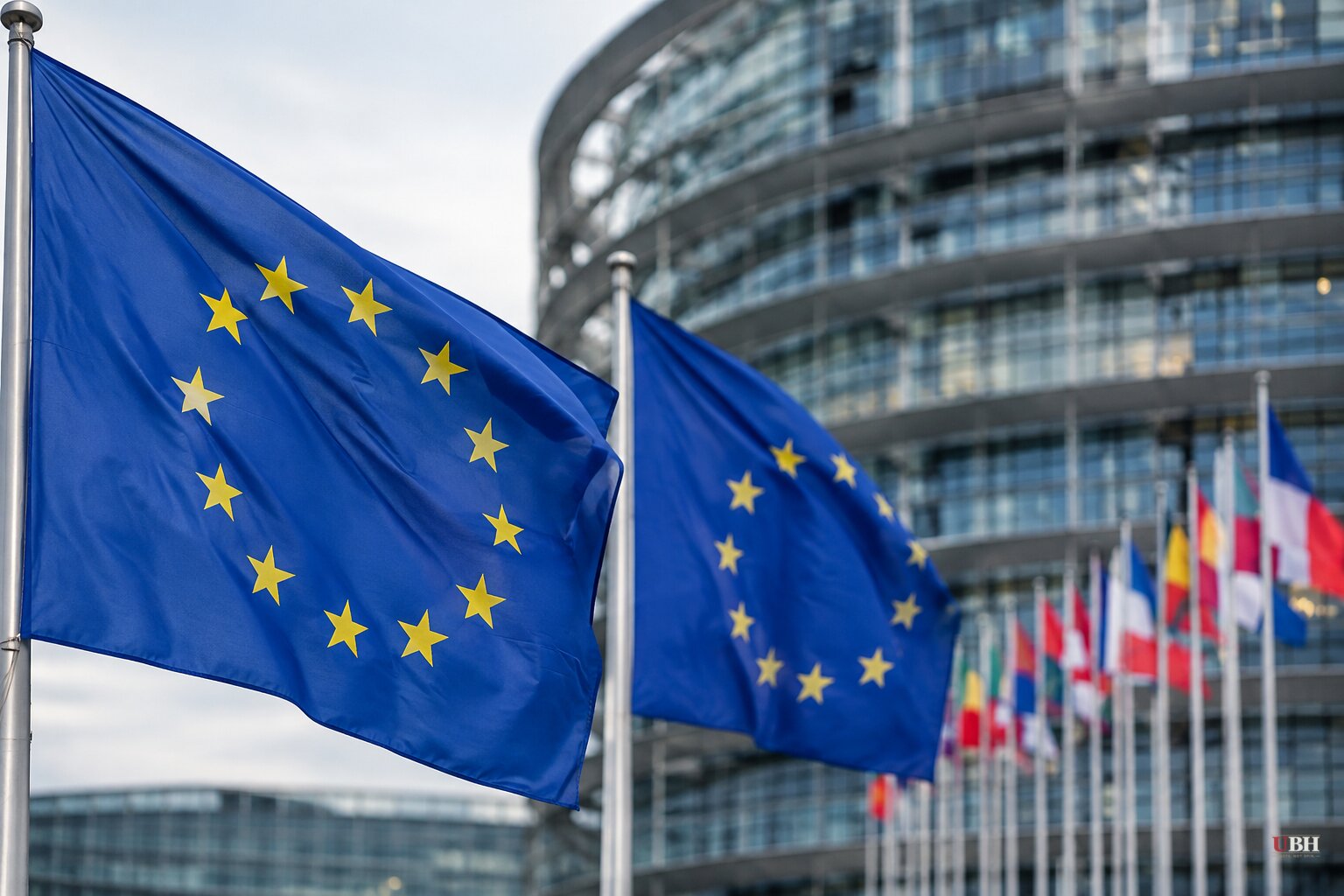
Since the six-day truce in the Ukrainian city of Oleshky ended on Nov. 1, Washington's Ukraine diplomacy has picked up speed. It has also run straight into European resistance.
President Donald Trump met Russian envoy Kirill Dmitriev at the White House on Thursday, Nov. 5. Dmitriev was in the building for an event with first lady Melania Trump honoring the local ceasefire in Kherson region, which ran from Oct. 27 to Nov. 1. It was the most significant truce since Russia's full-scale invasion in February 2022.
Trump declined to give details. "I can't tell you what I discussed," he said. "But I'm just telling you, it's going to be a big agreement." He added that it "is going to involve more than Ukraine," and "might involve all of Europe."
Trump did not meet the Ukrainian officials who were also at the event, parliamentary faction leader Davyd Arakhamia and human rights ombudsman Dmytro Lubinets. He gave no reason, and the White House did not immediately comment.
Kushner's five goals
The same day, Trump's envoy and son-in-law Jared Kushner took part by video link in talks with NATO, EU and European officials in Brussels. He then posted on X that Washington is working on "a broader European security architecture that can help establish the conditions for lasting peace."
Kushner listed five goals: permanent security consultations, reliable crisis communications, greater military transparency, reciprocal measures to reduce escalation risks, and an enduring framework for long-term European security.
He also wrote that any arrangement must "fully respect the sovereignty, territorial integrity, and independent decision-making of every nation." No country would have a veto over another's sovereign choices, he said, and "NATO will remain central to European collective defense."
CNN reported that Kushner used the label "Shell Bay format," a reference to a golf and residential development owned by envoy Steve Witkoff. CNN also reported that three European officials it contacted Friday morning did not know what Kushner or Trump meant.
Ukrainian President Volodymyr Zelenskyy told CNN's Jake Tapper he knew few details and warned the proposal would not be simple.
Europe pushes back
The Europeans did not wait for details. Speaking in Warsaw on Friday, Kallas said: "We already have a European security architecture in place. The problem remains that Russia keeps breaking the treaties that underpin it."
She added that NATO "posed no threat to Russia in 2021" and that "Putin does not have a veto over European security." Any agreement, she said, would require the EU to be part of it.
Sikorski, Poland's foreign minister, said an arrangement "above our heads would not just be unwise. It is actually impossible." Sybiga, Ukraine's foreign minister, said Moscow "cannot be the security guarantor for the European continent."
An EU spokeswoman said "a lot of work" remains for peace and that the bloc will decide its own security matters.
The history behind the alarm is specific. Before the 2022 invasion, the Kremlin sent NATO an ultimatum on European security arrangements that included a demand that the alliance pull its troops out of eastern Europe. NATO rejected it.
Kushner's stated position is that the effort aims at "practical arrangements that address the security concerns of all sides," built on existing institutions rather than replacing them. No document laying out the proposal has been published.
What else is on the table
Commentators are already filling the gap. Andrew Korybko, writing for ZeroHedge, argues Trump could use "plausibly deniable" pressure to push European states toward pulling forces out of countries that joined NATO after 1997. Nobody in the administration has proposed that, and Kushner's post says the opposite about respecting each country's decisions.
The Atlantic Council makes a different case. It argues any durable settlement must include EU membership for Ukraine, and notes the Trump administration has already tied Ukraine's EU admission to earlier peace proposals. It urges Washington to broker a deal with Brussels and Kyiv. Member states, the think tank says, worry about the cost of enlargement and about farmers' anger over new competition.
The diesel deal and the talks ahead
The diplomacy is moving alongside a sanctions shift. During the closing weeks of the midterm campaign, Trump struck a deal with Russian President Vladimir Putin to remove sanctions from Russian diesel exports, according to the Associated Press. Trump has also lately blamed Zelenskyy for refusing to make concessions.
Putin has confirmed the next trilateral Russia-U.S.-Ukraine talks will be held in Abu Dhabi on Nov. 10-11, according to Korybko's account. The AP describes them as the first three-way peace talks since February. CNN reports Moscow is sending Vladimir Medinsky to lead its delegation.
What Trump discussed with Dmitriev is still undisclosed. The open question going into Abu Dhabi is whether the "broader architecture" will be put on the table with Russia in the room and Europe outside it, which is the scenario Kallas and Sikorski say cannot work.
Kallas's position is that any deal needs the EU at the table to be implemented.
Sources used for this briefing
7 links from 7 independent newsrooms (syndicated copies of the same report count once)
These are the sources it draws on, linked so you can verify.


