
Original briefings. Zero spin.
Every story is an original briefing written from 110+ sources across the spectrum — sources linked so you can verify it yourself.
 politics
Major Story (7/10)
September 12, 2026 at 07:41 PM
politics
Major Story (7/10)
September 12, 2026 at 07:41 PM
Trump Says He Would 'Love' to See Ireland Reunified, Breaking With Official US Neutrality
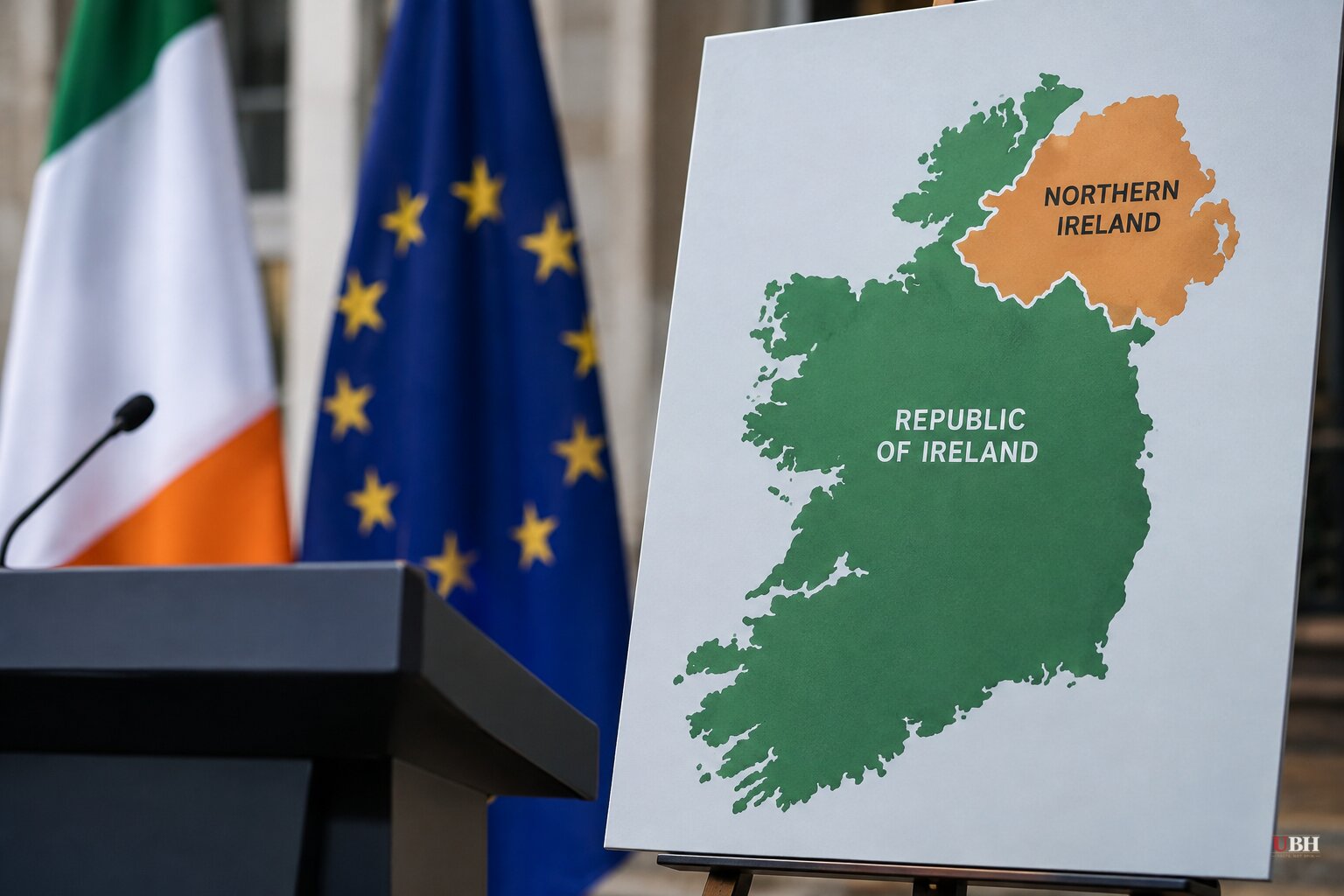
President Trump waded into one of the most sensitive fault lines in British and Irish politics on Saturday, telling reporters in Dublin he would "love to see" Northern Ireland reunified with the Republic of Ireland.
"Well, I don't want to cause any problems, but I will tell you I'd love to see it unified," Trump said, standing beside Irish Taoiseach Micheál Martin. "I think it would be a great feather in everybody's cap if that happened. It's going to happen eventually."
Trump went further, describing Martin as "the right man over here to get it moving" and suggesting the two were actively discussing the idea. "I think it would be a fantastic thing," he added. "Now the UK will have something to say about it, obviously. But I think it would be a great thing. I mean, how can it be bad?"
A Break From Official US Policy
Washington's longstanding position on Irish reunification is one of neutrality. The 1998 Good Friday Agreement brought a fragile peace to Northern Ireland after three decades of violent conflict over Irish sovereignty.
Trump's remarks broke from that neutral posture in public, on camera, sitting next to the Irish head of government. He did add a caveat, saying he didn't "want to cause any problems."
Unionists and Conservatives Push Back
The reaction across the UK was swift. Conservative Party leader Kemi Badenoch posted on X that Trump was "shooting from the hip as usual," calling his comments "deeply unhelpful" and warning they create "unnecessary tension."
"Northern Ireland is part of the United Kingdom," Badenoch wrote, adding that with separatist parties governing Scotland, Wales and Northern Ireland, Britain needs a government that will "defend the Union clearly and confidently."
Traditional Unionist Voice leader Jim Allister was blunter still. "Northern Ireland not a pawn in Trump's fall out with the UK," he wrote on X. "Our constitutional future does not depend on him or any other foreign dignitary."
Ulster Unionist Party leader Jon Burrows said the only people whose decision counts are the people of Northern Ireland. "When all is said and done, Northern Ireland's future will be decided by the people of Northern Ireland," Burrows posted. "I am confident that we are safer, more secure and more prosperous within the United Kingdom, and that is where we will remain."
UK Prime Minister Andy Burnham said earlier in the week that there was no clear consensus on a reunification poll, and did not comment directly on Trump's remarks. A spokesman for the PM referred the media back to that earlier statement.
Sinn Féin Claims Vindication
On the other side of the debate, Sinn Féin leader Mary Lou McDonald embraced Trump's comments as momentum for her party's long-term goal. She said the "conversation on Irish unity has shifted." "We have secured peace, and as we approach the 30th anniversary of the Good Friday Agreement our national journey is now reunification, which is organised, planned and a peaceful transition," the BBC reported her saying.
Under the terms of the Good Friday Agreement, there will be no reunification until a majority of Northern Irish people want a poll held. If such a poll succeeded, Ireland would also vote. No such poll is currently scheduled, and Burnham's own comments this week indicated no consensus exists for one.
What's Actually at Stake
Trump explicitly said he didn't want to cause problems, framed it as a personal wish rather than a policy demand, and acknowledged "the UK will have something to say about it." A sitting president is allowed a personal opinion, and no formal change in US policy has been announced.
But the criticism from Badenoch and the unionist parties is grounded in something real. The Good Friday Agreement has held for nearly three decades in part because outside powers, including the United States, stayed neutral on the underlying sovereignty question. A US president publicly endorsing one outcome, even informally, hands ammunition to one side of a fragile political balance.
No formal reunification poll has been called. The White House did not immediately respond to a request for comment on Trump's remarks. Whether unionist leaders in Belfast see this as a one-off comment or the start of a real shift in American posture toward Northern Ireland's constitutional status remains an open question heading into the Good Friday Agreement's 30th anniversary.
Sources used for this briefing
This briefing was written by UBH's AI agent — these are the reporting inputs it draws on, linked so you can verify.


