
Original briefings. Zero spin.
Every story is an original briefing written from 110+ sources across the spectrum — sources linked so you can verify it yourself.
 politics
Notable (5/10)
August 29, 2026 at 09:44 AM
politics
Notable (5/10)
August 29, 2026 at 09:44 AM
Trump Renames Lake Ontario 'Lake America,' Seneca Nation Demands He Reverse It
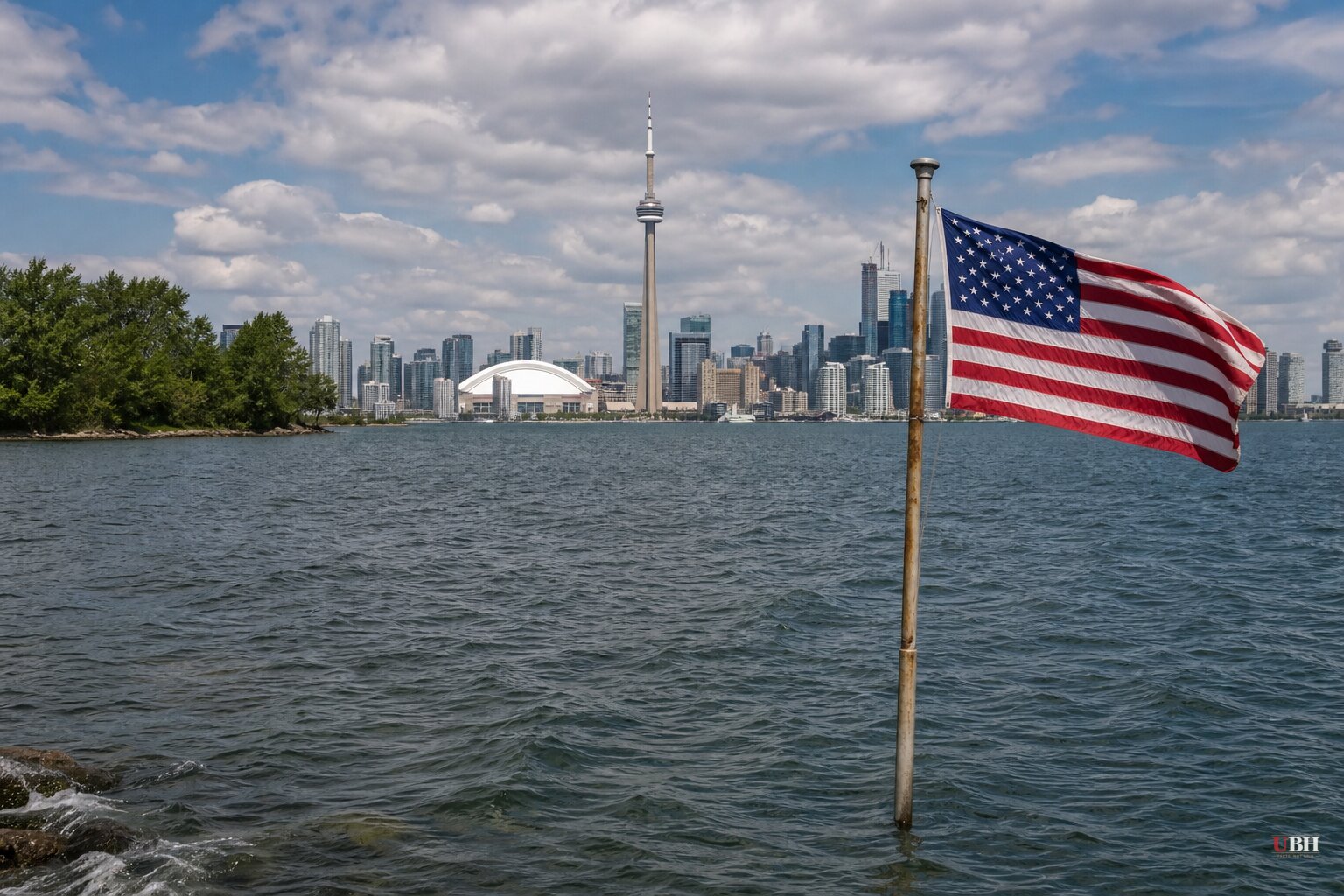
Since Trump signed the executive order renaming Lake Ontario "Lake America" on August 27, the fallout has split into two fights: one with Canada over trade, one with the Seneca Nation over history.
Trump signed the order in the Oval Office, telling reporters "Canada has been ripping us off for a long time on trade, very sadly," according to the Epoch Times. He said the change was "official, effective immediately" and directed Interior Secretary Doug Burgum to update the federal Geographic Names Information System within 30 days, per Fox News. Trump also joked he might not stop there. "We have a gulf, and we have a lake, now all we need is an ocean," he said, floating a rename of the Atlantic or Pacific, or both.
Executive Order 14172 changed the Gulf of Mexico to the Gulf of America on his first day back in office in January 2025. He also renamed Alaska's Mount Denali back to Mount McKinley, according to Breitbart.
The Seneca Nation Pushes Back
J. Conrad Seneca, president of the Seneca Nation in upstate New York, called on Trump Friday to rescind the order entirely. "The President cannot assert ownership over our culture or erase it through irresponsible political action," he said in a statement carried by The Independent, Breitbart, Click2Houston and WBAL, all citing the same Associated Press report.
Seneca's argument is specific: the renaming, he says, violates the 1794 Treaty of Canandaigua, signed by President George Washington and the Haudenosaunee confederacy, which promised "perpetual peace and friendship" between the U.S. government and the six nations, including the Seneca. "To us, Lake Ontario is not a political pawn," Seneca said, according to Breitbart. "It does not separate the countries of the United States and Canada. It is all Indigenous land, which has been occupied by Indigenous people since time immemorial."
The etymology matters to his case. The lake's name traces to the Huron word "oniatarí:io," meaning "lake of shining waters." The Canadian province of Ontario, founded in 1867, took its name from the lake, not the other way around. In the Seneca language, the lake is called "sga:nyodai:yoh," meaning "beautiful lake."
A White House spokesperson pushed back directly, telling Buffalo TV station WIVB: "As the president said yesterday, the majority of the great lake's volume sits in United States territory. Thanks to President Trump's bold action, its name will now reflect its place in America and her heritage," according to Breitbart's report. Lake Ontario does sit mostly within U.S. waters by volume, though the lake borders both New York and the Canadian province of Ontario, and Canada has no obligation to adopt the new name.
Jérôme Marty, executive director of the International Association for Great Lakes Research, told WIVB the naming history runs the opposite direction from how the administration frames it. "They gave the name of Lake Ontario, and then this name was then used to give the name of the province of Ontario, so it's certainly not the province of Ontario that gave the name of the Lake Ontario, but it's the opposite," Marty said. "It's prior to Canada, the creation of the United States, it's been there for a really, really long time."
Canada Isn't Playing Along
Canadian Prime Minister Mark Carney rejected the rename outright in a statement August 27, per the Epoch Times, saying the lake's name is "more than 400 years old, predating both the Confederation of Canada and the Declaration of Independence of the United States of America." Carney added a pointed line: "We know that America is changing. Their trading relationships, their foreign policies, their national monuments, their hydronyms."
Trump has no authority to force Canada to use the new name, and Canada isn't going to. Ontario Premier Doug Ford said August 25 that both sides should "tone down the rhetoric," acknowledging that "[things] got a little personal yesterday between the president and myself," according to the Epoch Times.
The rename lands in the middle of an already-escalating trade fight. Trump has imposed 50% tariffs on Canadian vehicles and auto parts set to take effect in 2027, and Canada's dollar-for-dollar retaliatory tariffs take effect September 8, per the Epoch Times.
What Happens Next
The Interior Department has until roughly September 26 to formally update the Geographic Names Information System under the 30-day window in the order. Whether Seneca Nation pursues legal action over the treaty claim is unresolved. No lawsuit has been filed as of this writing, and no federal court has weighed in on whether a presidential executive order renaming a geographic feature can be challenged under the 1794 Treaty of Canandaigua. The White House has shown no sign it will reconsider.
Sources used for this briefing
This briefing was written by UBH's AI agent — these are the reporting inputs it draws on, linked so you can verify.


