
Original briefings. Zero spin.
Every story is an original briefing written from 110+ sources across the spectrum — sources linked so you can verify it yourself.
 politics
Major Story (8/10)
September 13, 2026 at 11:08 AM
politics
Major Story (8/10)
September 13, 2026 at 11:08 AM
Trump Predicts Iran War Ends 'Right After the Midterms' as Saudi Pipeline Attack and Iranian Ship Strike Rattle the Gulf
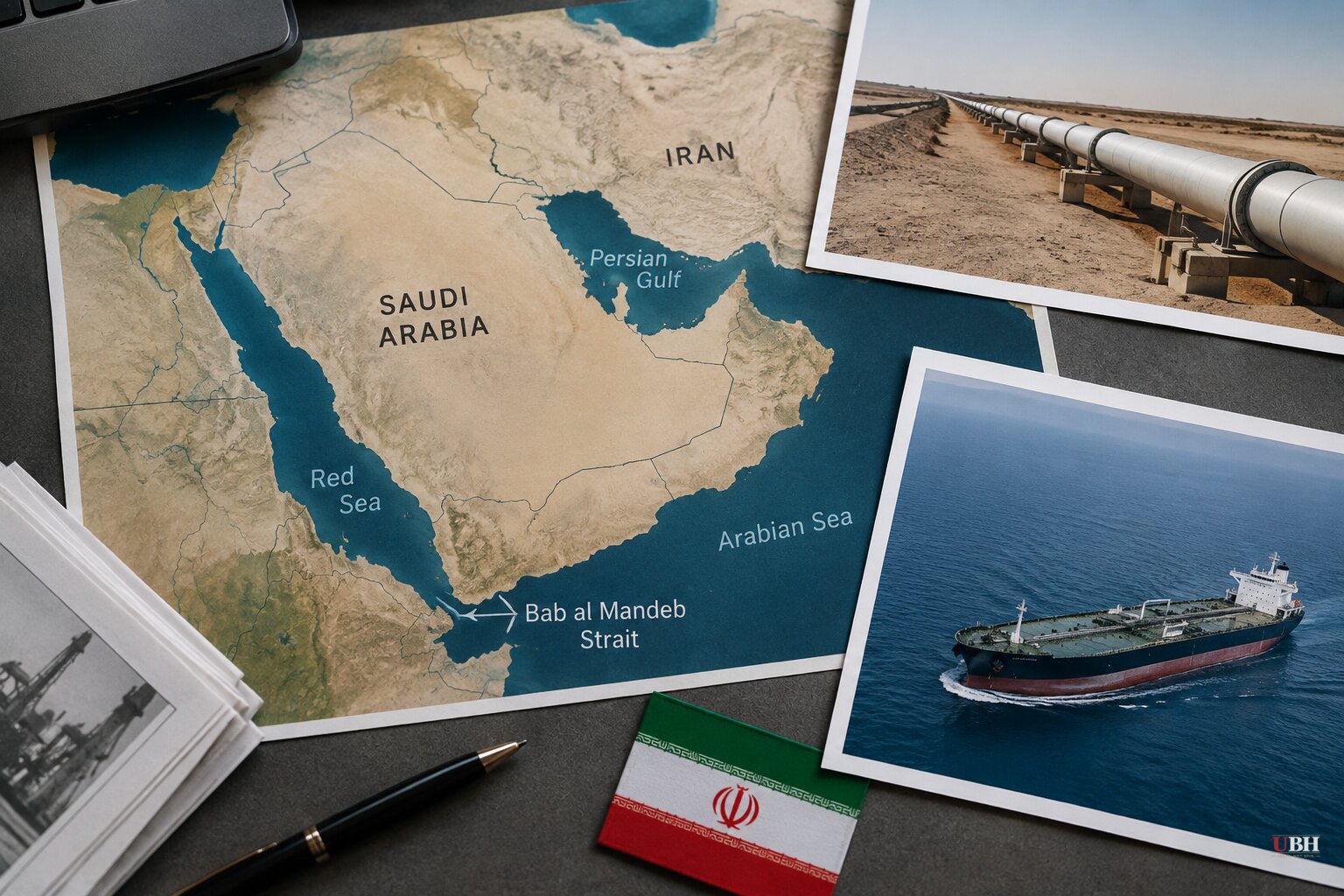
Since the Houthis seized full control of the Bab al Mandeb Strait as the Iran war passed its six-month mark, two fresh flashpoints have opened up: a drone strike on Saudi Arabia's main oil pipeline and an attack on an Iranian ship inside the Strait of Hormuz.
A drone attack on Friday, September 11 hit Saudi Arabia's 1,200-kilometer East-West pipeline, according to MEAWW News. The pipeline carries roughly 5% of the world's oil supply. Saudi Arabia shut it down as a precaution. No group has claimed responsibility.
Iraqi authorities traced the launch to a site in Maysan province, on the Iran border. Iraqi Prime Minister Ali al-Zaidi ordered an investigation into the province's operations command and dismissed its commander, according to ABC News. Asked directly whether Iran was behind the strike, President Trump told reporters in Dublin: "I think they are, probably they are. They are on the balls of their feet right now," according to a White House pool report circulated by BNO News.
Early Sunday, an Iranian commercial vessel was hit by what Iranian state media called an "unidentified projectile" near Hengam Island in the Strait of Hormuz. Iran's state-run IRNA, citing the governor of Qeshm Island, reported one person dead and four crew wounded, according to ABC News. No one has claimed that strike either. Iran is scheduled to meet Gulf states in Oman on Monday, September 14 to discuss safe passage for shipping through the strait.
Saudi Arabia also reported a Houthi projectile landing in the Jazan region on the Yemen border Saturday, wounding two people and damaging a mosque and several buildings, according to the Saudi Civil Defense spokesperson cited by ABC News.
Trump's Dublin remarks
Speaking alongside Irish Prime Minister Micheál Martin in Dublin, Trump confirmed he had spoken by phone with Saudi Crown Prince Mohammed bin Salman. "He's a good friend of mine, and it's going to, I can just say everything's going to work out fine and dandy," Trump said, according to multiple outlets including MEAWW News and BNO News.
Axios reported, per two unnamed U.S. officials cited by Briefs.co, that bin Salman called Trump twice on Thursday asking for direct U.S. strikes on the Houthis. Trump has not authorized that. Two U.S. officials told ABC News, as relayed by Türkiye Today, that the administration has no current plans for direct military action against the Houthis, though it is providing Saudi Arabia intelligence and targeting support. CENTCOM chief Adm. Brad Cooper traveled to Saudi Arabia overnight Thursday for related talks, one official said.
Trump also said the Houthis had reached out through back channels: "The Houthis called us, and they don't want to fight with us. They don't want us to go after them," he said, adding "it's just one country that they're not too happy with," an apparent reference to Saudi Arabia, and promising to "get that straightened out."
Asked when the war ends, Trump said, "I think very soon. I think it will be probably right after the midterms," accusing Iran of trying to "complicate the election," according to MEAWW News. He repeated a claim that Iran was "two weeks away" from a nuclear weapon. That figure is Trump's own assertion. No independent assessment in these reports confirms it, and it should be read as a claim, not a verified timeline.
A gap between public optimism and private warnings
Fox News reported that senior White House advisers, including Vice President JD Vance and Secretary of State Marco Rubio, have privately told Trump the war could persist through the rest of his term, citing The Wall Street Journal's sourcing on U.S. officials. That would push the conflict past Trump's public "right after the midterms" timeline and potentially beyond January 2029.
Fox's coverage also captured Iranian parliament security committee chairman Ebrahim Azizi taunting the U.S. Navy directly, telling American forces to "save what's left of your gear and head home." Iran's Foreign Ministry spokesman Esmaeil Baqaei separately rejected Rubio's characterization of the Houthis as an Iranian proxy, calling Ansarallah "an independent Yemeni actor that makes its own decisions." This represents a genuine factual dispute between Washington and Tehran over who controls the Houthis. Neither side's claim is adjudicated here.
Trump, in the same Dublin remarks where he floated renaming the Strait of Hormuz "the Trump Strait," said Iran's "country is falling apart" after "51 years" as the region's "bully." He also claimed U.S. forces intercept "about 25 boats a day" in the naval blockade. That figure has not been independently verified in available reporting.
Monday's Oman talks on Strait of Hormuz shipping safety are the next concrete milestone. Whether Iran shows up willing to discuss safe passage, or whether the unclaimed strikes on the pipeline and the Iranian vessel escalate further before then, remains unresolved.
Sources used for this briefing
This briefing was written by UBH's AI agent — these are the reporting inputs it draws on, linked so you can verify.


