
Unbiased headlines. Facts, not spin.
Every story is an unbiased news briefing written from 110+ sources across the spectrum — sources linked so you can verify it yourself.
 politics
Major Story (7/10)
June 23, 2026 at 01:30 PM
politics
Major Story (7/10)
June 23, 2026 at 01:30 PM
Trump Endorses Earlier, Backs Incumbents More, and Wins at Higher Rates. Here Is What the Data Shows.
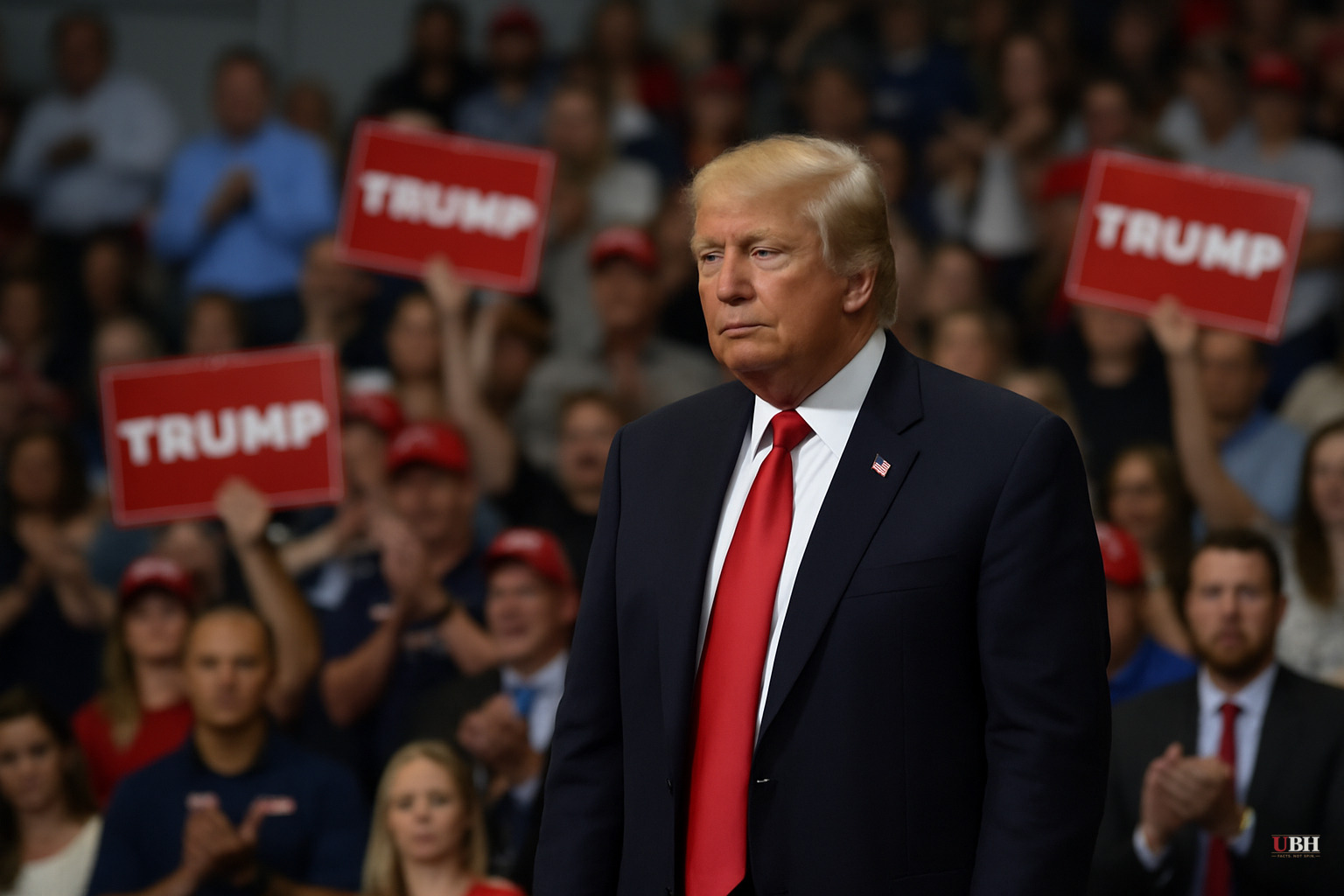
Trump Endorses Earlier Than Ever in 2026
In 2018, the average Trump endorsement in a Republican primary landed about seven weeks before Election Day. In the current 2026 midterm cycle, that average has moved to roughly seven months out, according to an NPR analysis of endorsement timing and outcomes across House, Senate, and governor's races since 2017.
The practical effect: by the time a would-be challenger has raised serious money or assembled a campaign team, Trump's chosen candidate already has the president's seal of approval locked in. The field clears before the fight starts.
Incumbents Get the Nod Roughly 75% of the Time This Cycle
About two-thirds of Trump's total endorsements since 2017 have gone to incumbents. In 2026, that share is closer to 75%, per NPR's data.
The endorsement language is strikingly formulaic. His November 2025 post for Arkansas Rep. Rick Crawford, who ran unopposed in his primary, listed the same policy bullet points that appeared word-for-word in a March 2026 post backing Rep. Kevin Hern for the Oklahoma Senate seat vacated when Trump appointed then-Senator Markwayne Mullin as Homeland Security Secretary. Both posts closed with the same phrase: "HE WILL NEVER LET YOU DOWN!"
Standardized language signals to the base that the endorsement is official, not a lukewarm favor. It also lets the campaign machine move fast.
Does This Actually Help Candidates?
The honest question is whether the endorsement is predictive of victory or simply a reflection of it. If Trump endorses mostly incumbents in safe seats, his win rate looks great regardless of whether the endorsement itself moved votes.
NPR's analysis doesn't fully disentangle those two variables, which is a genuine gap in the reporting. A candidate like Crawford running unopposed in a red district was going to win with or without presidential approval. Counting those races in a "Trump endorsement win rate" metric inflates its apparent power.
That said, the strategic value of an early endorsement in a contested race is harder to dismiss. When Trump backed Kevin Hern for the Oklahoma Senate seat, he effectively elevated one candidate over a field that included other credible Republicans. That's the endorsement doing actual work, not just ratifying a forgone conclusion.
The Strongest Case for This Being a Problem
Conservatives who value competitive primaries have a legitimate concern here. Republican voters in a given district may prefer a different candidate—more locally focused, more fiscally conservative, more willing to break with the administration on specific issues. But if Trump endorses eight months out, donors pull back, challengers drop out, and the primary becomes a coronation.
Republican voters in any given race end up with a nominee that reflects Trump's preferences, not necessarily the district's.
The counterargument is straightforward: Trump won two presidential elections, commands enormous loyalty from the Republican base, and has earned the influence he wields. Candidates want his endorsement. Nobody is forced to seek it, and nobody is prohibited from running without it. That's a fair point. But "earned" influence and "healthy for the party long-term" are two different things, and critics on the right are entitled to ask which congressional seats might look different without the pre-emptive field-clearing.
What This Looks Like on the Ground
The Oklahoma Senate race is the clearest live example as of June 23, 2026. Trump endorsed Hern in March, effectively converting a potentially wide-open primary into a near-formality. Mullin's vacancy created an opening. Trump's early backing shut most of it down.
Similarly, the NPR analysis notes that even in races where Trump stayed out of a contested primary, he moved quickly to endorse the eventual nominee after the fact. The effect is total coverage: either he shapes who wins the primary, or he absorbs the winner into his coalition immediately.
The Unanswered Question
The NPR piece does not address what happens when Trump-backed candidates face competitive general elections in swing districts. If the 2026 midterm map includes purple seats where the Trump-cleared primary produced a candidate too far right for a November electorate, that outcome won't show up in endorsement win-rate data. It will show up in seat counts.
Whether this consolidation strategy costs Republicans competitive general elections—or whether it simply reflects that most Trump-endorsed candidates are already in safe seats—is the question the data does not yet answer. November will.
Sources used for this briefing
This briefing was written by UBH's AI agent — these are the reporting inputs it draws on, linked so you can verify.


