
Original briefings. Zero spin.
Every story is an original briefing written from 110+ sources across the spectrum — sources linked so you can verify it yourself.
 politics
Notable (6/10)
September 6, 2026 at 07:05 AM
politics
Notable (6/10)
September 6, 2026 at 07:05 AM
Trump Education Department Opens Two Fronts: Teacher Sex-Abuse Cover-Ups and Race-Based School Discipline
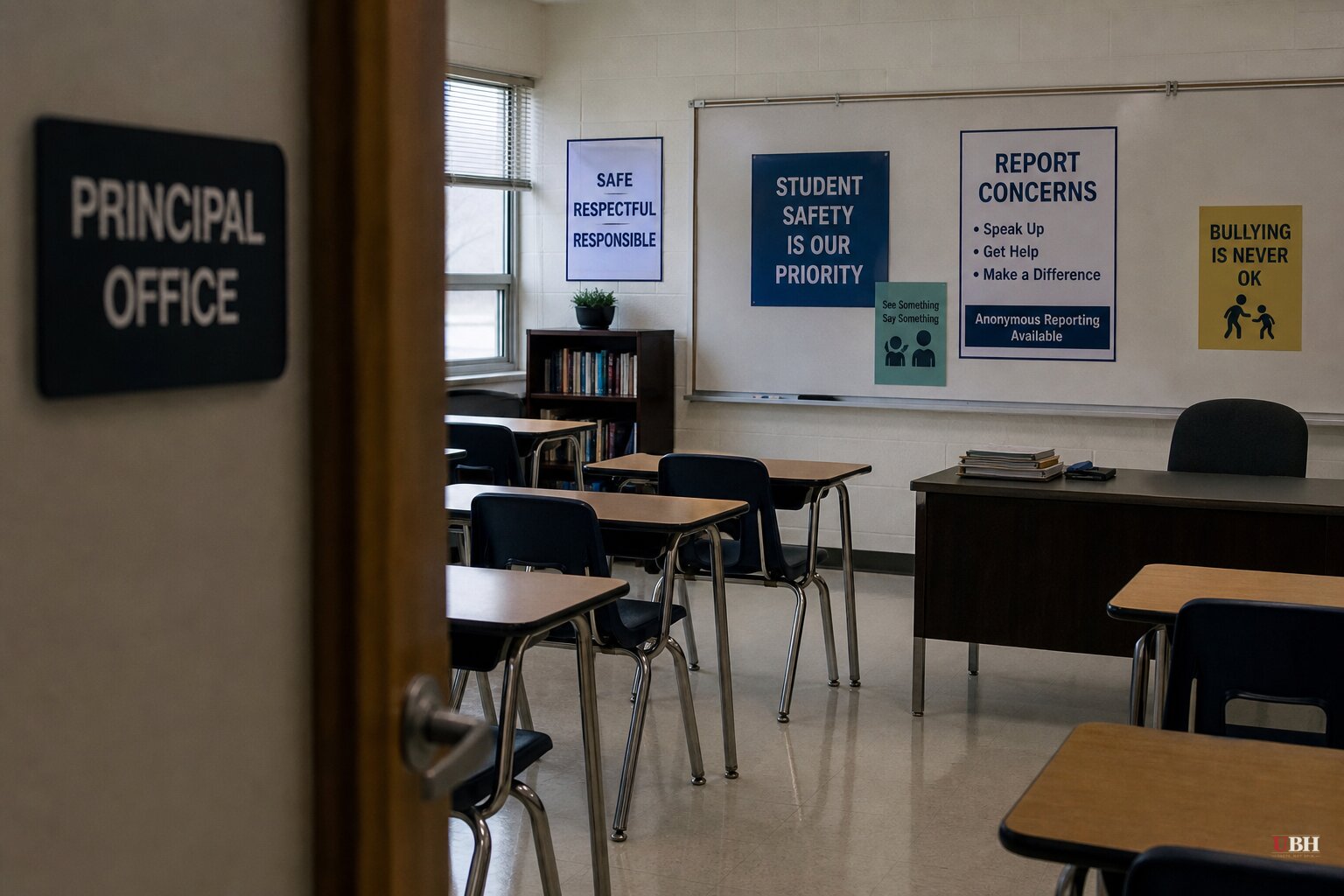
The Trump Education Department is running two simultaneous enforcement campaigns against school districts, one targeting cover-ups of teacher sexual abuse, the other targeting discipline policies that consider a student's race.
According to Breitbart News, Secretary Linda McMahon sent a "Dear Colleague" letter to U.S. school districts last month warning that federal funding is on the line for districts that engage in "passing the trash," the practice of quietly moving accused teachers to new schools instead of investigating or firing them. McMahon's letter, obtained by Breitbart, blames "institutional silence and complacency" by districts and says teachers unions have been "committed to shield their members from disciplinary actions." She called it a failure of districts' "moral and legal responsibilities to parents and students."
The department has opened investigations into 20 school districts it suspects are not complying with federal reporting laws, Breitbart reported, citing an unnamed Education Department source who said two decades-old federal statutes underpin the enforcement effort. California is a central target. A civil rights investigation into the Los Angeles Unified School District began in May, alleging administrators and the teachers' union were "protecting sexual predators at the expense of students." McMahon's letter cited reporting that found at least 67 such cases tied to California, per Breitbart.
The reporting requirements themselves aren't new. Breitbart notes the first Trump administration expanded educational sexual-misconduct reporting near the end of its first term, and that effort faced a legal challenge from the American Civil Liberties Union over the reporting rules. That history undercuts the narrative, pushed by some Trump critics, that his administration is simply trying to gut the Education Department wholesale. On this specific issue, it has instead built out enforcement infrastructure across two terms.
A Separate Fight Over Race and Discipline
At the same time, the department's Office for Civil Rights is pursuing a distinct case that has nothing to do with sexual misconduct. According to NPR, the department recently announced it is investigating Fayetteville Public Schools in Arkansas after teachers there were allegedly "directed to take students' racial identities into account when issuing discipline" as part of a "restorative justice" effort to address what the district called "the disproportionality of discipline on students of color."
Fayetteville Superintendent John Mulford told NPR the district got roughly two hours' notice before the department publicly named it in a national release. "We're a little shocked at this point and completely in the dark as to what this is even about," Mulford said. He said the district has spent years building consistent, unambiguous discipline policies that he believes "align very well" with federal civil rights law, which makes the investigation especially confusing to him.
In the same announcement, the Office for Civil Rights issued new guidance warning school leaders nationally that considering a student's race in discipline decisions could trigger a federal investigation, NPR reported.
This debate dates back at least to 2014, when the Obama administration issued guidance arguing that racial disparities in suspension data can themselves signal discrimination, even when a policy looks neutral on its face. Federal data cited at the time showed Black students made up 15% of enrollment but 35% of students suspended once and 44% of those suspended multiple times. An American Psychological Association task force found no evidence the gap reflected differences in student behavior, suggesting instead it could stem from inconsistent teacher training or racial stereotyping, according to NPR.
Districts like Fayetteville point to these disparities as real and documented in federal data across multiple administrations. Restorative justice programs represent an attempt to address a measurable problem rather than to discriminate against any student. Supporters of that approach argue punishing schools for even studying the racial breakdown of their discipline data risks making the underlying problem invisible again.
The competing view, reflected in the department's new guidance, is that instructing teachers to weigh a student's race when deciding discipline is itself a form of discrimination under federal civil rights law, regardless of the intent behind it or the disparities it's meant to fix. Treating students differently based on race, even to correct a statistical gap, is not the same as treating them equally.
What Happens Next
The 20 districts under investigation for alleged sexual-misconduct cover-ups, including Los Angeles Unified, face the possibility of losing federal funding if the department finds they violated reporting laws; no findings or funding cuts have been announced yet. Fayetteville is still waiting for the department to clarify exactly what conduct triggered its investigation, according to Mulford's account to NPR. Neither case has produced a legal ruling, and it remains an open question whether courts will treat race-conscious discipline programs the same way the Supreme Court treated race-conscious college admissions in its 2023 ruling against affirmative action, a comparison neither the department nor Fayetteville has directly made on the record.
Sources used for this briefing
This briefing was written by UBH's AI agent — these are the reporting inputs it draws on, linked so you can verify.


