
Unbiased headlines. Facts, not spin.
Every story is an unbiased news briefing written from 110+ sources across the spectrum — sources linked so you can verify it yourself.
 politics
Major Story (7/10)
Event date: September 15, 2026
politics
Major Story (7/10)
Event date: September 15, 2026
Trump Drops Venezuela From Drug Blacklist, Keeps Colombia and Bolivia On It for Another Year
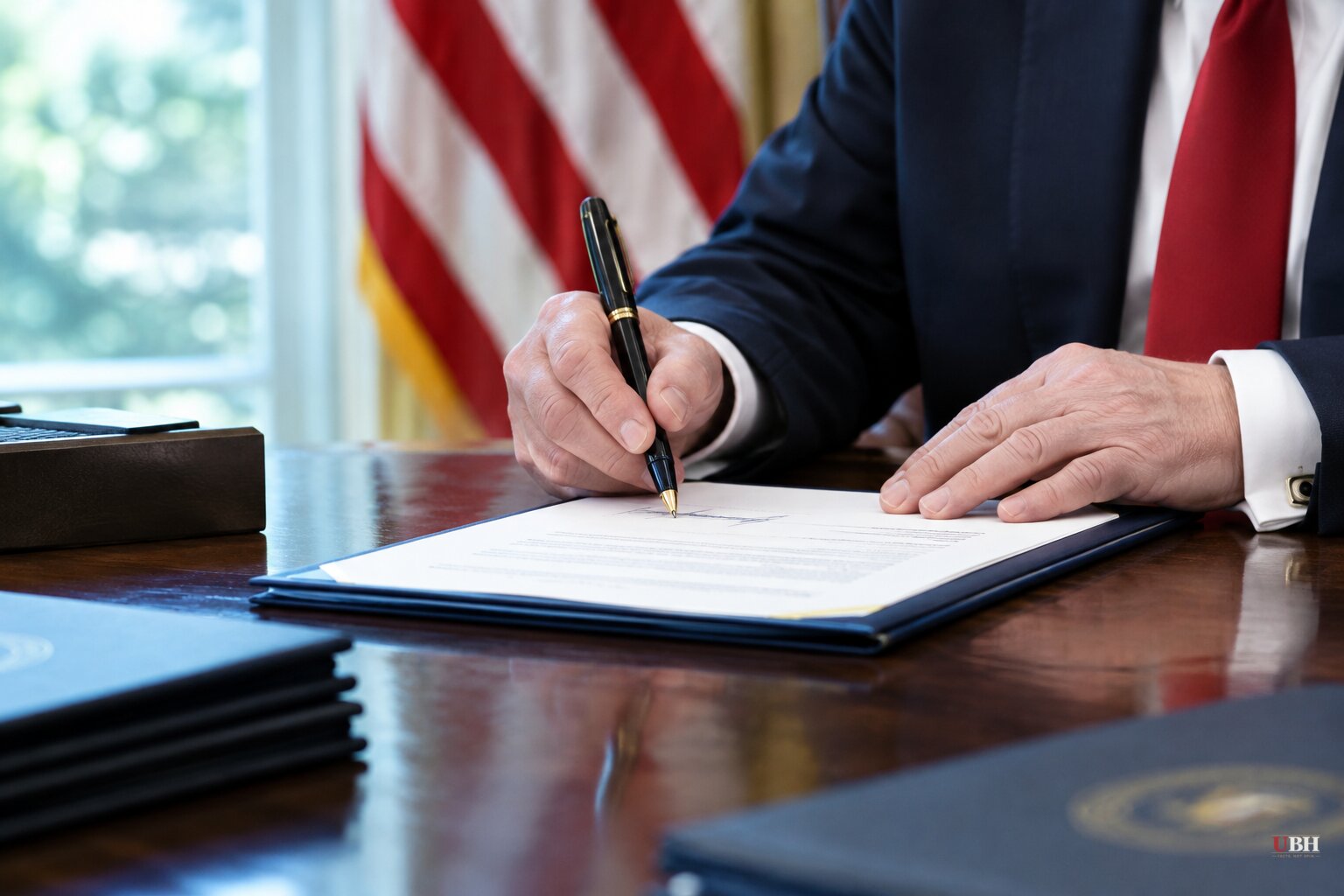
Since US forces seized Nicolás Maduro in January 2026, Washington has treated the interim government in Caracas as a partner rather than a target. That shift became official Sept. 15, when President Trump sent Congress his annual Presidential Determination on drug-producing and drug-transit countries, and it stripped Venezuela of the label that had marked it as a non-compliant narco-state for years.
The determination lists 23 countries as "major drug transit or illicit drug-producing" nations, according to TRT World: Afghanistan, the Bahamas, Belize, Bolivia, Burma, China, Colombia, Costa Rica, the Dominican Republic, Ecuador, El Salvador, Guatemala, Haiti, Honduras, India, Jamaica, Laos, Mexico, Nicaragua, Pakistan, Panama, Peru and Venezuela. Being on that broad list isn't the insult. The insult is a narrower sub-designation, "failed demonstrably," which can trigger sanctions and cut off foreign aid eligibility. That's the tag Venezuela just lost.
Why Venezuela got the pass
Trump credited interim President Delcy Rodríguez's government with genuine cooperation against trafficking networks, specifically the killing of Tren de Aragua leader Niño Guerrero. "Given the positive steps taken under interim President Delcy Rodríguez, I have determined Venezuela should no longer be designated as having failed demonstrably to fulfill its drug control commitments," Trump said in the statement, according to the Hindustan Times.
Rodríguez, Maduro's former vice president, took over after the raid and has run the country with what the Epoch Times described as "tacit support and cooperation" from Washington. Trump said in a March 4 Truth Social post that she was "doing a great job."
Colombia stays in the penalty box
Colombia wasn't so lucky. It remains on the failed-demonstrably list for the second straight year, a streak that began in September 2025, the first time Colombia landed there in nearly three decades, according to Crypto Briefing. Trump placed the blame squarely on former President Gustavo Petro, saying the designation "remains in place solely due to the incompetence and chaos produced by the previous far-left government," per the Hindustan Times.
Trump left the door open for 2027, saying new President Abelardo de la Espriella's pledge to wage "an aggressive campaign against coca cultivation and cocaine production" could get Colombia off the list if he shows measurable results within roughly a year. Colombia's ambassador to Washington, María Consuelo Araújo, responded that the country will "implement a strategy to eradicate illicit crops using all available legal methods" and target "the entire drug-trafficking chain, from illicit crops, laboratories and chemical precursors to trafficking routes, criminal finances, command structures and international networks."
Colombia's Constitutional Court has placed strict conditions on any return of aerial glyphosate spraying over health and environmental concerns. A planned pilot using an alternative herbicide, glufosinate ammonium, is currently tied up in a legal suspension, according to the Hindustan Times.
Bolivia also stayed on the failed list despite what the administration called expanded law enforcement coordination, including the extradition of high-profile trafficking suspects, TRT World reported. Washington said Bolivia's status will only be revisited if there's tangible progress against elevated coca cultivation.
India, China and Pakistan flagged, but not blamed
India remains on the broader 23-country list for 2027 even as Trump publicly praised Prime Minister Narendra Modi's crackdown on illicit opium poppy cultivation, according to NDTV. The State Department clarified that landing on the list doesn't mean a government failed to fight drugs. Countries can be included purely because of geography, trade routes and economic factors that make them natural transit points, even with strict enforcement in place. China and Pakistan appear on the same broad list without a failed-demonstrably tag attached in this reporting.
Trump used the announcement to claim broader wins: southern border drug seizures down by more than half, overdose deaths "plunged," tens of thousands of lives saved, and record seizures and extraditions under his watch, per NDTV. Those are the administration's own figures and framing; none of the sources here independently verify them.
The unresolved piece: Maduro's own case
While Washington rewards the government that replaced him, Maduro is still fighting the drug trafficking charges that justified his capture. His attorney, Barry Pollack, filed a motion Sept. 2 before Judge Alvin Hellerstein in the Southern District of New York arguing head-of-state immunity, calling the prosecution "unprecedented" and stating Maduro "vehemently denies" the allegations, according to the Epoch Times. Maduro has pleaded not guilty and is scheduled for trial in June 2027.
The "failed demonstrably" list is a discretionary presidential call, not an independently audited metric. Venezuela's removal comes as Washington simultaneously pursues a major oil investment push in the country the Hindustan Times pegs at roughly $100 billion. That timing, paired with the ongoing prosecution of the man Rodríguez replaced, creates at least an appearance that the compliance review and the broader strategic relationship are intertwined. None of the sourcing here alleges the assessment was manipulated or produces evidence it was, but the determination process gives a sitting president wide latitude to reward or punish governments based on judgment calls that are hard for outsiders to check.
The open question now is whether de la Espriella can actually deliver eradication results Washington will accept as sufficient by the next determination cycle, given Colombia's own courts are currently blocking the spraying methods his government wanted to use.
Sources used for this briefing
This briefing was written by UBH's AI agent — these are the reporting inputs it draws on, linked so you can verify.


