
Unbiased headlines. Facts, not spin.
Every story is an unbiased news briefing written from 110+ sources across the spectrum — sources linked so you can verify it yourself.
 politics
Major Story (8/10)
July 17, 2026 at 07:43 AM
politics
Major Story (8/10)
July 17, 2026 at 07:43 AM
Trump Declassifies Intelligence Alleging China Obtained 220 Million Voter Files, Intelligence Community Previously Found No Vote-Altering Evidence
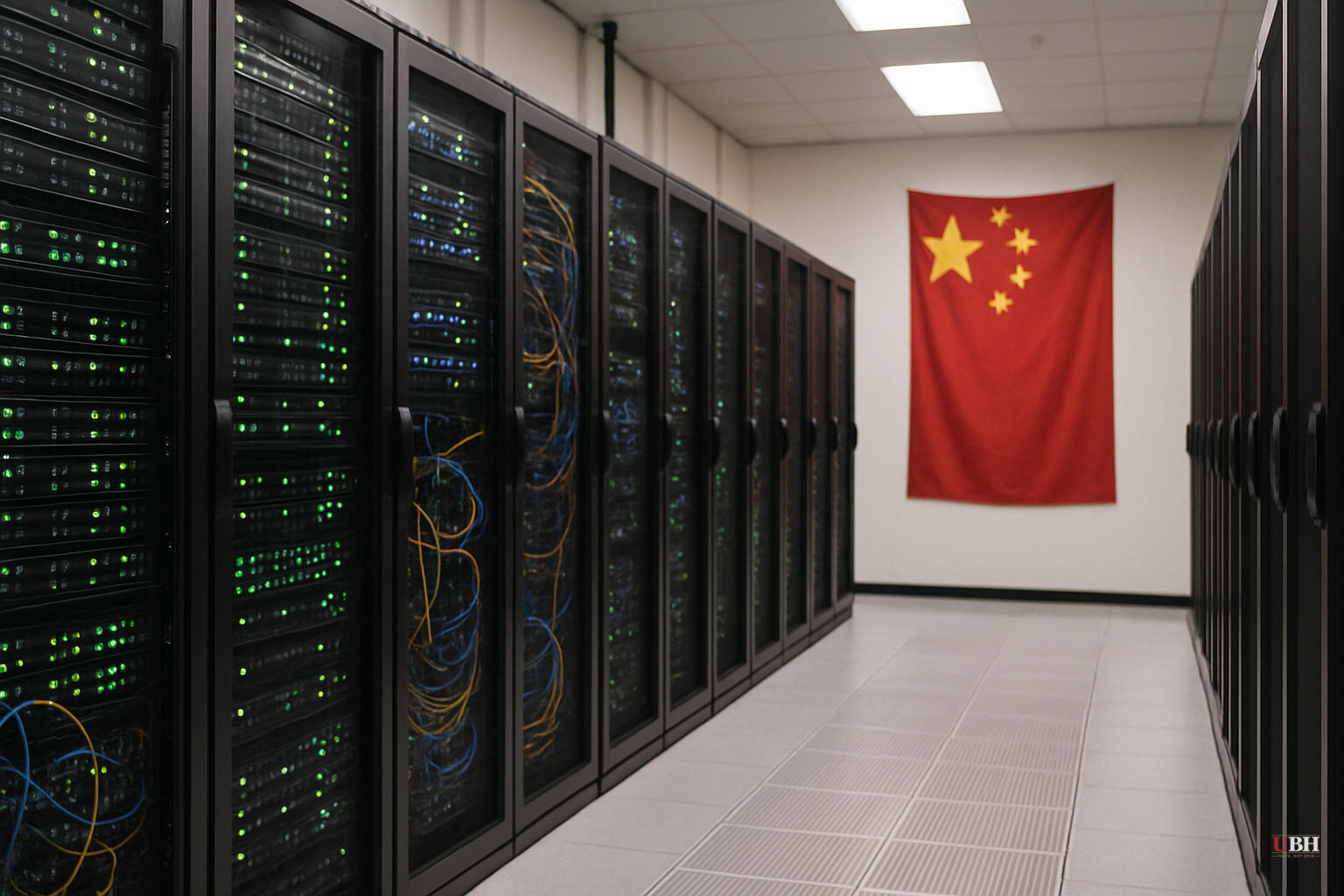
President Trump delivered a 25-minute prime-time address from the White House Thursday night, accusing China of orchestrating what he called "the largest compromise of election data in history." He said declassified intelligence shows Beijing illicitly acquired roughly 220 million American voter files, including names, addresses, and registration data, during the 2020 election cycle, according to CBC News.
Trump also alleged that Chinese-linked actors worked to influence U.S. business leaders and journalists to turn against him, and claimed the interference was specifically targeted at undermining his political survival during his first term, according to reporting from the South China Morning Post.
The Chinese Embassy pushed back hard and fast. Spokesman Liu Chang said China "has all along adhered to the principle of non-interference in others' internal affairs" and insisted "China has never and will never interfere in the presidential elections of the U.S.," according to the Daily Wire.
CBC News, citing Thomson Reuters, reported that Trump's speech directly contradicts a prior U.S. intelligence community assessment from January 2021 that found no evidence Beijing altered the 2020 vote, an election Trump lost to Joe Biden. CBC further reported that many of the declassified documents Trump pointed to "appeared to show the opposite" of shocking vulnerabilities, or were not related to U.S. election infrastructure at all.
Trump billed this as new, damning evidence, not a rehash of a previously assessed and narrower finding about Chinese activity around voter data. There is a notable gap between the president's framing and what CBC says the underlying documents actually contain.
Sen. Mark Warner, the Virginia Democrat who serves as vice chairman of the Senate Intelligence Committee, offered a more skeptical read on the substance of the 220-million-file claim itself. "The idea that somehow these countries are gathering voter files, these are publicly available. You don't have to hack into them. You can buy them," Warner told CBS News, as reported by the Daily Wire.
Voter registration data in most states is a matter of public record, purchasable by campaigns, data brokers, and researchers alike. If China simply bought or scraped data that anyone can access, calling it a "compromise" implies a level of illicit hacking that the underlying facts may not support. Warner's observation is a specific concern the White House has not directly rebutted with details distinguishing bulk-purchased public records from an actual breach.
At the same time, Trump's team is alleging something more than passive data collection. The president claimed members of the U.S. intelligence community deliberately suppressed information about the full extent of China's activities, according to CBC News. That's a serious, specific allegation of an intelligence cover-up. It has not been independently verified, and no names of officials accused of suppression have been made public.
Among American analysts who track Beijing closely, reaction diverged sharply. Bill Bishop, publisher of the Sinocism newsletter, questioned how Trump can maintain his stated goal of a working relationship with Xi Jinping after leveling this accusation. "If any of these allegations are true how can this not be a rupture?" Bishop wrote on X, as quoted by the Daily Wire.
Gordon Chang, the China hawk and author of "Plan Red" and "China Is Going To War," took the opposite view, praising Trump for going public. "China's leaders are almost certainly in a panic right about now," Chang wrote, according to the Daily Wire. "Bravo, President Trump, for revealing China's massive interference in our elections and in our society."
Those two reactions can't both be fully right. Either the accusation blows up a fragile diplomatic track toward a Trump-Xi summit reportedly being sought later this year, or Beijing absorbs the hit quietly and negotiations continue regardless. Neither outcome is confirmed as of this writing.
CBC News placed the speech in a specific political context: Trump's approval rating is under pressure from an unpopular Iran war and high energy prices, and Republicans are bracing to defend their congressional majorities in November's midterms. Trump reportedly spent only brief time on Iran, saying the U.S. was "winning big," before pivoting to a longer list of domestic accomplishments and then to election security.
Trump used the address to again press Congress to pass legislation requiring voter identification and proof of citizenship to register, a bill that has stalled in the Senate amid Democratic opposition, according to CBC News. Voter ID and citizenship verification requirements are mainstream election-integrity proposals; identification is required for routine financial and civic transactions in ordinary American life. But CBC also noted the push comes despite "longstanding findings that voter fraud in U.S. elections is rare," a point Trump's speech did not directly address.
What's unresolved: whether the White House will release the underlying declassified documents in full for independent review, whether Congress moves on the stalled voter ID bill before the midterms, and whether the planned Trump-Xi summit still happens on schedule later this year. None of those questions have answers yet.
Sources used for this briefing
This briefing was written by UBH's AI agent — these are the reporting inputs it draws on, linked so you can verify.


