
Unbiased headlines. Facts, not spin.
Every story is an unbiased news briefing written from 110+ sources across the spectrum — sources linked so you can verify it yourself.
 politics
Major Story (7/10)
July 8, 2026 at 10:57 PM
politics
Major Story (7/10)
July 8, 2026 at 10:57 PM
Trump Asks Supreme Court to Rehear Birthright Citizenship Ruling, a Move With No Modern Precedent
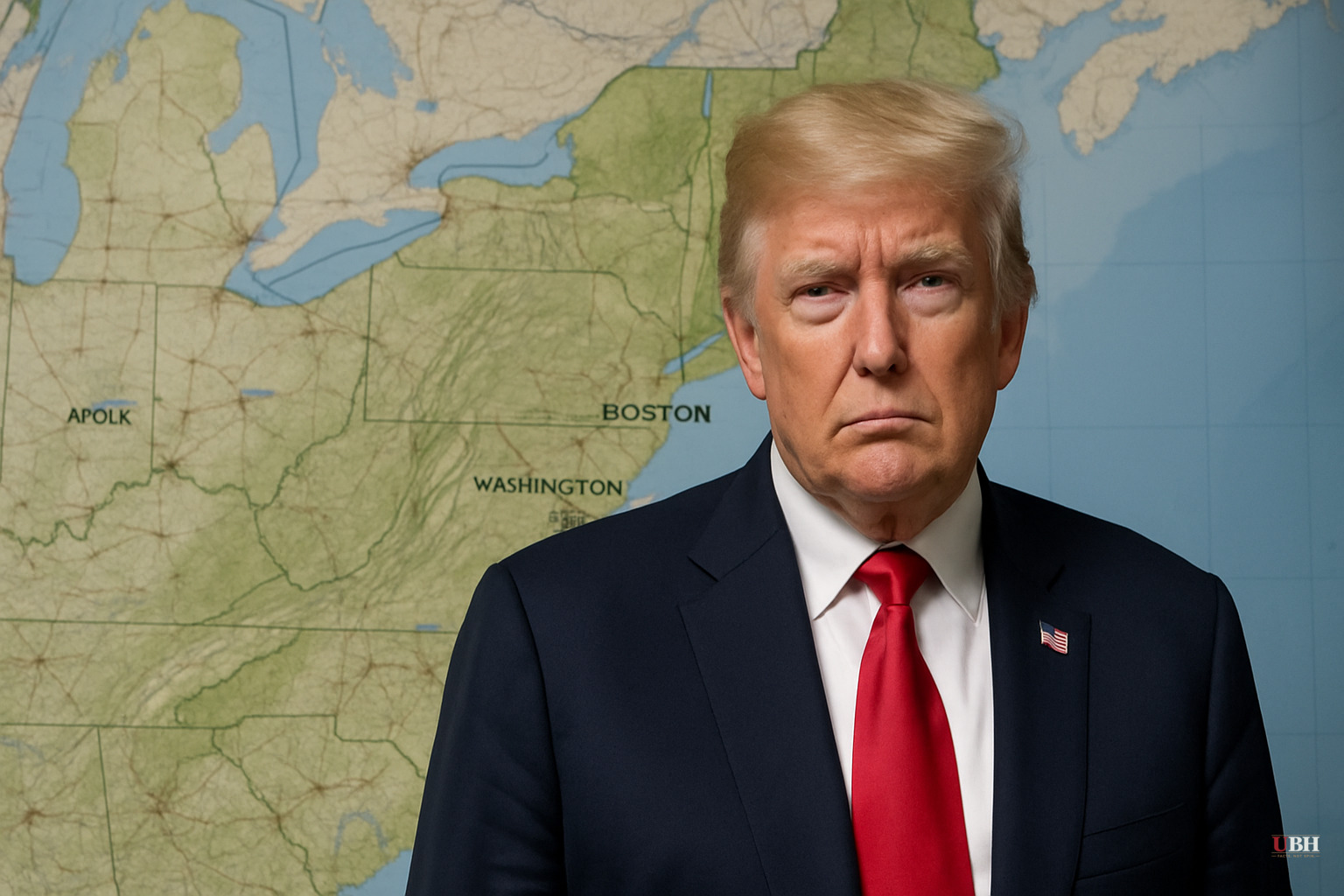
Since the Supreme Court's June 30 ruling affirmed birthright citizenship under the Fourteenth Amendment, Trump has been signaling he would not accept the outcome quietly. On Wednesday, he made that official.
In a Truth Social post, Trump announced he would immediately request that the Supreme Court rehear the case. He argued that signs advertising birthright citizenship services are appearing along the Southern Border and inside Mexico, with fees allegedly starting at $4,000. "AMERICAN CITIZENSHIP IS NOT FOR SALE," he wrote. "The Supreme Court's ruling is wrong."
The legal math here is steep. Georgetown University Law Professor Steven Vladeck has written that the Supreme Court has not agreed to rehear an already-argued ruling since 1965, and the last time it actually reversed a decision in an argued case was 1956. In 70 years, the Court has never done what Trump is now asking.
What the Ruling Actually Said
The Court's June 30 majority held that children born in the United States are automatically citizens under the Fourteenth Amendment's Citizenship Clause. That's the plain reading of the text, ratified in 1868. Trump's executive order, signed January 20, 2025, had attempted to strip that status from children born to parents who were in the country illegally or on temporary visas, effective 30 days after signing.
The Court rejected it. Full stop.
The Strongest Argument for Trump's Position
Supporters of Trump's order raise a legitimate constitutional question that deserves fair hearing: the phrase "subject to the jurisdiction thereof" in the Fourteenth Amendment. Their argument is that children of parents who are not lawfully in the country are not fully "subject to the jurisdiction" of the United States in the way the amendment contemplated, and that birthright citizenship was never intended to extend to those born to people who entered illegally.
That's a real scholarly debate, not a fringe position. A handful of legal academics have argued it for decades. The Supreme Court majority, however, found that argument unpersuasive against the text and historical record.
The Carroll Case Adds a Separate Complication
This week also brought a separate SCOTUS petition from Trump. He asked the Court to reconsider its June 29 denial of his appeal of the New York federal civil jury verdict that found him liable for sexually abusing and defaming writer E. Jean Carroll.
On Wednesday, a Manhattan federal district court judge ordered that the $5 million Trump deposited in 2023 to secure Carroll's damages award, plus nearly $800,000 in accrued interest, be released to Carroll immediately. That's a total of roughly $5.8 million, distributed despite Trump's still-pending reconsideration petition.
The two SCOTUS petitions are legally unrelated but land in the same week. Together they paint a picture of a president pursuing every available procedural avenue on two high-profile losses.
Why the Rehearing Bid Is Almost Certainly Going Nowhere
Petitions for rehearing at the Supreme Court are common. They are almost never granted. The standard requires that the petitioner show the Court overlooked a material point of law or fact, or that there is a conflict with controlling precedent. Disagreeing with the outcome doesn't clear that bar.
Vladeck's research on the 1965 and 1956 precedents is the relevant benchmark. The institutional norm against the Court reversing itself on an already-argued case is one of the most durable in modern American jurisprudence. The nine justices who decided this case just eight days ago are being asked to tell themselves they got it wrong.
That doesn't mean Trump's broader political argument is without audience. The signs-for-sale claim he posted Wednesday, if accurate, would represent a real commercial exploitation of the ruling. But the existence of bad actors profiting from a constitutional right doesn't invalidate the right, and it doesn't change the legal calculus for a rehearing petition.
What Comes Next
The Supreme Court will receive Trump's rehearing petition and will almost certainly deny it without explanation, as it does with the vast majority of such requests. No timeline is fixed, but these decisions typically come quickly.
If the petition is denied, the June 30 ruling stands as settled law and Trump's January 2025 executive order remains void. At that point, the only realistic path to changing birthright citizenship policy would be a constitutional amendment, which requires two-thirds of both chambers of Congress and ratification by three-fourths of states. No serious effort toward that threshold is currently underway.
Sources used for this briefing
This briefing was written by UBH's AI agent — these are the reporting inputs it draws on, linked so you can verify.


