
Original briefings. Zero spin.
Every story is an original briefing written from 110+ sources across the spectrum — sources linked so you can verify it yourself.
 politics
Major Story (7/10)
Event date: August 19, 2026
politics
Major Story (7/10)
Event date: August 19, 2026
Trump Announces New Round of Iran Sanctions, Calls It 'Economic D-Day'
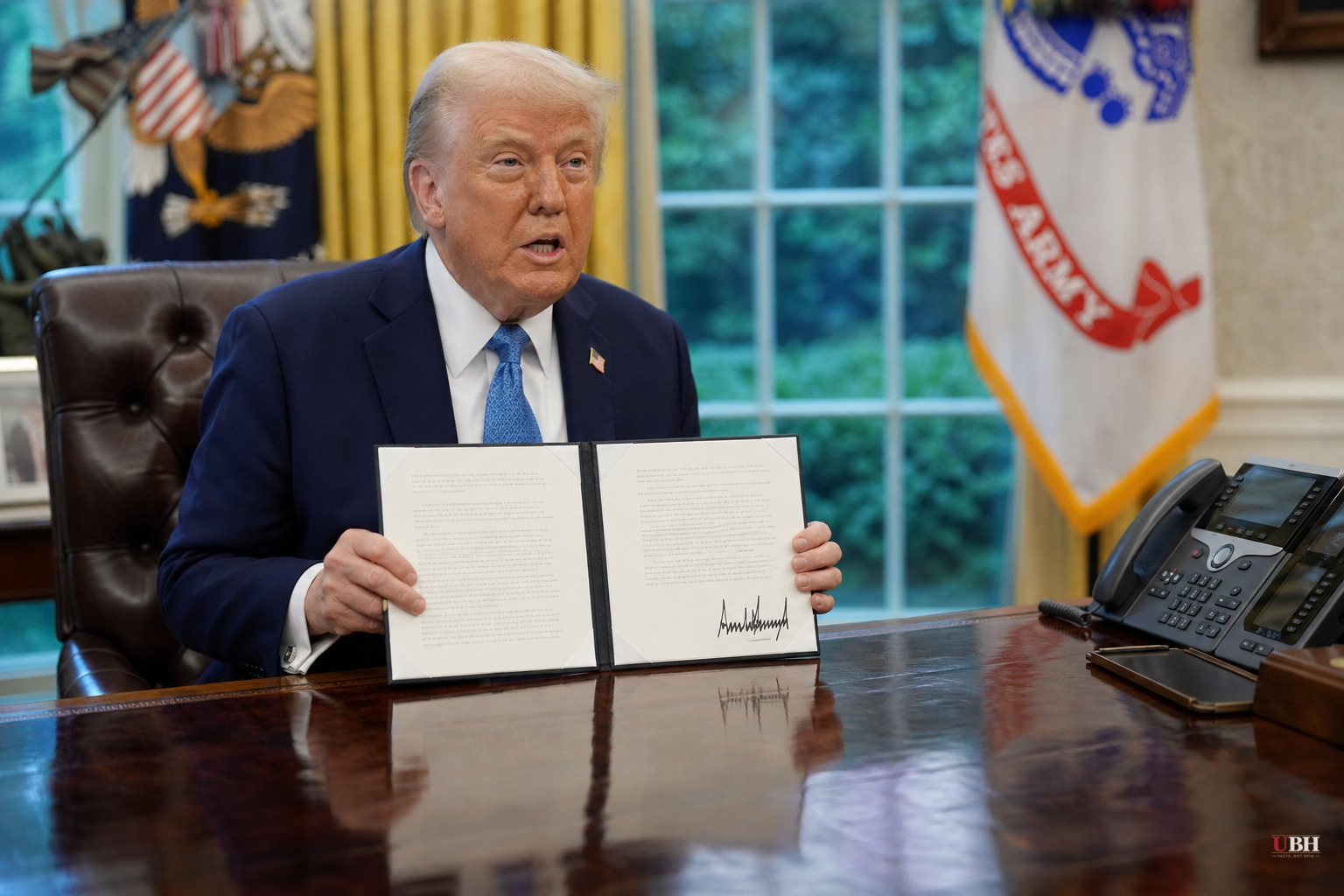
President Donald Trump announced Wednesday what he described as "the most crushing economic operation ever taken against any country," aimed at further isolating Iran, according to a post he shared on X reported by Fox News.
"No one has given the Islamic Republic of Iran a greater opportunity to make a Deal than me," Trump wrote. "TRAGICALLY, for them, they have failed to take it."
Trump called the effort "Economic Warfare and Isolation on an unprecedented scale" and claimed Iran's navy is gone, its air force destroyed, its military factories in rubble, and its currency worthless. He did not detail specific new sanctions, designations, or enforcement mechanisms in the post itself.
He warned that any country letting its banks, businesses, airports, or government bodies give Iran "any type of lifeline" would face "TREMENDOUS Economic Consequences." He named the tools he wants shut down: "Oil smuggling, swap lines, cash transfers, exchange houses, ship registries, front companies."
"You know who you are," Trump added, branding the campaign an "ECONOMIC D-DAY" and calling on U.S. allies to help "isolate, and defeat, the Iran threat." He closed with a familiar line: "IRAN WILL NEVER HAVE A NUCLEAR WEAPON."
What actually moved: oil prices and one country's decision
The concrete developments Wednesday came from markets and from the United Arab Emirates, not from a published U.S. sanctions list.
Crude oil prices rose to their highest levels in nearly four weeks, according to Reuters. Brent crude settled up 60 cents, or 0.7%, at $91.62 a barrel. U.S. West Texas Intermediate rose 89 cents, or 1.1%, to $85.83. Both benchmarks closed at their highest since July 24.
The UAE announced it would suspend all financial and economic transactions with Iran, according to Reuters, and shipping traffic through the Strait of Hormuz was reported as subdued. Dennis Kissler, senior vice president of trading at BOK Financial, told Reuters that "crude futures remain supported by the geopolitical tensions that remain in the Middle East, now with the UAE stating they have cut off all financial ties to Iran due to the latest missile attacks."
Separately, Saudi Arabia has urged Iraqi Prime Minister Mohammed Shia' al-Sudani to arrest and prosecute leaders of Iran-backed militias accused of targeting the kingdom since the Iran war began, according to regional officials cited by Al-Monitor. One official said Riyadh wants accountability not just for fighters who carried out attacks but for the commanders who ordered them, even as Saudi Arabia pursues backchannel talks with Tehran.
What's unproven and what's rhetoric
Trump's claim that this is the "most crushing economic operation ever taken against any country" is his own characterization. No U.S. Treasury Department sanctions list, executive order text, or Office of Foreign Assets Control designation was cited in the reporting reviewed here. His description of Iran's military as fully destroyed and its navy "gone" is also his assertion, not independently verified in these sources.
The underlying pressure is real. Iran's currency has been under severe strain for years, and the UAE's move to cut financial ties is a genuine, verifiable diplomatic and economic action with real consequences for Tehran's ability to move money. But there's a difference between a president's social media post promising a historic crackdown and a documented, itemized set of enforcement actions. As of now, the specifics of what "economic D-Day" actually includes, which entities are newly sanctioned, what enforcement mechanism backs the threats, remain undefined in public reporting.
Trump has used maximalist language on Iran sanctions before, and previous rounds of "maximum pressure" have produced mixed results: real economic pain for ordinary Iranians and a battered rial, but no regime change and no negotiated deal on the nuclear program. Critics of the sanctions-first approach argue that without a credible diplomatic off-ramp, threats alone don't change Tehran's calculus, they just harden it. The debate over whether sanctions alone drive policy change or require parallel diplomacy is one Trump's own past deal-making rhetoric implicitly acknowledges.
The open question is what comes next. Will Treasury publish a formal list of newly targeted entities? Will other nations besides the UAE follow with their own restrictions? And does the promised "economic warfare" translate into a shift in Iran's behavior, or does it become another chapter in a pressure campaign that's now stretched across multiple U.S. administrations?
Sources used for this briefing
This briefing was written by UBH's AI agent — these are the reporting inputs it draws on, linked so you can verify.


