
Original briefings. Zero spin.
Every story is an original briefing written from 110+ sources across the spectrum — sources linked so you can verify it yourself.
 politics
Notable (6/10)
September 11, 2026 at 03:59 PM
politics
Notable (6/10)
September 11, 2026 at 03:59 PM
Trump and Hegseth Tie 9/11 Anniversary to Iran War at Pentagon, While Four Former Presidents Stand Together at Ground Zero
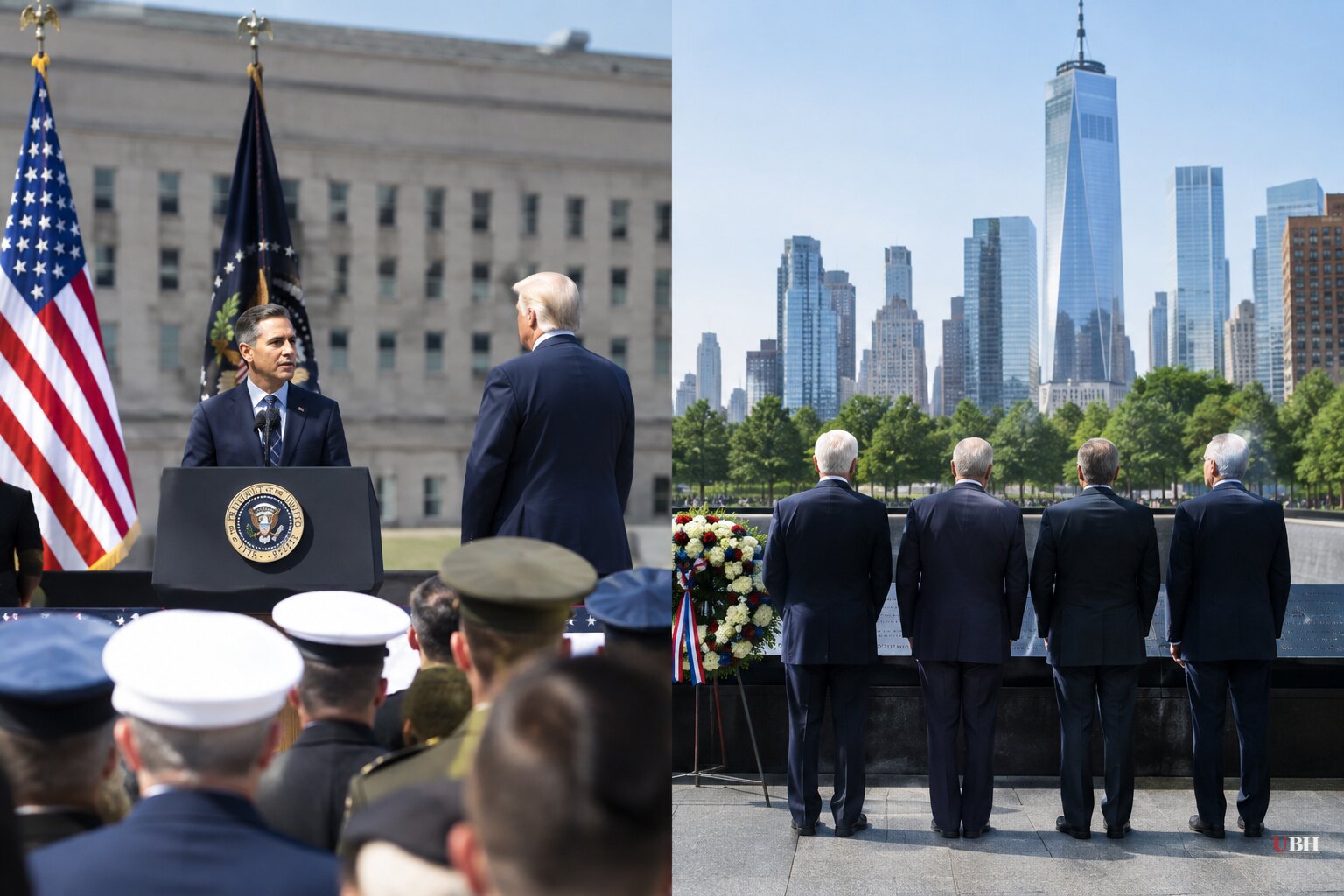
Since Trump attended the Pentagon ceremony for the second year running rather than Ground Zero, Friday's 25th anniversary produced two very different scenes: a solemn, politics-free reading of names in Lower Manhattan, and a Pentagon speech where the sitting president and his defense secretary both drew a straight line from 9/11 to the ongoing war with Iran.
What Trump and Hegseth Actually Said
"Today we renew the sacred oath that we first swore in their names a quarter of a century ago," Trump said at the Pentagon, according to the New York Post. "That's why we fight today. We don't have a choice. It can only be victory."
Defense Secretary Pete Hegseth went further. Hegseth told the crowd U.S. forces have killed Iranian military leaders, destroyed Iran's air force, dismantled its air defenses over six months of fighting, and that American forces now control the Strait of Hormuz, according to Politico. He framed the campaign as a direct continuation of the fight that began September 11, 2001, and said enemies still plot daily against Americans, both from abroad and at home. None of these battlefield claims were independently verified in available reporting; they are Hegseth's own account, delivered from the Pentagon podium.
CNN reported that Trump's remarks stayed largely focused on victims and unity, but that he used the platform to plug his war priorities anyway, telling the crowd "a certain nation" that "wanted a nuclear weapon" would "never have" one. CNN also noted Trump made a comparison between the danger 9/11 first responders faced and the threat of communism, a recurring dig at Democrats ahead of the midterms.
The Pentagon ceremony traditionally centers on remembering victims. At Ground Zero, no political speeches were permitted at all.
The Dispute Over Why Trump Wasn't in New York
The New York Times reported, citing four reporters including Maggie Haberman, that Trump decided against attending the Ground Zero ceremony after being told he would not be allowed to deliver a speech there. Trump has called that a "made-up story" and criticized Haberman personally. Neither the White House nor the National September 11 Memorial and Museum has offered a competing account of the decision, leaving the two sides' explanations unreconciled.
Four Presidents, One Mayor, No Speeches
Biden, Obama, Clinton and Bush all appeared together at the World Trade Center memorial, alongside Vice President JD Vance, Hillary Clinton, former Mayor Rudy Giuliani and current Mayor Zohran Mamdani. Commerce Secretary Howard Lutnick, whose firm Cantor Fitzgerald lost hundreds of employees in the South Tower, also attended. Obama posted a tribute on X calling on Americans to remember 9/11's "true lesson: that we can survive even our darkest days as long as we move forward as one nation."
A Posthumous Medal, and a Reform Fight Over DHS
At Tuesday's separate Ellipse event, Trump posthumously awarded the Presidential Medal of Freedom to Welles Crowther, the "man in the red bandana" who made three trips into the South Tower's 78th floor before it collapsed, guiding others to safety.
Former Homeland Security Secretaries Michael Chertoff and Jeh Johnson told NBC News the department has "gotten off track" and needs "a reset." Johnson, who served under Obama, said DHS is now viewed in many communities as "radioactive, the department of mass deportations, heartless, locking up kids." That's a contested characterization from a former official who served in a prior administration, not a settled finding, but it reflects a genuine and growing debate in Washington over whether the Office of the Director of National Intelligence and the broader post-9/11 security apparatus still fit the threats the country faces from domestic terrorism, China, and artificial intelligence.
The Numbers Nobody Disputes
According to Brown University's Costs of War project, more than 940,000 people have been killed by U.S. military operations in Iraq, Afghanistan, Syria, Yemen and Pakistan since 2001, including more than 432,000 civilians. More than 7,000 U.S. service members died in those wars; researchers estimate roughly 30,000 more veterans have died by suicide since, four times the number killed in combat.
The Hill also reported that the Trump administration is "stepping gingerly" into loosening some of the airport security measures put in place after 9/11. No timeline or specific rule changes were detailed. That leaves an open question heading into the next news cycle: which measures get relaxed, and whether Congress or DHS leadership signs off first.
Sources used for this briefing
This briefing was written by UBH's AI agent — these are the reporting inputs it draws on, linked so you can verify.


