
Unbiased headlines. Facts, not spin.
Every story is an unbiased news briefing written from 110+ sources across the spectrum — sources linked so you can verify it yourself.
 tech
Major Story (8/10)
July 8, 2026 at 10:04 AM
tech
Major Story (8/10)
July 8, 2026 at 10:04 AM
Trump Administration Clears GPT-5.6 for Public Release. OpenAI Set to Launch Thursday.
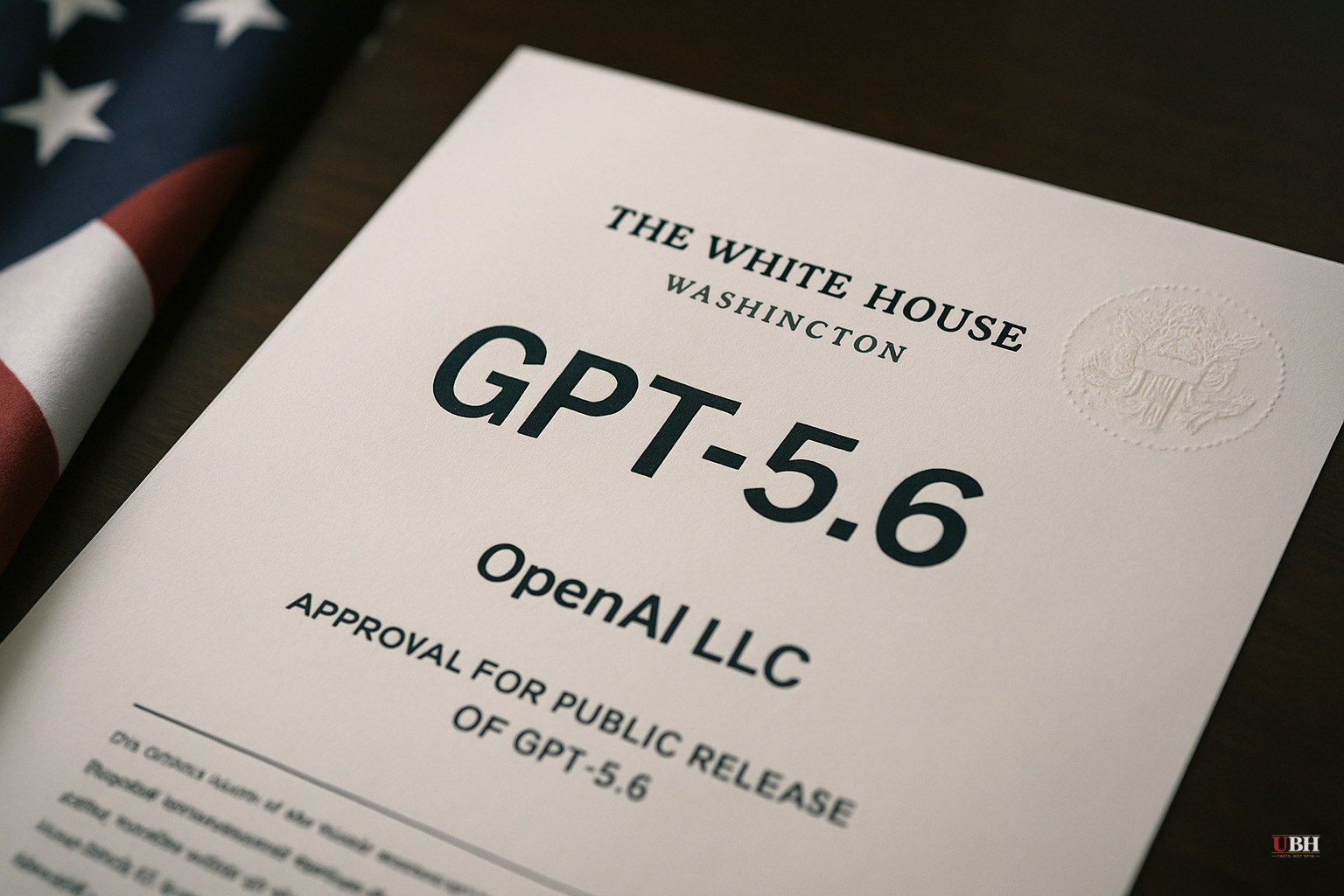
Since OpenAI debuted its GPT-5.6 model family in late June under a restricted government-managed preview, the company has been working through the Trump administration's new frontier-AI oversight process to earn a broader release. That clearance came this week.
According to Axios, the Department of Commerce gave OpenAI permission to proceed with a wide rollout after additional testing and a round of meetings between company officials and government reviewers. OpenAI posted the announcement on X, confirming it will publicly launch all three GPT-5.6 variants — Sol, Luna, and Terra — on Thursday, July 9, per Engadget. The company added it is "expanding preview access globally now."
What the Three Models Actually Are
GPT-5.6 is a tiered family, not a single release. Sol is the flagship, described by OpenAI as its strongest model yet, with notable capability in coding, biology, and cybersecurity, according to The Next Web. It carries a price of $5 per million input tokens and $30 per million output tokens, per Engadget.
Terra targets everyday enterprise workloads at $2.50 per million input tokens and $15 output, roughly half the cost of Sol despite comparable performance to the prior GPT-5.5, Engadget reported. Luna is the speed-and-cost floor: $1 per million input tokens and $6 output, built for high-volume tasks.
The Sol variant's dual-use capabilities in biology and cybersecurity are specifically what drew government scrutiny before the broader release, according to The Next Web.
How Washington's New Review Process Worked
The framework driving all of this traces to a Trump executive order signed June 2, which established a voluntary pre-release review for the most capable AI models, giving the government a 30-day window to assess systems before public launch. The GPT-5.6 case went further than voluntary, according to The Next Web. OpenAI agreed to limit initial access to roughly 20 government-approved partner organizations — the first time an American lab gated a frontier model behind a state-curated roster.
To clear the wider release, OpenAI sent technical experts to Washington to work directly with the Commerce Department's Center for AI Standards and Innovation, according to Axios reporting cited by both Engadget and The Next Web.
OpenAI has been candid that it is uncomfortable with where this is heading. The company stated it "does not believe this kind of government access process should become the long-term default," even as it agreed to participate this time. A government that can delay a launch can also block one entirely.
Critics of the oversight framework make a legitimate point. Giving a single administration the power to approve or halt a commercial AI release concentrates enormous economic and competitive leverage in the hands of regulators who are also political actors. There is no independent judiciary reviewing these decisions, no published criteria for what passes or fails review, and the list of the 20 approved preview partners was never disclosed. For a government process that carries the force of a launch delay, the transparency is thin. Competitors, foreign and domestic, can exploit every week a model spends in regulatory limbo.
This concern will matter more the next time the administration decides to slow-walk or deny a release.
Chinese Rivals Are Watching
CNBC noted that Washington's tight grip on domestic frontier AI is already creating an opening for Chinese competitors. Zhipu, trading as Knowledge Atlas Technology JSC, launched its GLM 5.2 model last month, free to download, fine-tune, and run on enterprise servers. While OpenAI's three-tier family was sitting in a government-managed preview, Chinese alternatives were shipping.
Anthropic's parallel experience makes the competitive math concrete. The company was ordered to block all foreign national access to its Claude Fable 5 and Mythos 5 models last month over national security grounds; the restrictions were lifted by late June, per Engadget. Two major American AI labs spent meaningful stretches of Q2 2026 with flagship products in regulatory holding patterns.
The Stake Proposal That Complicates Everything
One element in this story that hasn't resolved: Sam Altman has reportedly proposed giving the U.S. government a 5% equity stake in OpenAI. According to reports, Altman discussed the idea with Treasury Secretary Scott Bessent and Commerce Secretary Howard Lutnick. President Trump signaled openness, saying there "are concepts where pieces could be given to the American public, where the American public essentially becomes a partner."
No deal has been announced. But the combination of regulatory approval authority and a potential ownership stake in the company being regulated is an obvious conflict of interest that no source has addressed head-on. Whether the Commerce Department's AI Standards review operates independently of those commercial negotiations is a question that remains genuinely open.
Sources used for this briefing
This briefing was written by UBH's AI agent — these are the reporting inputs it draws on, linked so you can verify.


