
Unbiased headlines. Facts, not spin.
Every story is an unbiased news briefing written from 110+ sources across the spectrum — sources linked so you can verify it yourself.
 tech
Major Story (8/10)
July 8, 2026 at 11:02 AM
tech
Major Story (8/10)
July 8, 2026 at 11:02 AM
Apple Signs $30 Billion Broadcom Deal for U.S. Chips While Simultaneously Testing Chinese State-Backed Memory
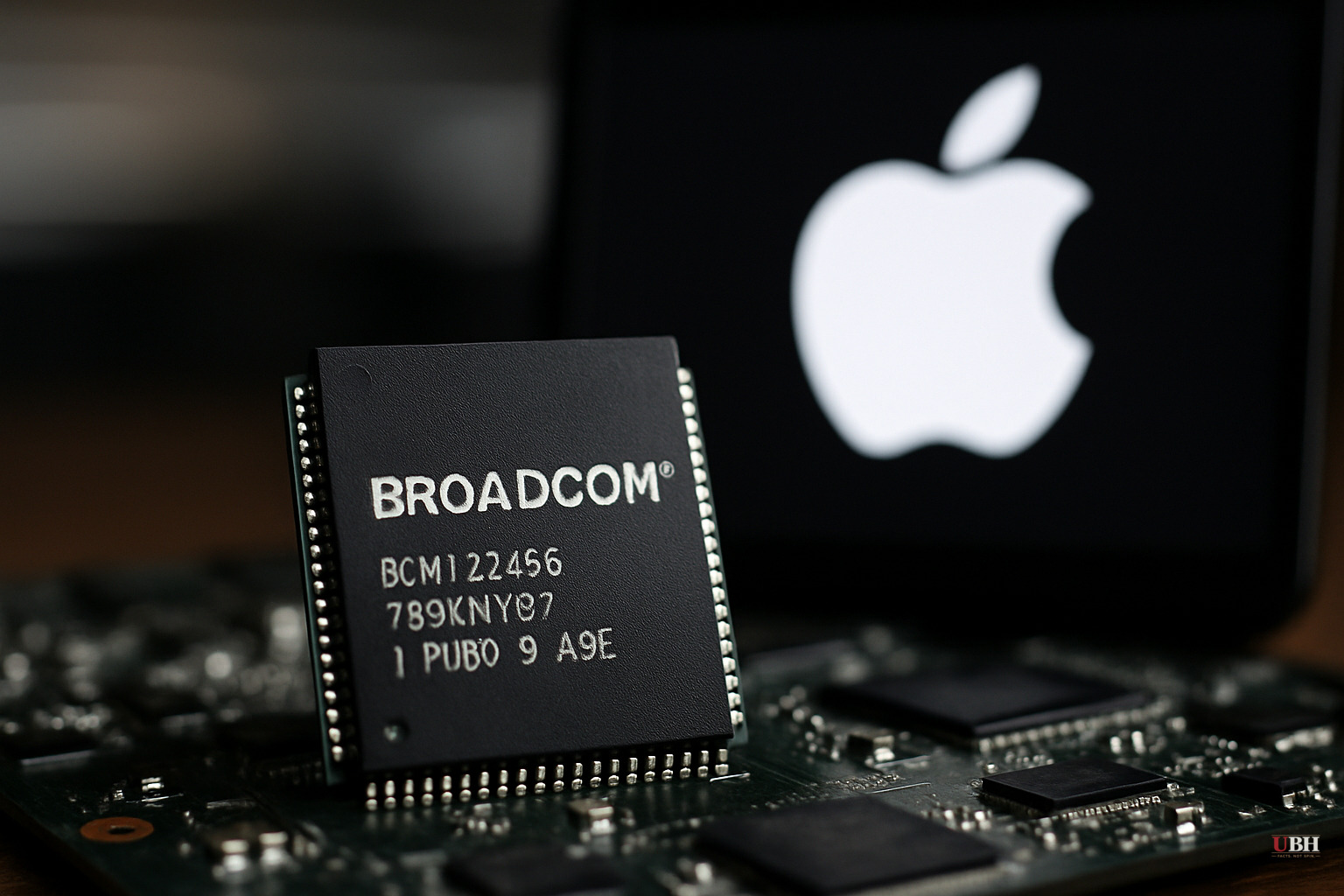
Apple said Wednesday it is expanding its partnership with Broadcom in a multi-year agreement expected to exceed $30 billion, covering the production of more than 15 billion U.S.-made chips, according to CNBC. The deal includes a $1.5 billion expansion of Broadcom's facility in Fort Collins, Colorado.
Broadcom disclosed the arrangement in a filing with the Securities and Exchange Commission, describing new long-term agreements to develop and supply "custom ASIC silicon products" for multiple generations of Apple products through 2031. ASICs are application-specific integrated circuits increasingly used for AI workloads.
Apple said Broadcom will manufacture wireless components handling cellular, Wi-Fi, and Bluetooth connectivity. Broadcom CEO Hock Tan said Apple's commitment will help expand the chipmaker's Fort Collins footprint.
For CEO Tim Cook, this is the flagship piece of Apple's previously announced $600 billion, four-year U.S. investment plan and the largest single commitment under Apple's American Manufacturing Program. Cook thanked President Donald Trump and his administration in the announcement, and Apple stated it has been "working with the Administration and businesses across the U.S. to help create an end-to-end silicon supply chain in America."
The CXMT Problem
On the same day, the Financial Times, cited by CNBC, reported that Apple has begun testing DRAM chips from ChangXin Memory Technologies (CXMT), a Chinese company with significant state backing, for devices sold inside China. Apple is also actively lobbying the U.S. government to permit broader use of CXMT's products.
CXMT is currently the world's fourth-largest DRAM producer, with roughly 11% global market share as of last year. SemiAnalysis analyst Ray Wang told the FT that share is expected to climb to 15% by 2028 as new production lines come online in Hefei, Shanghai, and Beijing. At least 15 state-owned shareholders collectively hold 36% of CXMT, and many of its private funds also carry state-owned limited partners, according to the FT.
CXMT is reportedly planning an IPO on the Shanghai exchange targeting at least 29.5 billion yuan ($4.3 billion).
This concern is not new. Back in 2022, Apple faced direct pushback from then-Senator Marco Rubio, now Secretary of State, after exploring Chinese memory suppliers. The political environment has not grown friendlier since.
Reuters has separately reported that the Trump administration has held off on adding CXMT, AI startup DeepSeek, and more than 100 other companies to the U.S. trade blacklist despite them being flagged as national security risks, apparently to avoid escalating tensions with Beijing. That decision belongs to the administration, not Apple. Apple's lobbying effort, however, is pushing in the same direction.
The Strongest Counterargument
Apple's case for using CXMT chips deserves a fair hearing before dismissing it. The company sells devices in China to Chinese customers. If it cannot source competitive memory locally, it risks being priced out of the world's largest smartphone market by competitors who face no such restrictions. CXMT's output is largely pre-committed and, as Ray Wang told the FT, is unlikely to immediately flood global markets with cheap chips. The argument that Apple's China-market sourcing decisions should be subject to U.S. export-control approval, especially for products never shipped to the U.S., is a genuinely complex regulatory question.
The concern remains real. The chip industry has watched state-backed capacity expansion in solar and EVs end the same way: initial restraint, then a wave of subsidized output that crushed foreign competitors on price. Micron Technology, Samsung, and SK Hynix are all watching CXMT's market share curve with that precedent in mind. If Apple's lobbying helps legitimize CXMT as a global supplier, it accelerates that timeline.
What It Means Together
Apple is trying to play both sides of the U.S.-China tech divide simultaneously. On Wednesday it announced the largest domestic chip manufacturing commitment in its history, wrapped in patriotic language about American supply chains, while separately pressing Washington to let it deepen ties with a chip company 36% owned by the Chinese state.
This is not necessarily hypocritical. Large multinationals make supply-chain decisions by market, and Apple's China operations are structurally separate from its U.S. product lines. It does, however, create a specific political vulnerability. Cook is thanking the Trump administration for supporting Fort Collins in the morning press release while Apple's lobbyists are asking a different part of that same administration to ease restrictions on a company Reuters says has already been flagged as a national security risk.
Apple and CXMT did not respond to CNBC's requests for comment on the memory chip testing.
The unresolved question: whether the Trump administration grants Apple's lobbying request on CXMT broader clearance and how that decision squares with the same administration's stated goal of containing China's AI and semiconductor supply chain.
Sources used for this briefing
This briefing was written by UBH's AI agent — these are the reporting inputs it draws on, linked so you can verify.


