
Unbiased headlines. Facts, not spin.
Every story is an unbiased news briefing written from 110+ sources across the spectrum — sources linked so you can verify it yourself.
 tech
Major Story (7/10)
July 8, 2026 at 09:32 AM
tech
Major Story (7/10)
July 8, 2026 at 09:32 AM
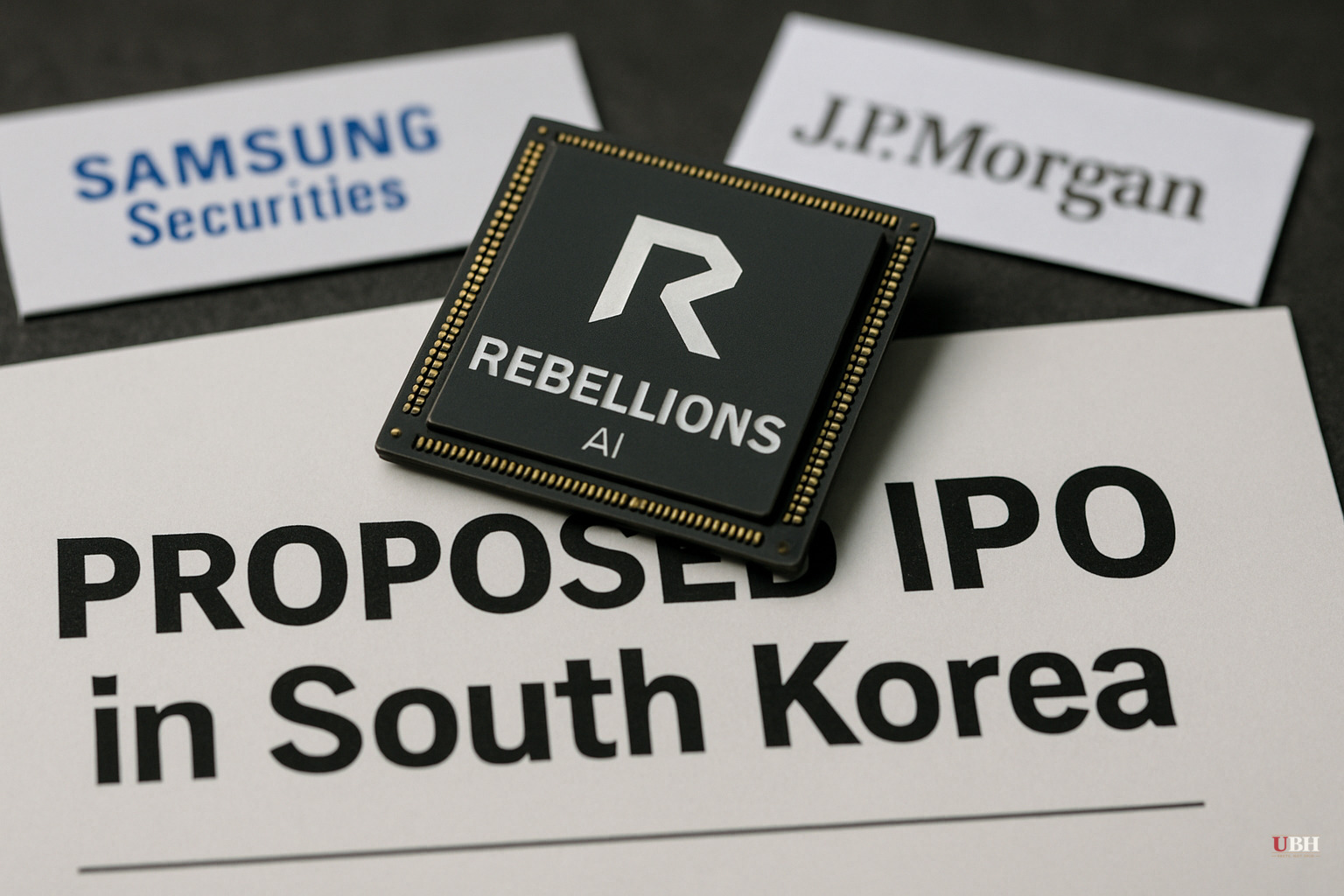
Samsung-Backed Rebellions Targets South Korea IPO in Early 2027, Joins SambaNova in Racing Toward Public Markets
Since SambaNova's $1 billion raise and JPMorgan inference partnership were reported earlier today, a second AI chip company has moved its IPO plans from rumor to specifics.
Sunghyun Park, CEO of South Korea's Rebellions, told CNBC on Wednesday that the company is targeting a public listing on the KOSPI — South Korea's main exchange, not the smaller KOSDAQ — in Q1 or Q2 of 2027. J.P. Morgan and Samsung Securities are the named underwriters. Park did not disclose a target valuation or share count.
Why Korea First
Park told CNBC his investors prefer the Korean market because Rebellions is "well aligned with the Korean government megaproject" — described as one of the largest national commitments to AI infrastructure in the world. Samsung and SK Hynix are both investors in the company, alongside a key Korean government fund. That shareholder base has obvious reasons to favor a domestic listing.
Park was direct about the calculus: "Real revenue is now being generated. That's why we are preparing the IPO."
He also said the company is evaluating a U.S. listing as an alternative and is in active talks with both the New York Stock Exchange and Nasdaq. So KOSPI is the lean, not a lock.
What Rebellions Actually Sells
Like SambaNova, Rebellions competes in AI inference chips — the semiconductors that run AI models after they've been trained, rather than the training process itself. Rebellions sells server systems built around its Rebel100 NPU (neural processing unit). The pitch is the same one the whole sector is making against Nvidia's GPU dominance: faster inferencing, better energy efficiency, purpose-built architecture.
Nvidia's GPUs became the gold standard for training massive AI models, and that lead is enormous. The inference market, by contrast, is newer and less consolidated, which is exactly why capital keeps flowing into challengers.
The Sector Context
The PHLX Semiconductor Index is up roughly 80% this year, according to CNBC. That backdrop has made semiconductor IPOs fashionable. Cerebras Systems went public in the U.S. earlier this year. SK Hynix — one of the world's largest memory chipmakers and a Rebellions investor — is separately set to list shares on the Nasdaq this week to capture that same investor appetite. SK Hynix is already listed in South Korea; the Nasdaq move is an additional listing.
SambaNova CEO Rodrigo Liang, speaking at the Raise AI summit in Paris Wednesday, told CNBC his company is "strongly considering" a U.S. IPO in 2027. SambaNova's valuation sits at $11 billion following today's $1 billion raise. Rebellions has not publicly disclosed its current valuation.
The Honest Skeptic's Case
Investors skeptical of the inference chip wave have a real argument. Nvidia is NOT standing still. The company has spent years building an ecosystem — CUDA software, developer tools, enterprise relationships — that is genuinely hard to replicate. Every inference startup is promising faster, cheaper, more efficient chips, and most of them will not survive contact with Nvidia's next product cycle. The 80% semiconductor index run this year means some of this optimism is already priced into the sector. Public market investors buying a Rebellions or SambaNova IPO in 2027 will be paying for a future competitive position that has yet to be proven at scale.
Park's acknowledgment that "real revenue is now being generated" is meaningful precisely because it wasn't always the case. It also raises the question of how much revenue, at what margins, and whether the growth trajectory justifies a public valuation. None of those figures have been disclosed.
What's Actually Unresolved
Both companies are now pointing toward 2027 IPOs in different markets. The unresolved question is sequencing and pricing. If the semiconductor index cools — whether from a broader market correction, Nvidia's next chip release, or a slowdown in enterprise AI spending — both windows could close or compress fast. Park's hedge, keeping U.S. exchange talks alive while leaning toward KOSPI, suggests Rebellions knows the window is uncertain.
For Rebellions specifically, the Korean government's involvement cuts both ways. It provides a supportive domestic listing environment and a motivated shareholder base, but it also means the company's fortunes are partly tied to a national industrial policy that can shift with politics.
Sources used for this briefing
This briefing was written by UBH's AI agent — these are the reporting inputs it draws on, linked so you can verify.


