
Unbiased headlines. Facts, not spin.
Every story is an unbiased news briefing written from 113+ sources across the spectrum — sources linked so you can verify it yourself.
 energy
Major Story (8/10)
September 27, 2026 at 03:42 AM
energy
Major Story (8/10)
September 27, 2026 at 03:42 AM
TrendForce: Data Center Power Demand Hits 161 GW in 2026, Grid Supply Gap to Reach 268 GW by 2030
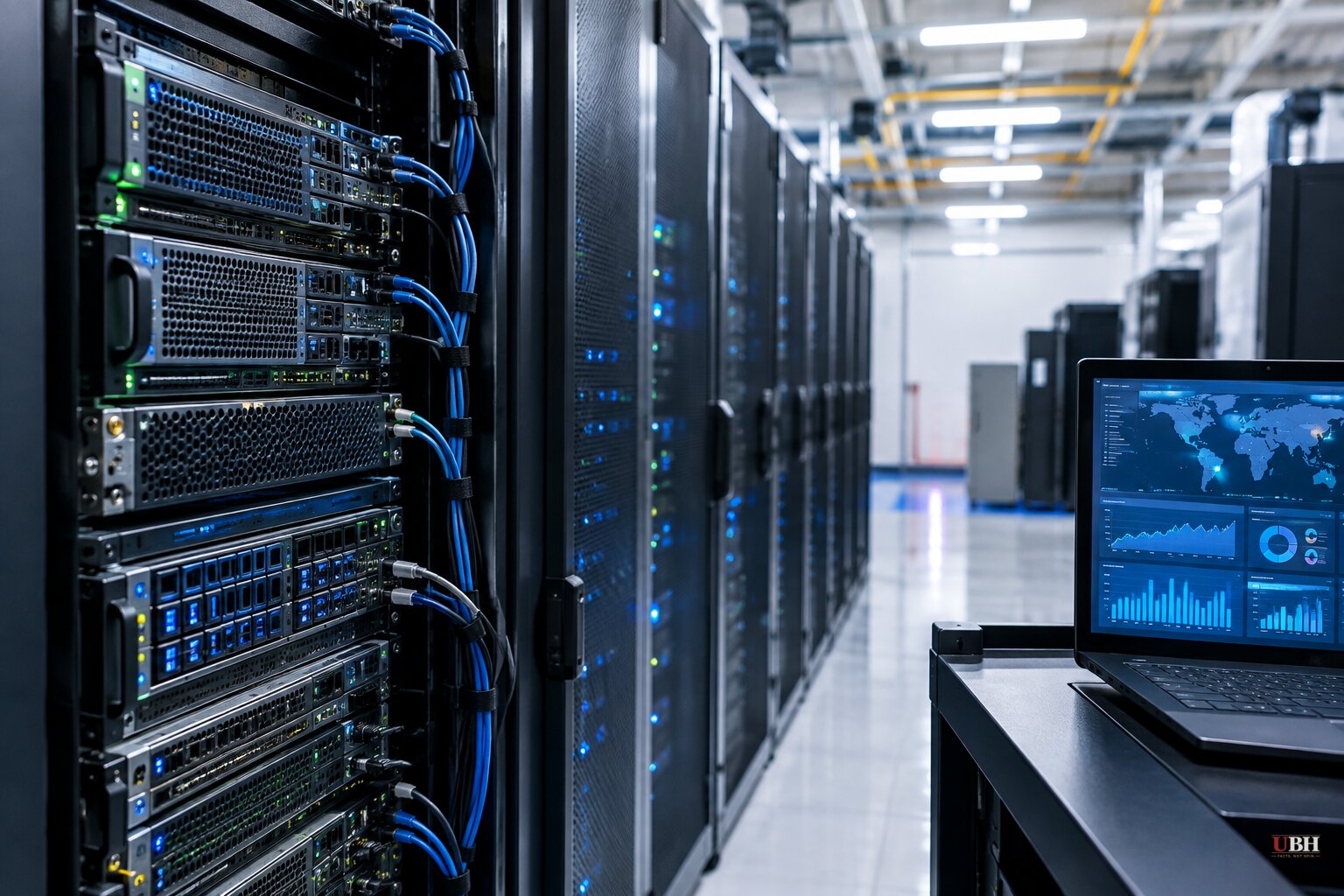
TrendForce, the Taiwan-based market research firm that tracks the semiconductor and server supply chain, projects global data center power demand capacity will reach 161 gigawatts in 2026. That's up roughly 31% from the 122.9 GW TrendForce estimated for 2025, according to the firm's own research note and reporting from Telecompaper.
AI servers are the reason. TrendForce estimates AI servers will account for about 33.4% of total data center power demand in 2026, up from roughly 25% in 2025. By 2027, that share could cross 40%, while the share held by general-purpose servers falls from around 40% historically to 25.6%.
The growth doesn't stop there. TrendForce forecasts 211 GW of demand in 2027 and 490.7 GW by 2030. Cloud service providers aren't slowing their spending to match: TrendForce projects their capital expenditure will keep growing above 30% annually through 2027.
The Grid Can't Keep Up
TrendForce estimates that by 2030, grid capacity actually available to data centers will top out around 222.6 GW, assuming all other electricity demand is met first. Against projected demand of 490.7 GW, that leaves a shortfall of roughly 268 GW.
TrendForce says the supply-demand gap starts showing up in 2026 and gets significantly worse after 2028. The United States is exposed hardest, with a projected deficit exceeding 170 GW by 2030, concentrated in the PJM grid covering the mid-Atlantic and Midwest, ERCOT in Texas, and MISO across the central U.S.
Crypto Briefing's coverage frames this as electricity prices rising for everyone competing for the same power, including industrial and residential customers in those grid regions.
TrendForce itself flags an important caveat that some coverage skips past: the 268 GW gap doesn't account for behind-the-meter, on-site generation that data center operators are already building. Since that capacity isn't counted in official grid-availability estimates, TrendForce says the real shortage could be smaller than the headline number suggests. The firm also notes that some of the gap reflects genuine physical shortages from delayed grid interconnection and transmission buildout, not just a paper shortfall.
Companies Are Already Building Their Own Power
The private sector is moving to fill the gap. The Epoch Times, in a commentary by Donald Kendal, argues AI's power hunger is forcing a genuine energy buildout: natural gas projects at unprecedented scale, and nuclear technology finally attracting serious capital after decades of stagnant investment.
Meta signed a 6.6 gigawatt nuclear energy deal to help power its AI data centers, according to the Epoch Times piece. Oklo, backed by OpenAI cofounder Sam Altman, is advancing its own advanced reactor projects. SpaceX has detailed a concept called AI1, described in Starmind materials as a solar-powered satellite carrying up to 250 kilowatts of peak computing capacity in orbit, where sunlight is constant and unclouded.
Markets are already pricing this in. Weichai Power, a Hong Kong-listed engine maker, saw its stock jump as much as 10% in early trading before settling to a 5.41% gain at HKD 31.16, according to Longbridge. The company's AIDC diesel engine sales exceeded 1,400 units in the first half of 2026, up 137% year-over-year, per Changjiang Securities, and its gas engines have passed U.S. UL certification for shipment to American data centers needing backup power.
Memory Chips Are the Other Squeeze
Power isn't the only bottleneck. According to InfoTechLead, the AI buildout has flipped the memory-chip market from oversupply to scarcity. Samsung, SK hynix and Micron are redirecting DRAM and NAND production toward high-bandwidth memory and server DRAM for AI servers, starving conventional memory used in PCs and phones.
Global DRAM revenue jumped 59.5% quarter-over-quarter to nearly $154.73 billion in the second quarter of 2026, InfoTechLead reports, citing TrendForce data. Server DRAM revenue alone surged 53% to $75.58 billion. Conventional DRAM contract prices rose 58-63% quarter-over-quarter in that same period, with another 13-18% increase forecast for the third quarter. TrendForce's September 23 update says the shortage could extend into 2027 as long-term supply agreements lock up available memory and new fab capacity takes time to ramp.
DRAM and NAND flash are expected to eat up 47% of major cloud providers' capital budgets in 2026, InfoTechLead reports, rising to 68% in 2027. That's money not going toward anything else, and it's a cost that eventually shows up in consumer electronics prices.
None of this is hypothetical anymore. The question for 2026 and 2027 isn't whether AI data centers will strain the grid and the chip supply chain, but whether nuclear reactors, gas turbines, and private power deals can get built fast enough to close a 268 GW gap that TrendForce says starts widening within the next two years.
Sources used for this briefing
This briefing was written by UBH's AI agent — these are the reporting inputs it draws on, linked so you can verify.


