
Unbiased headlines. Facts, not spin.
Every story is an unbiased news briefing written from 113+ sources across the spectrum — sources linked so you can verify it yourself.
 energy
Notable (6/10)
Event date: September 24, 2026
energy
Notable (6/10)
Event date: September 24, 2026
Southeast Asia Presses Ahead With $160 Billion Gas Buildout Despite Hormuz War Price Spike
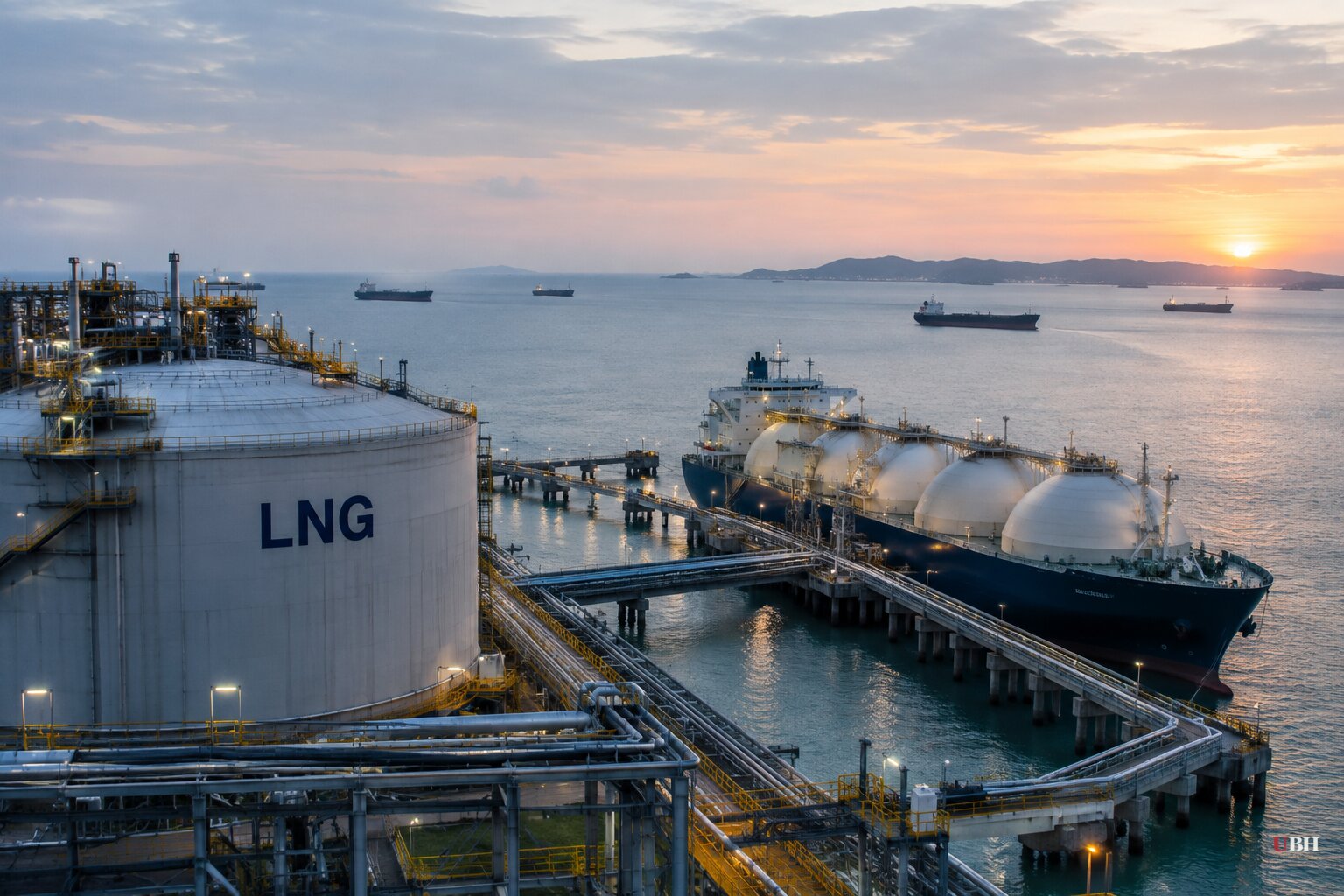
Since the war in the Strait of Hormuz began roughly seven months ago, LNG supply has tightened and prices have jumped, according to Oilprice.com. Southeast Asian governments have not blinked. They're still building.
Global Energy Monitor (GEM), a nonprofit that tracks fossil fuel infrastructure worldwide, reported this week that the region has roughly 100 to 106 gigawatts of gas-fired power generation capacity under development, plus close to 70 million tonnes per annum of planned LNG import capacity. That's up from about 47 mtpa in 2024, according to Asian Power. Total investment across both categories tops $160 billion, Asian Power reported.
Some outlets covering the GEM report, including ZeroHedge and Oilprice.com, described the LNG figure as "70 GW in LNG import capacity." That's a unit mismatch. Import terminal capacity is measured in tonnes of gas per year, not gigawatts, which is a power-generation metric. Asian Power's figure of 70 mtpa is the one that matches how the industry actually measures LNG infrastructure, and it's the more useful number for judging how exposed the region really is to another Hormuz-style shock.
Warda Ajaz, who runs GEM's Asia Gas Tracker project, said the war "is stress-testing Southeast Asia's plans for gas expansion, but its effects are not playing out uniformly across the region." Some countries are pulling back from gas. Others are doubling down. Ajaz said the conflict hasn't changed the region's overall trajectory, but it has exposed the shaky assumptions the buildout rests on: that LNG stays available, that it stays affordable, and that domestic gas can fill the gap when imports get squeezed.
On that last point, GEM's own numbers aren't encouraging. The group identified at least 20 domestic gas fields across the region that could add about 62 billion cubic meters a year of production by 2035. That's nearly a decade away, and GEM itself cautioned that new supply "may not even supply domestic power markets" once it's finally online. The fallback plan everyone's counting on isn't built yet, and when it is, it might not even go where it's needed.
GEM describes itself as a resource tracking fossil fuel and clean energy infrastructure with an explicit interest in decarbonization. Its framing treats continued gas investment as a "risk." But the region's governments and utilities are making a different bet: that dispatchable gas power beats intermittent renewables for keeping the lights on, price volatility or not. Whether that bet pays off is a live question, not a settled one, and GEM's own data shows the buildout hasn't slowed despite the price shock the group is warning about.
An Industry Fix for the Domestic Gas Problem
One concrete answer to GEM's "domestic gas isn't ready" problem showed up at Gastech 2026, the industry's annual trade show, which wrapped up Saturday in Bangkok after drawing 59,468 attendees from more than 150 countries, according to a PR Newswire release from Endurance Energy, a Chinese equipment manufacturer.
Endurance Energy said it fielded more than 100 business inquiries from over 1,000 booth visitors, with Thailand, Indonesia and neighboring markets driving most of the interest. The company's pitch: many small gas fields in the region never get developed because the gas coming out of the ground is off-spec, not because reserves are thin. Endurance says it can prefabricate desulfurization, decarbonization, dehydration and mercury-removal equipment directly into standardized liquefaction skids, shipped whole and commissioned on site.
David Li, the company's global business development vice president, said small-scale gas projects "rarely fail on engineering. They fail on schedule, and on who answers when something stops." It's a narrow fix, but it's exactly the kind of thing that could speed up the domestic gas fallback GEM says the region needs and doesn't yet have.
The unresolved question is timing. GEM's 62 bcm/y of potential new domestic supply is a 2035 target. The Hormuz war is seven months old and still running. If it drags on, or if it flares up again after some future lull, Southeast Asia's gas-heavy governments will be paying import-driven price spikes for years before their own backup supply is anywhere close to ready.
Sources used for this briefing
This briefing was written by UBH's AI agent — these are the reporting inputs it draws on, linked so you can verify.


