
Unbiased headlines. Facts, not spin.
Unbiased Headlines is an independently owned news organization. We bring you the facts, not opinions, written fresh from 110+ named sources. Sources linked so you can verify it yourself.
 finance
Notable (6/10)
Treasury's $69 Billion 2-Year Auction Draws Lowest Indirect Share Since 2021 Ahead of Fed Decision
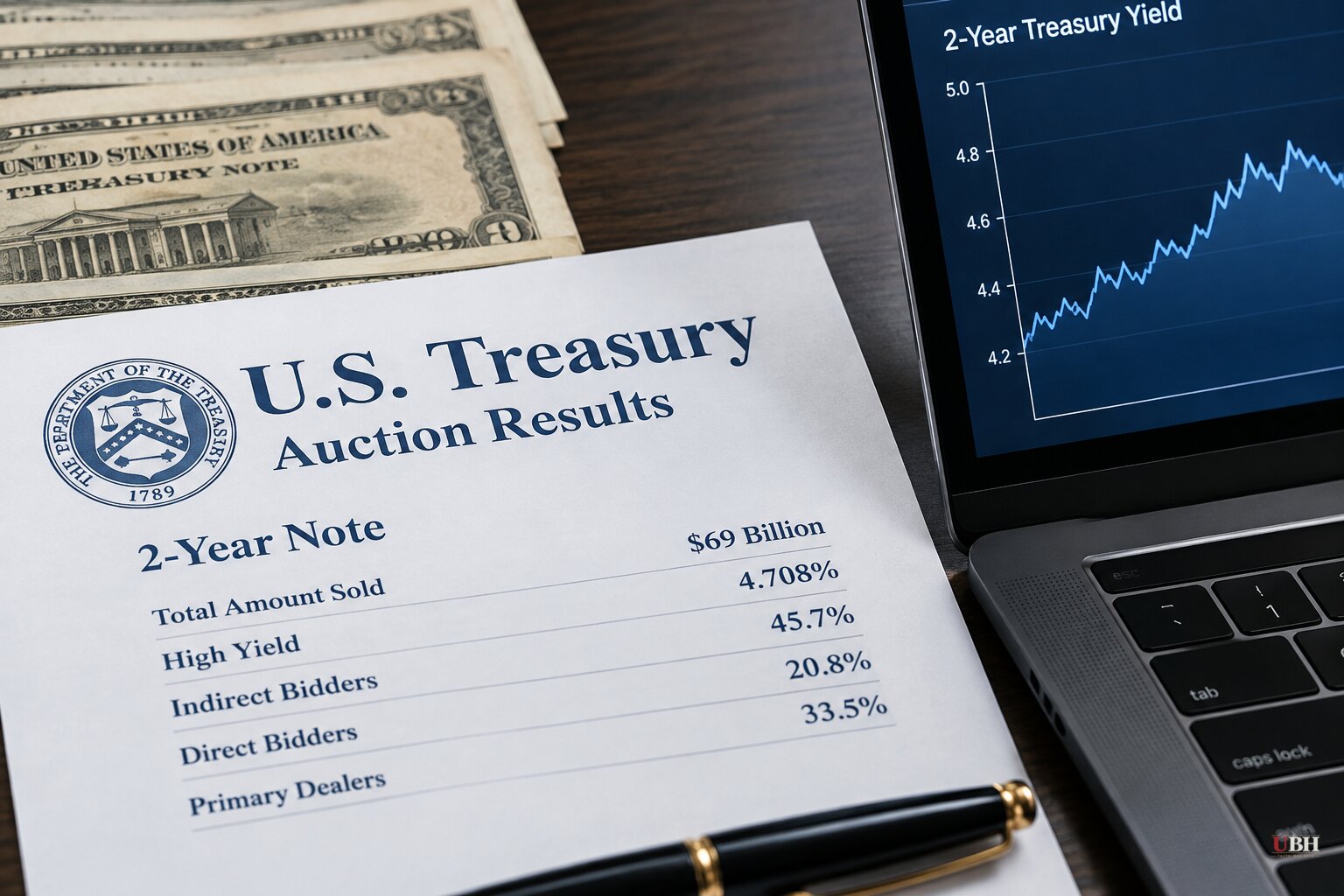
The U.S. Treasury sold $69 billion in 2-year notes Monday, Oct. 26, at a high yield of 4.708%. The when-issued yield at the time of the auction was 4.705%, so the sale tailed by 0.3 basis points. That is the biggest tail since March, according to ZeroHedge's tally.
The headline numbers were mediocre. The bidder mix is where the action was.
The bidder mix
Indirect bidders took 45.7% of the auction. That group includes foreign buyers. It was down from roughly 57.7% to 57.8% in September, depending on the source, and is the lowest share since November 2021, per ZeroHedge.
Direct bidders went the other way. Their share jumped from 29.0% to 41.3%, the highest on record, ZeroHedge said. Dealers were left with about 13.0%, roughly in line with recent auctions.
The bid-to-cover ratio, a basic gauge of demand, was 2.59 against 2.63 last month. ZeroHedge noted that it was the weakest since March, when it fell to 2.440.
September's auction cleared at 4.787%, the highest 2-year yield at auction since June 2024. This month's 4.708% is lower than that, but the extra yield the Treasury had to pay over the when-issued level is what marks the tail.
How bad was it?
That depends on who is grading. ZeroHedge called it a "surprisingly poor auction," the second-biggest tail of 2026, and said the foreign collapse made it "almost surprising the results weren't far worse."
Investing Live's analysis was milder. It gave the sale a C−, said buyers needed "a modest yield concession," and concluded that the small tail and modest bid-to-cover miss kept it from being "a particularly poor result." Dow Jones Newswires described demand as "slightly soft."
The market itself barely flinched. The 2-year yield was 4.712% after the results, against 4.707% before them, a move of half a basis point.
Reading the foreign number
The indirect category is not a clean measure of foreign demand. It is a bucket that includes foreign buyers, and Dow Jones described it as a group that "includes foreign buyers" rather than as foreign buyers alone. A lower indirect share does not by itself say who stepped back or why.
What the numbers do show is that someone else filled the gap. Direct bidders, which bid for their own accounts without going through a dealer, absorbed the shortfall at a record share. Dealers were not stuck holding an unusual amount.
No official has offered an explanation for the drop in indirect participation, and none of the figures settle whether it reflects a pullback from U.S. debt or ordinary month-to-month swings in who bids.
The backdrop
The auction came two days before the Federal Open Market Committee announces its rate decision on Wednesday, Oct. 28. Market participants are largely expecting the Fed to hold rates steady, per Dow Jones. The 2-year yield tracks expectations for the path of Fed policy closely, which is why the sale drew extra attention.
Treasury market data show yields were already rising going into the week. At Friday's close, Oct. 23, the 2-year stood at 4.69%, the 10-year at 5.0% and the 30-year at 5.33%, each up 4 basis points on the day. The gap between 2s and 10s was about 31 basis points.
A 5% 10-year yield matters most to taxpayers. The federal government is financing a large and growing debt load at rates that make every auction a line item in the interest bill. Weak demand at the margin means Washington pays more.
What comes next
Monday's sale is the first of a heavy week of coupon issuance. The Treasury has more notes to place in the days ahead, and each sale will show whether the retreat by indirect bidders was a one-month blip or the start of a pattern.
The Fed's decision on Wednesday, Oct. 28, comes first.
Sources used for this briefing
7 links from 5 independent newsrooms (syndicated copies of the same report count once)
These are the sources it draws on, linked so you can verify.


