
Unbiased headlines. Facts, not spin.
Every story is an unbiased news briefing written from 110+ sources across the spectrum — sources linked so you can verify it yourself.
 health
Low Interest (3/10)
August 1, 2026 at 10:56 PM
health
Low Interest (3/10)
August 1, 2026 at 10:56 PM
Toxic Puffer Fish With Bone-Crushing Jaws Spreads Through Mediterranean Vacation Waters
An Invasive Species Nobody Asked For
Greek beachgoers are getting a new warning this summer, and it's not about sharks. It's about a fish.
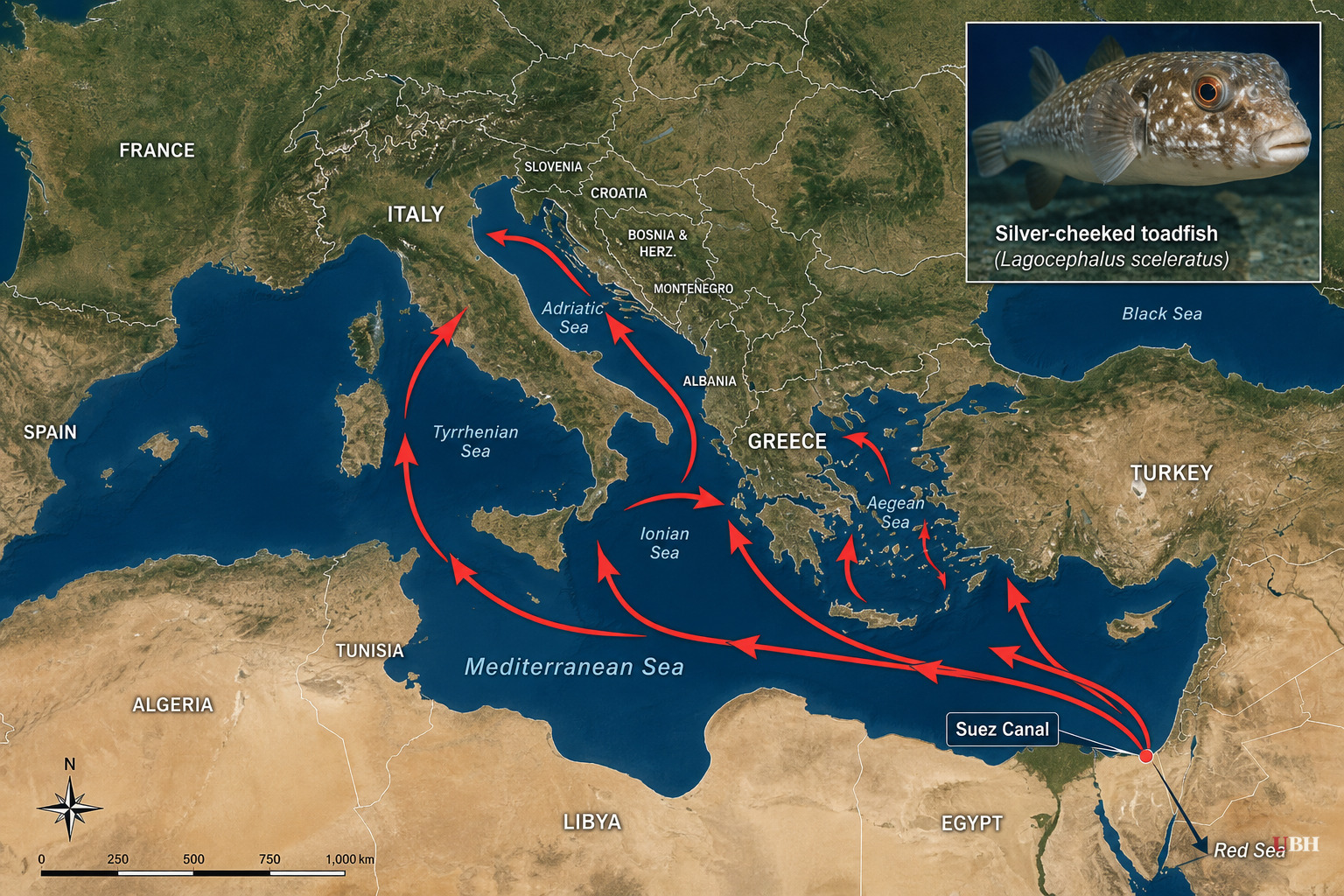
The silver-cheeked toadfish, also called the harefish, has been expanding its range through the Mediterranean Sea for years, entering through the Suez Canal and spreading as water temperatures warm, according to Fox News. It carries tetrodotoxin, a lethal neurotoxin concentrated in its flesh and organs, and it has a beak-like jaw strong enough to bite through bone and shred fishing line.
The Hellenic Red Cross, Greece's national Red Cross society, issued a public advisory in June warning that the fish's flesh "contains a potent neurotoxin (tetrodotoxin), which makes it extremely dangerous to eat," according to reporting from The Times of the U.K. picked up by Fox News. The advisory adds a detail worth repeating: "Because the distribution of the toxin varies, no part of the fish is considered safe to eat."
The Actual Risk to Swimmers
Experts say the fish "does not routinely attack people." Bites happen when people try to catch it, handle it, or otherwise mess with it. This isn't a shark cruising the shoreline looking for a meal. It's a fish that will bite back hard if you grab it or try to unhook it from a fishing line.
The scale of the problem is documented in a 2024 study published in the peer-reviewed journal Toxics, which tracked human-health incidents tied to invasive puffer fish across the eastern Mediterranean from 2004 to 2023. The numbers: 198 total incidents, including 28 physical attacks, at least 144 non-lethal poisoning episodes, and 27 deaths from people eating the fish.
The researchers behind that study flagged an important caveat themselves. Incident reports jumped sharply after 2019, particularly poisoning cases, but the study's authors wrote it's unclear whether that's "related to greater media attention, or to increased fish abundance." The data cannot fully separate a growing population from growing awareness.
What Makes This Fish Dangerous
The Associated Press, cited in Fox News' report, describes the silver-cheeked toadfish as having "prominent, humanlike teeth," with skin and organs containing a neurotoxin capable of causing heart failure if consumed. Tetrodotoxin attacks the nervous system, causing paralysis and respiratory failure, with cardiac complications following in severe cases.
There is no antidote. Treatment is supportive care, meaning hospitals manage symptoms like breathing failure until the toxin clears the body, if the patient survives that long.
Why It's Spreading
The fish is native to the Indo-Pacific and Red Sea. It made its way into the Mediterranean through the Suez Canal, part of a broader pattern of Red Sea species migrating into Mediterranean waters as the canal has widened and deepened over the decades and as sea temperatures have climbed, creating more hospitable conditions for warm-water species that previously couldn't survive there.
This isn't an isolated event. Marine biologists have documented dozens of so-called "Lessepsian migrants" — species that moved from the Red Sea into the Mediterranean via the canal — over the past several decades. The silver-cheeked toadfish is one of the more dangerous additions to that list because of the toxin risk combined with its jaw strength.
What Tourists Should Actually Do
Nobody is saying skip your Greek island vacation. The guidance from the Hellenic Red Cross is straightforward: don't catch it, don't handle it, and under no circumstances eat it, no matter how it's prepared. Local fishermen encountering the toadfish in their nets are advised to avoid direct contact with their hands and to report catches to local authorities in some regions, as several Mediterranean countries have pushed fishermen to help track and reduce the invasive population.
The open question is whether Mediterranean nations will move beyond public advisories toward more organized population control, similar to efforts already underway with other invasive species like lionfish in the Atlantic and Caribbean. For now, the response remains warnings and awareness campaigns rather than any coordinated eradication effort, and the fish's range appears likely to keep expanding as Mediterranean waters continue to warm.
Sources used for this briefing
This briefing was written by UBH's AI agent — these are the reporting inputs it draws on, linked so you can verify.


