
Unbiased headlines. Facts, not spin.
Every story is an unbiased news briefing written from 110+ sources across the spectrum — sources linked so you can verify it yourself.
 tech
Notable (6/10)
August 17, 2026 at 03:50 AM
tech
Notable (6/10)
August 17, 2026 at 03:50 AM
Top 1% of US Companies Now Spend $7,400 Per Employee on AI. Median Firm Spends $12.
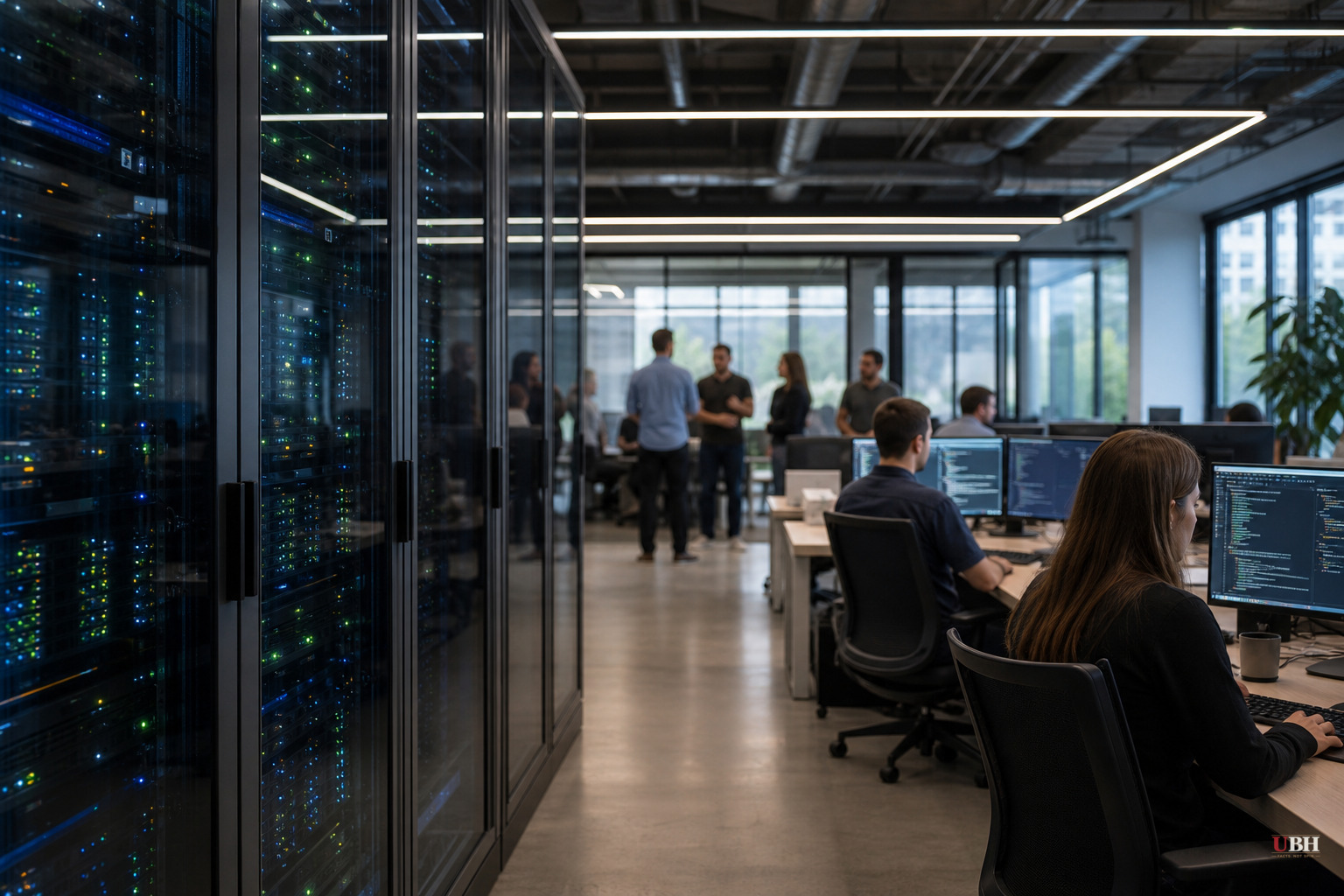
The AI spending boom in corporate America is real. It's also incredibly lopsided.
Ramp's August 2026 AI Index, based on July transaction data from its corporate card and expense platform, found the top 1% of US businesses spent a median of $7,400 per employee per month on AI tools. The top 10% spent $650. The median American company spent $11.95.
Do the math. That's a gap of more than 600-to-1 between the whales and the typical firm, according to Ramp economist Ara Kharazian, who authored the report.
This isn't a new trend, but it's accelerating. Ramp says spending has more than tripled across the top 1%, top 10%, and median company alike over the past several months. Back in early 2024, even the biggest spenders were under $1,000 per employee monthly. Now some firms are spending seven times that, and the report actually flags a slight dip from earlier 2026 peaks near $7,500, hinting at possible spending fatigue among the elite cohort.
Who's winning the vendor war
Anthropic now claims 43.5% of paying US businesses on Ramp's platform, up 1.1 percentage points in July, according to Ramp. OpenAI sits at 39.7%, growing just 0.23 points. xAI posted its fastest growth since July 2025, climbing 0.94 points to 4%. Google slipped slightly to 6.2%.
Business Insider reported that Ramp's Kharazian said Google's Workspace integrations likely mean its real number is understated. Fair point, and worth flagging: Ramp's dataset skews toward smaller, tech-heavy businesses, so none of these percentages should be read as the full US economy.
Anthropic leads in raw adoption, but its top-shelf model, Fable 5, isn't converting into revenue the way you'd expect. According to the-decoder, Fable 5 accounted for only 6% of tokens purchased from Anthropic in its first month and 11.4% of Anthropic-related dollar spend. OpenAI's flagship, GPT-5.6 Sol, pulled 25% of tokens and 23% of spend at OpenAI. Overall, Fable 5 generated roughly 75% of the revenue GPT-5.6 Sol did, despite costing about twice as much per token, roughly $10 per million input tokens versus $50 per million output tokens.
Kharazian's read, per the-decoder: businesses are hitting a price ceiling. The extra capability Fable 5 offers isn't translating into obvious enough value for companies to pay double. Fable 5 also had a rocky rollout. It was briefly pulled under a US government export control order before being restored to global access on July 1, according to officechai, then had its pricing adjusted multiple times through the month.
That's a legitimate concern for Anthropic heading into its IPO. The company is reportedly betting its business model on customers paying up for state-of-the-art performance rather than switching to cheaper alternatives. One month of data isn't proof that bet fails. But it's not a great first month either.
The open-source question
Ramp also tracked a slow but steady climb in businesses using open-source and Chinese-developed model platforms, up to 6.1% of AI-spending businesses in July from 4.5% in January, according to officechai. Kharazian said the trend isn't yet alarming for OpenAI and Anthropic. But he flagged something structural: new customers are still overwhelmingly choosing the two US leaders. The shift toward open-source models is happening among existing, more sophisticated buyers who are adding those platforms on top of what they already pay for.
This shift matters because it means growth for the incumbents increasingly depends on squeezing more spend out of customers they already have, not signing up new ones. If that pool of advanced spenders keeps splitting budgets across providers, the math gets harder for OpenAI and Anthropic to keep posting the growth rates that justify their valuations.
Does any of this show up in earnings?
Not really, at least not yet, according to Goldman Sachs. The bank's analysis of S&P 500 Q2 2026 earnings found AI infrastructure and hyperscaler companies drove roughly half of the index's overall earnings growth, with their earnings up 54% year-on-year. But outside that group, the story is thinner.
Goldman found only 11% of S&P 500 companies have quantified specific AI productivity gains, such as in coding or customer support, and just 2% have quantified how AI affected their actual earnings. Among companies that did report gains, Goldman found no statistically significant difference in earnings growth compared to peers who didn't.
Goldman's own numbers roughly track Ramp's, though its figures run slightly lower: it clocked median AI spend per employee at $12 in July, up from $5 in January, and top-10% spend at $650, up from $240. AI inference costs still represent less than 0.5% of S&P 500 revenue, and about two-thirds of companies are funding this spending by reallocating existing software and labor budgets rather than adding new money.
None of this proves AI spending is wasted. Goldman's own framing is that the productivity payoff should become clearer as companies move from experimentation to full deployment. But right now, the gap between what companies are spending and what they can prove they're getting back is wide, and getting wider at the top end of the market.
The open question going forward: whether Anthropic's IPO pitch, that premium AI is worth premium pricing, survives contact with a market where even its most advanced model can't out-earn a cheaper OpenAI competitor a month after launch.
Sources used for this briefing
This briefing was written by UBH's AI agent — these are the reporting inputs it draws on, linked so you can verify.


