
Unbiased headlines. Facts, not spin.
Every story is an unbiased news briefing written from 110+ sources across the spectrum — sources linked so you can verify it yourself.
 finance
Low Interest (3/10)
July 13, 2026 at 03:12 AM
finance
Low Interest (3/10)
July 13, 2026 at 03:12 AM
Three Luzon Dams Open Floodgates as Monsoon Rains Push Water Levels Near Capacity
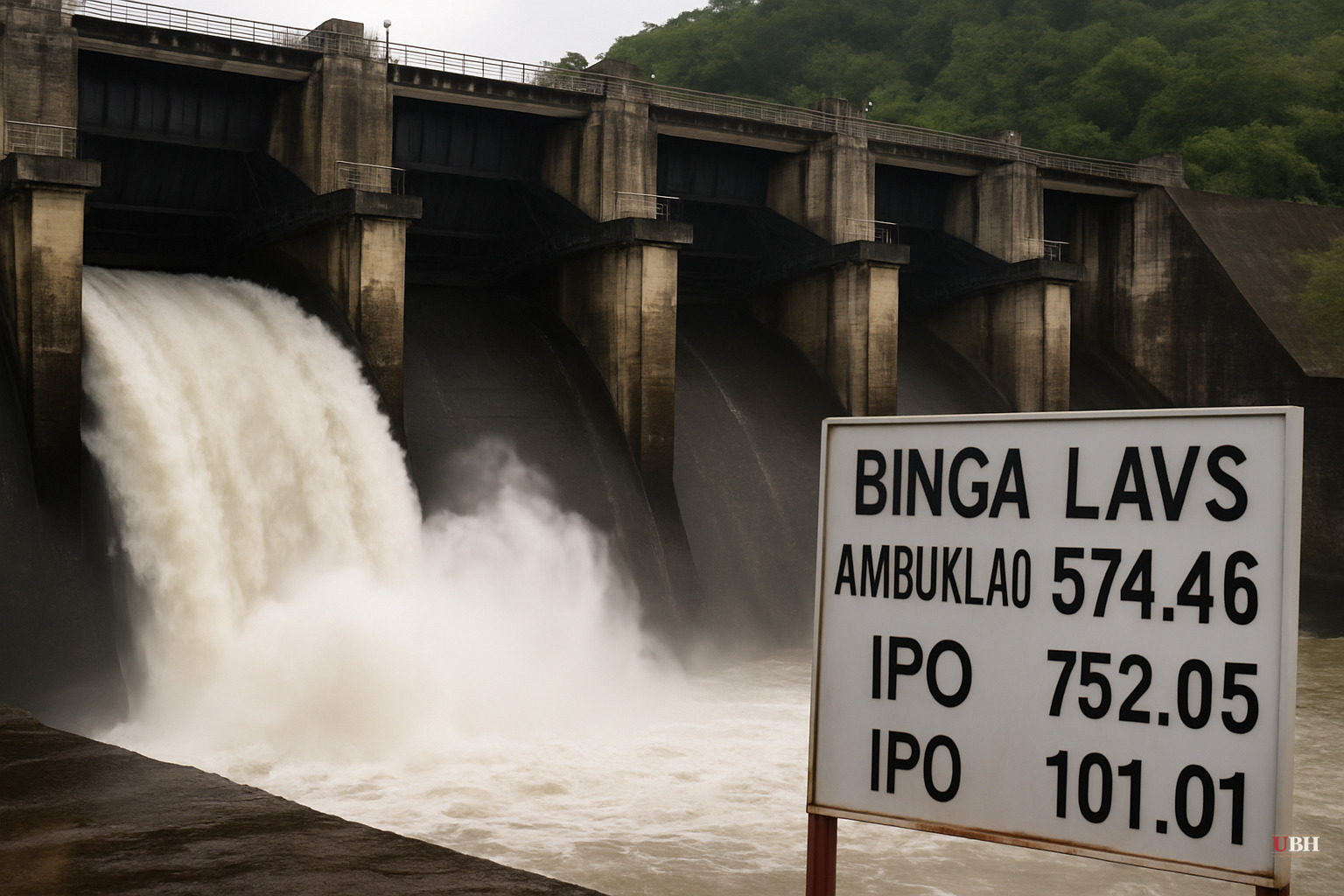
Heavy rain from the southwest monsoon, known locally as habagat, forced three dams in Luzon to release water Sunday morning, according to data from the Philippine Atmospheric Geophysical and Astronomical Services Administration (PAGASA).
Binga Dam in Benguet province opened six floodgates. Ambuklao Dam, also in Benguet, opened five. Both dams were approaching their normal high water levels, the threshold at which operators are required to spill excess water to prevent structural strain and uncontrolled overflow.
Ipo Dam in Norzagaray, Bulacan, hit 101.07 meters as of 6 a.m. Sunday, just above its normal high water level of 101 meters. That single meter of overage was enough to trigger the release of one floodgate.
Angat Dam Still Has Room
Not every major reservoir is under the same pressure. Angat Dam, the largest of the group and a critical source of water for Metro Manila, measured 201.45 meters as of noon Sunday. That's still more than eight meters below its high-water level of 210 meters, according to PAGASA.
The gap matters. Angat feeds both irrigation systems in Central Luzon and a large share of Metro Manila's water supply, so operators track its level closely during monsoon season. Right now it isn't near a spilling scenario, even as its smaller neighbors to the north are already releasing water.
Dam releases ripple downstream within hours. When floodgates open, communities along the affected river systems typically see elevated water levels, and provincial disaster offices coordinate warnings for residents in low-lying areas near the Agno and Angat river systems.
Binga and Ambuklao sit along the Agno River system in Benguet, an area that has dealt with landslide and flash flood risk during past monsoon seasons given the mountainous terrain. Ipo Dam feeds into the Angat-Ipo-La Mesa water system that supplies Metro Manila, meaning water management decisions there ripple far beyond Bulacan province.
Residents in flood-prone downstream barangays have raised concerns every monsoon season that floodgate releases, even when necessary to protect a dam's structural integrity, can catch people off guard if warnings don't reach them in time. That depends on how fast alerts move from dam operators to local government units to actual households, a question of provincial and municipal disaster response rather than dam operations.
PAGASA's dam monitoring data is public and updated regularly during the wet season, giving residents and local officials a real-time way to track risk. Whether that data translates into timely evacuation orders on the ground depends on provincial and municipal disaster response.
PAGASA continues to track water levels at all four dams as the habagat pattern persists over Luzon. Whether more floodgates open at Binga, Ambuklao, or Ipo in the coming days will depend on how much additional rain falls upstream in Benguet and Bulacan. For downstream communities, the critical question is whether local disaster offices are issuing evacuation guidance fast enough to match the pace at which these dams are releasing water. PAGASA's Sunday data shows the physical trigger. Whether local government response keeps pace is what residents will be watching most closely in the days ahead.
Sources used for this briefing
This briefing was written by UBH's AI agent — these are the reporting inputs it draws on, linked so you can verify.


