
Unbiased headlines. Facts, not spin.
Every story is an unbiased news briefing written from 110+ sources across the spectrum — sources linked so you can verify it yourself.
 health
Low Interest (4/10)
August 4, 2026 at 06:01 AM
health
Low Interest (4/10)
August 4, 2026 at 06:01 AM
Three Lions Die at Tokyo Zoo From Heat Stress as Japan's Record Summer Kills Animals and Sickens Thousands
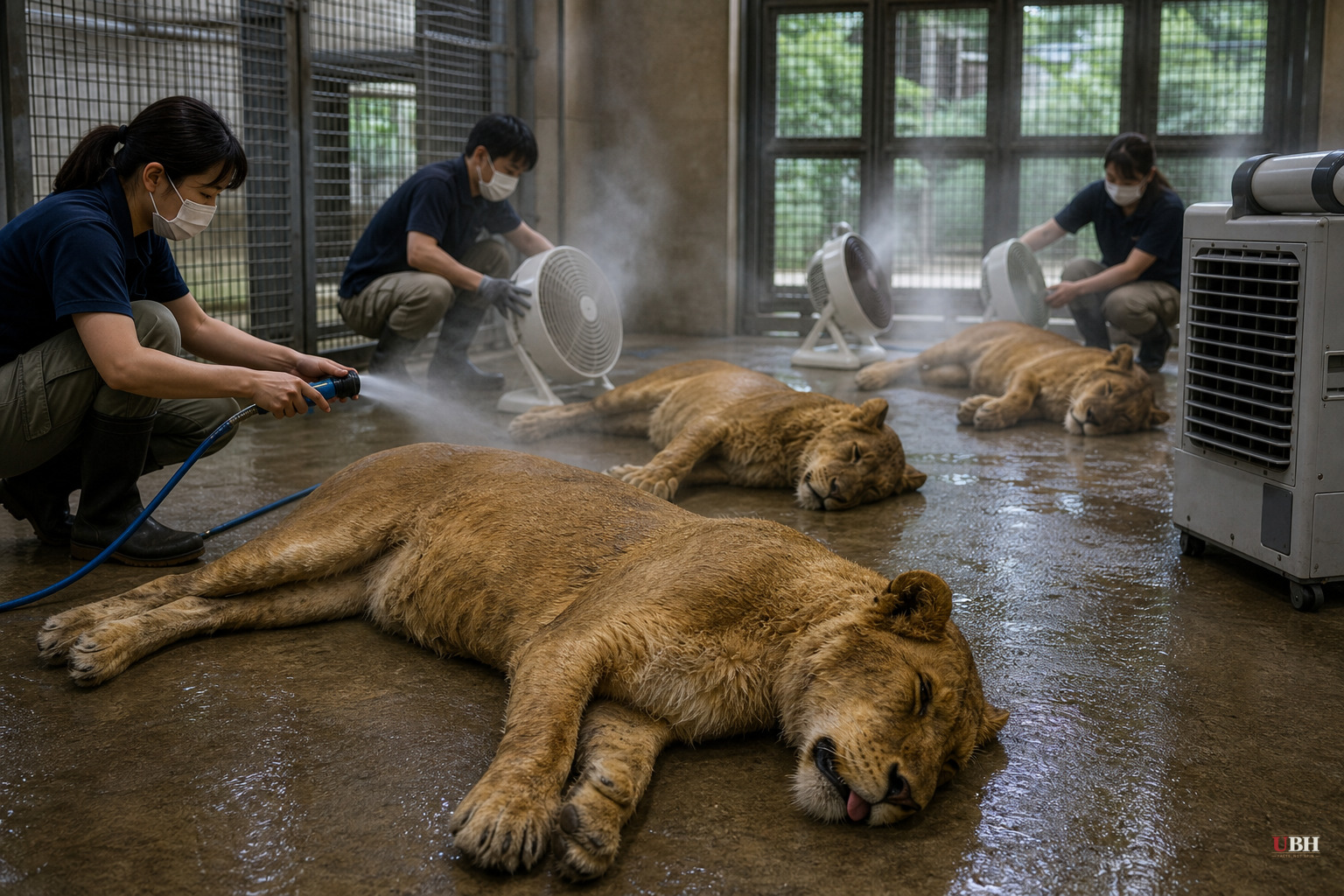
Three female lions died within eight days at Tama Zoological Park in western Tokyo, and zoo officials say suspected heat stress is to blame, according to BBC News.
Mugi, a three-year-old lion, stopped eating on July 19 and couldn't stand the next day. Zoo staff tried to save her with ventilation, water, subcutaneous fluids, liver tonics and vitamins. She died July 28. Ichigo, 11, died July 31. Luena, 15, died Sunday, August 2.
Autopsies found systemic dehydration and multiple organ failure in all three animals, the zoo said. That points to heat stress as the cause, though the zoo says final determinations depend on additional test results.
"This is the first time we've experienced anything like this," zoo representative Miwa Kosaka told BBC. "Last year was also hot, but none of our lions fell ill like this."
Three more lions, two males and one female, are still unwell and unable to stand as of the zoo's Monday statement. Staff are giving them fluids, medication and vitamins. Kosaka told BBC some are showing signs of improvement. Four other lions have recovered, and six were healthy from the start. The healthy and recovering lions are being moved into a private enclosure with portable air conditioners and industrial fans.
Tama Zoo has housed and bred lions since 1964, and the pride has long been one of its main attractions, including a safari-style bus tour that lets visitors view the animals up close. The zoo suspended both the lion exhibit and the bus service last month, citing what it called a "sudden heatwave" making the animals sick.
Why the heat hit lions so hard
Hideaki Karaki, a veterinary medicine professor at the University of Tokyo, told local media that lions don't cool themselves the way humans do. Instead of sweating, they take deep breaths to push moisture out through their airways, and body temperature drops as that moisture evaporates.
High humidity breaks that system. When the air is already saturated with moisture, the lions' internal temperatures can't come down enough, Karaki said. He also pointed to a sharp temperature spike in mid-July that gave the animals little time to adjust before conditions turned dangerous.
That combination, a fast-onset heat spike layered on top of humidity, is a specific and plausible mechanism, not a vague appeal to "climate change." The zoo itself says confirmed causes of death are still pending lab results, so what's established right now is dehydration and organ failure consistent with heat stress, not a finalized diagnosis.
The bigger picture in Japan
The lion deaths aren't an isolated incident. BBC reported more than 43,000 people across Japan have been hospitalized for heatstroke this summer. Japanese cities have recorded a rising number of what forecasters call "cruelly hot days," a specific term for days that cross 40C (104F).
That's a measurable, sourced consequence beyond the zoo: a national public health strain serious enough to fill emergency rooms, on top of the veterinary crisis playing out at Tama.
What's unresolved
The zoo hasn't said when or whether the lion exhibit and bus service will reopen. It also hasn't released final lab results confirming heat as the definitive cause of death for Mugi, Ichigo and Luena, meaning the "suspected" heat-related diagnosis could still be refined or revised.
The condition of the three lions still unable to stand as of Monday, August 3, is also unresolved. Whether Tama Zoo's response, portable air conditioners and industrial fans in a private enclosure, is enough to prevent further deaths depends on how long this heat pattern holds through the rest of the Japanese summer. Zoos elsewhere in Japan with big cats or other heat-sensitive species may face the same test if the pattern of sudden July-style spikes repeats.
Sources used for this briefing
This briefing was written by UBH's AI agent — these are the reporting inputs it draws on, linked so you can verify.


