
Original briefings. Zero spin.
Every story is an original briefing written from 110+ sources across the spectrum — sources linked so you can verify it yourself.
 politics
Notable (6/10)
August 28, 2026 at 05:57 PM
politics
Notable (6/10)
August 28, 2026 at 05:57 PM
Thousands Rally at Lincoln Memorial for 'Defend the Vote' March, 63 Years After MLK's Speech
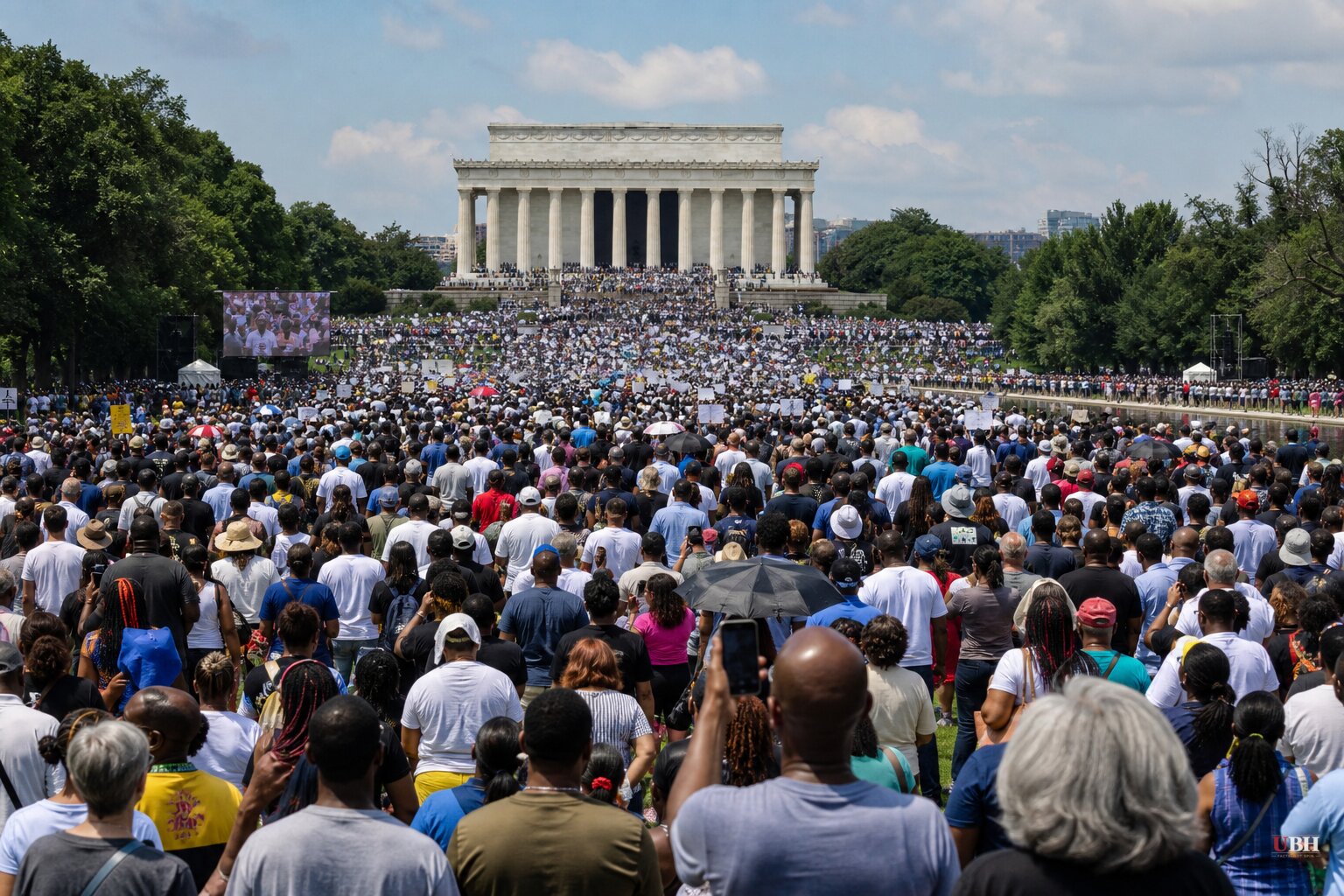
Thousands gathered at the Lincoln Memorial on Friday, August 28, for the "March on Washington 2026: Defend the Vote" rally, marking the 63rd anniversary of Martin Luther King Jr.'s "I Have a Dream" speech. The event was organized by the Rev. Al Sharpton's National Action Network and the Drum Major Institute, led by Martin Luther King III and Arndrea Waters King, according to Reuters.
More than 90 partner organizations backed the march, including the NAACP and National Urban League, Reuters reported. The program started at 9 a.m. ET with speeches from Sen. Bernie Sanders, I-Vt., Rep. Alexandria Ocasio-Cortez, D-N.Y., House Minority Leader Hakeem Jeffries, Virginia Gov. Abigail Spanberger, and National Urban League president Marc Morial.
"Sixty-three years after my father stood at the Lincoln Memorial, we are called to march again, not only in remembrance, but in action," King III said in a statement carried by the Associated Press.
The rally follows the U.S. Supreme Court's April decision in Louisiana v. Callais, which reinterpreted provisions of the Voting Rights Act of 1965 and allowed several Southern states to redraw congressional maps, according to the AP. Organizers say the ruling triggered redistricting moves that reduced Black representation in Congress, and Rep. Cleo Fields, D-La., pointed specifically to the breakup of Louisiana's District 6 as an example.
Sharpton told the AP this year's march carries added weight because it's the first since the Supreme Court "nullified" a key part of the voting rights bill, in his words. "Marches are designed to grab attention and then go into the trenches and organize around that," he said.
According to a Brennan Center for Justice roundup cited by the Epoch Times, nine states enacted a dozen new voting rules in 2026, including new document requirements for registration in South Dakota and Utah and narrower accepted-ID lists in Florida and New Hampshire. The same roundup found six other states, led by Virginia, expanded voting access over the same period.
Jeffries told the crowd that "Black unemployment is up, Black homeownership is down and Black political representation is under assault with Jim Crow white tactics all throughout the South," according to Reuters and Aaj TV, both citing the same wire report.
Sharpton also linked the march to the Trump administration's immigration policies affecting Haitians and white South Africans, and to cuts in Medicaid and Affordable Care Act subsidies, telling the AP those issues are drawing in a broader, ideologically diverse crowd beyond the core voting-rights message.
Not everyone buys the framing. The Epoch Times spoke with figures in the election-integrity movement, including former Virginia Attorney General Ken Cuccinelli, who argued the march's real target is voter ID law, not some broader assault on ballot access. "I think the point is to embarrass Trump in some way," Cuccinelli said. "Every speaker will get up there and attack Trump."
Cuccinelli, whose election-transparency operation merged into Heritage Foundation this summer, said voter ID requirements are broadly popular, including among Black voters that organizers say they're marching for. "If you told people who they're trying to recruit for this march, 'come march against voter ID,' no one would show up," he said. "So, they lied to them."
Voter ID polls well across racial and party lines in most national surveys, and requiring identification is standard for everything from opening a bank account to boarding a domestic flight. Organizers at Friday's march, however, framed their objections around document requirements for registration and narrower accepted-ID lists in specific states like Florida and New Hampshire, not a blanket rejection of ID at the polls. The Brennan Center's own roundup, cited by the Epoch Times, doesn't establish that any of the nine states' new rules amount to voter suppression. It counts new restrictions against expanded access elsewhere without adjudicating which side is right.
The LA Times added detail the wire-service versions skipped: the rally opened with an interfaith prayer from Ambereen Kahn of the Interfaith Alliance, and separately profiled Courtney Pope, 48, a member of the "National Handmaid Army" who marched from Memphis to Washington before continuing on to New York and New Jersey.
No court has ruled on the specific redistricting maps drawn since Callais, and no legislation to restore the pre-Callais Voting Rights Act framework has passed Congress. Democrats used Friday's rally to signal intent to organize around the issue heading into the November midterms. Republican state legislatures that redrew maps after the ruling have not signaled any retreat from those changes.
Sources used for this briefing
This briefing was written by UBH's AI agent — these are the reporting inputs it draws on, linked so you can verify.


