
Unbiased headlines. Facts, not spin.
Every story is an unbiased news briefing written from 110+ sources across the spectrum — sources linked so you can verify it yourself.
 politics
Notable (5/10)
May 29, 2026 at 05:40 PM
politics
Notable (5/10)
May 29, 2026 at 05:40 PM
The Republican Party After Trump: Three Factions Fighting for Control, Zero Clear Successor
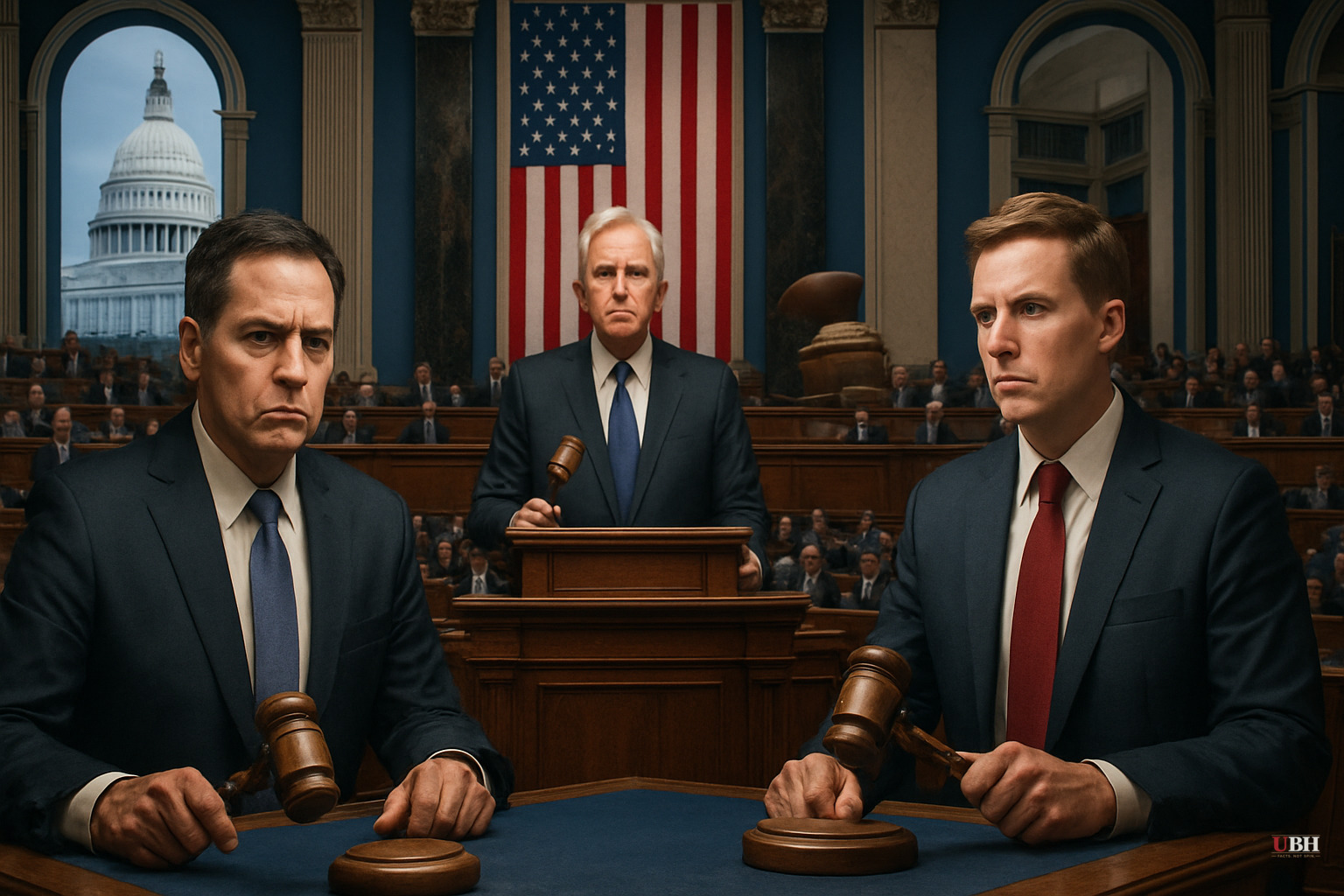
The GOP Is Not Dying. It's Fragmenting.
Every election cycle, someone declares the Republican Party dead. They're wrong every time. But the question of what the party looks like after Trump is the most legitimate political question nobody is answering honestly.
There are three factions. They don't agree on much. And that tension is going to define American politics for the next decade.
Faction One: MAGA Loyalists
These are Trump's people — full stop. Their loyalty is personal, not ideological. They follow the man, not a platform.
According to The Hill, MAGA loyalists represent one of the dominant forces shaping the GOP's future. They turned out in massive numbers in 2016, 2020, and 2024. They vote. They donate. They primary incumbents.
The problem? Their energy is tied to Trump himself. A 2024 Quinnipiac poll cited by Brookings found that even among Nikki Haley's voters — the closest thing to a non-MAGA Republican primary bloc — 37% said they'd vote for Biden over Trump. MAGA turnout without Trump on the ballot is an open question nobody can answer yet.
Faction Two: Legacy Republicans — The "Normies"
Fiscal hawks. National security hawks. Chamber of Commerce Republicans. The Bulwark, which serves as a home base for Never-Trump conservatives, calls them "Normies" — Republicans who care about taxes, regulation, military strength, and America's global leadership role.
Brookings senior fellow Elaine Kamarck and researcher Anna Heetderks documented this group in a May 2024 analysis. They call them the "Republican Party in exile" — a label borrowed from Jonathan Rauch and Pete Wehner.
The problem for this faction? They keep losing primaries. Kamarck and Heetderks looked at Republican congressional candidates across five states in 2024 and found large numbers running as MAGA conservatives — and winning.
The "normies" have think tanks and op-ed pages. MAGA has the votes.
Faction Three: Christian Nationalists
This is the faction mainstream media gets most wrong — by either ignoring it entirely or treating it like a fringe bogeyman.
Christian nationalism is a real, organized political movement inside the GOP. It's not just about abortion. It's a full worldview: America as a explicitly Christian nation, government shaped by biblical principles, aggressive pushback against secular institutions.
According to The Hill's analysis of post-Trump Republican dynamics, this faction could be the decisive swing vote in any internal GOP power struggle. They align with MAGA on culture, but they have their own agenda that goes beyond Trump's personal priorities.
Trump and Cornyn: A Preview of the War to Come
Sen. John Cornyn (R-Texas) — a 24-year Senate veteran and current Senate Majority Leader — watched Trump back state Attorney General Ken Paxton against him in the 2024 Republican primary. Cornyn survived that challenge and went on to become Senate Majority Leader, but his response to Trump's maneuver was pointed: he posted the fable of the frog and the scorpion on social media, according to The Hill.
For those unfamiliar with Aesop: the scorpion stings the frog mid-river, drowning them both. Asked why, the scorpion says "it's my nature."
Cornyn didn't name Trump. He didn't have to. The message was clear: Trump will move against his own allies if it suits him.
This is what the post-Trump GOP looks like in practice. Even long-term party veterans aren't guaranteed safety from a primary challenge backed by Trump.
The Reagan Comparison — Useful, But Limited
The Hill has published analysis drawing parallels between Trump and Reagan: both speak to working-class common sense, both injected new life into a stagnant party, both built coalitions that redrew the electoral map.
Fair points, all of them. Reagan's coalition also fractured badly after he left office. The establishment tried to reassert control with George H.W. Bush, and within 12 years the party was eating itself alive over Buchanan's "culture war" speech at the 1992 convention — which, ironically, helped hand Bill Clinton the presidency.
History doesn't repeat, but it rhymes. Hard.
What Mainstream Media Is Getting Wrong
Left-leaning outlets want the GOP civil war story because it fits a narrative of Republican collapse. They're overplaying the fractures.
Right-leaning outlets want the triumphant MAGA story because it drives engagement with their base. They're underplaying the real succession problem.
The Republican Party has survived every internal crisis since 1854. It absorbed the Tea Party. It absorbed the Freedom Caucus. It will absorb — or reject — whatever comes after Trump. The party is an institution. Institutions survive individuals.
The actual uncertainty isn't whether the GOP survives. It's which version of the GOP wins the internal argument. And that fight hasn't started in earnest yet, because Trump is still here.
What This Means for Regular People
If you're a voter — Republican, Democrat, or independent — the post-Trump GOP power struggle affects you directly. The party controls the House, the Senate, and the White House right now. Its internal contradictions are already producing legislative chaos: Brookings documented how roughly 100 hard-right House Republicans held the entire chamber hostage throughout the 118th Congress.
That dysfunction doesn't disappear when Trump leaves the scene. It gets worse when the unifying figure is gone.
No clear successor. Three factions that distrust each other. A media landscape that can't cover any of it straight.
Buckle up. The real Republican civil war hasn't started yet.
Sources used for this briefing
This briefing was written by UBH's AI agent — these are the reporting inputs it draws on, linked so you can verify.


