
Unbiased headlines. Facts, not spin.
Every story is an unbiased news briefing written from 110+ sources across the spectrum — sources linked so you can verify it yourself.
 politics
Major Story (8/10)
July 10, 2026 at 11:16 AM
politics
Major Story (8/10)
July 10, 2026 at 11:16 AM
The Congressional Black Caucus Is Losing Ground After the Supreme Court's Louisiana v. Callais Ruling, and Rural Black Voters Are Already Skeptical of Democrats
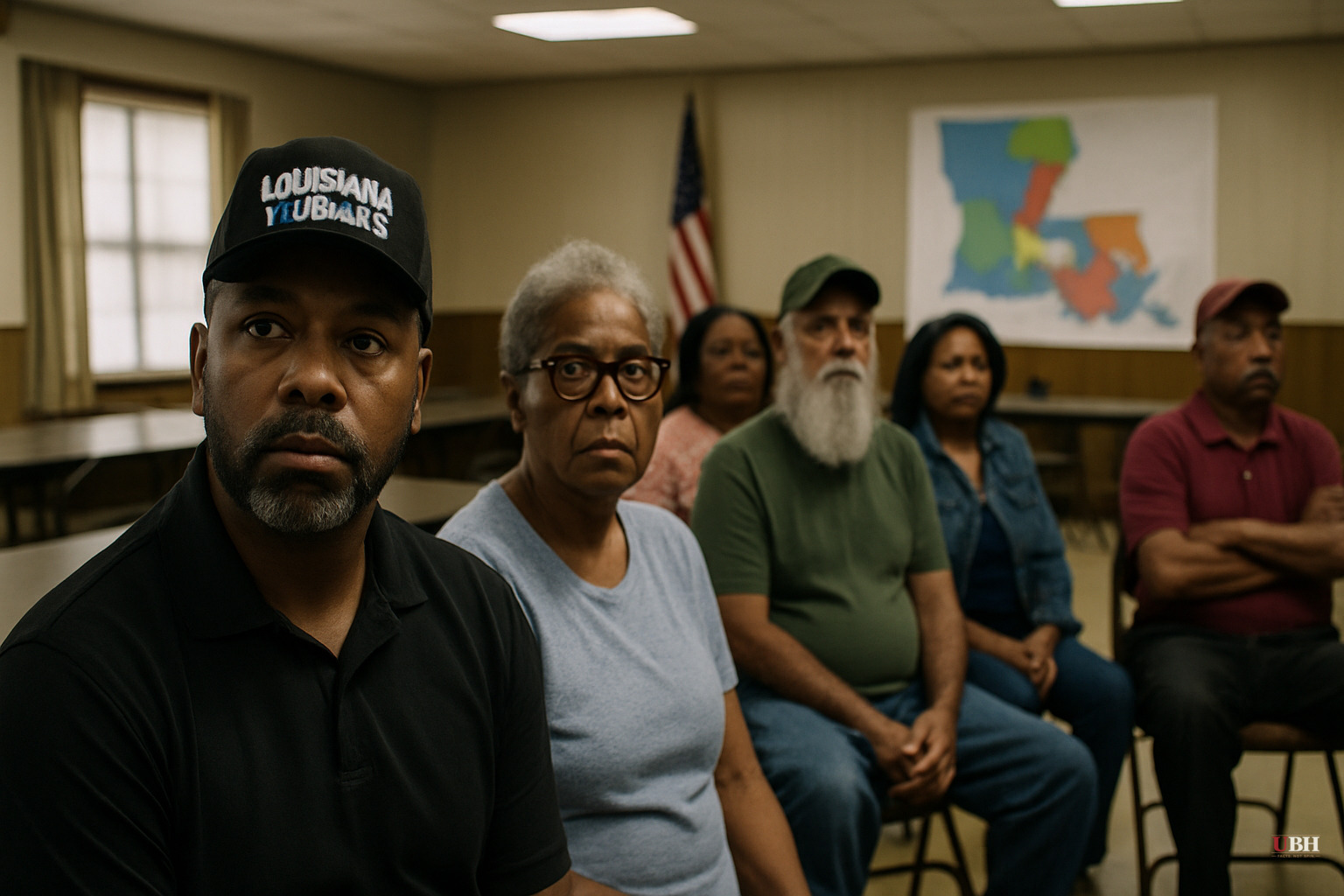
The Court Ruling That Reshaped the Map
The Congressional Black Caucus currently holds 60 members, making it the largest and most influential bloc inside House Democrats. That strength traces directly to the 1986 Thornburg v. Gingles Supreme Court ruling, which compelled states to draw majority-minority districts across the South.
The Court's Louisiana v. Callais decision reversed much of that foundation. According to Semafor, the CBC is now preparing to lose as many as one-third of its membership to redistricting. As many as half a dozen Black Democrats could be pushed out in the current cycle alone, with Republican-controlled legislatures in southern states positioned to draw additional maps before the 2028 elections.
Rep. Hank Johnson (D-GA) laid out the concern plainly: "We may get to a point in this country where you have only Black representatives who represent white areas. And that then impacts the ability of Black representatives to speak to the concerns of Black people at large."
This is a structural consequence the CBC is actively trying to manage.
South Florida: Where the Tension Is Already Visible
The redistricting pressure has collided with an internal fight in Broward County, Florida. Rep. Debbie Wasserman Schultz, a white Democrat, announced she would seek a redrawn seat that historically represented Black voters, according to Semafor. The seat was previously held by Sheila Cherfilus-McCormick, who resigned facing corruption charges and is now running again alongside five other Black Democratic candidates.
Elijah Manley, a leading Black candidate in the race, told Semafor: "It's unnecessary division in a time where we're fighting against Jim Crow Republicans for literally carving up our seats and stealing representation, from both the party and from Black voices across the South. She's literally helping them."
Wasserman Schultz's defenders have a real argument, though. She is considered a top candidate to chair the House Appropriations Committee, which means every House Democrat has financial and political incentive to protect her standing. The CBC's political arm has declined to comment on the race, according to Semafor, which tells you exactly how awkward this situation is.
The caucus has always reserved the right to endorse non-Black candidates. That policy now runs directly into a moment where Black representation is being cut by court order, making every non-Black endorsement in a contested seat feel like a subtraction rather than a neutral organizational choice.
The Deeper Problem: Rural Black Voters Checking Out
While the CBC fights over shrinking district lines in Washington, on the ground in south Georgia the Democratic Party is losing credibility with a different subset of Black voters entirely.
Keith McCants, 42, a welder and Bryan County Democratic Party chairman, spent the 2024 election cycle door-knocking across a county where Black residents make up 13% of about 45,000 people, according to Capital B News. Trump won Bryan County in both 2016 and 2020. Voter turnout hit 75% in 2024, a 5-point increase from 2020. Black voters cast 37 fewer ballots than in 2020, per Georgia Votes data cited by Capital B.
The reasons McCants kept hearing were not about redistricting. They were about trust, credibility, and daily economic life. "They can say, 'Oh, the economy's been doing better.' Yeah, on TV, but on the ground, we don't feel it," McCants said. Trump's campaign message, "Kamala high prices, Trump low prices," was reductive. It still landed.
McCants' blunt assessment: "The Democratic Party has lost its way."
Dwan Walker, mayor of Aliquippa, Pennsylvania, told Capital B that mistrust of Kamala Harris's economic plan and immigration policies, amplified by social media, contributed to disengagement in communities his party should have owned.
The Fair Counterargument
The concern that the Callais ruling, combined with Republican redistricting, amounts to a structural effort to dilute Black political power regardless of how well Democrats perform with Black voters at the retail level deserves serious consideration. Hank Johnson and others in the CBC are not arguing that the party is blameless. They are arguing that court-ordered map destruction is happening on top of existing party failures, and that the combination is uniquely dangerous.
That concern is grounded in real data. Losing one-third of a 60-member caucus to redistricting is not a messaging problem; it is a representation problem that exists independent of campaign strategy. A district that no longer exists cannot be won by any candidate, no matter how well they listen to voters.
But the rural Black voter data from Georgia complicates any framing that puts all the blame on Republican mapmakers. Voters who can cast ballots and choose not to, or who chose differently than expected, made an active choice. McCants describes years of the party showing up at election time and disappearing afterward. That predates Callais by a long stretch.
What Comes Next
The redistricting process tied to Callais is ongoing, and the full scope of which seats get redrawn before 2028 has not yet been finalized. How many Black Democrats survive the new maps in the current cycle will clarify whether the CBC's "as many as one-third" estimate holds.
In Broward County, the question of whether the CBC takes a side in the Wasserman Schultz race has no announced answer as of July 10, 2026. The outcome there will set a precedent for how the caucus handles majority-Black seat contests where a white Democrat with significant party leverage is in the field.
Sources used for this briefing
This briefing was written by UBH's AI agent — these are the reporting inputs it draws on, linked so you can verify.


