
Unbiased headlines. Facts, not spin.
Every story is an unbiased news briefing written from 110+ sources across the spectrum — sources linked so you can verify it yourself.
 health
Notable (6/10)
August 12, 2026 at 05:36 AM
health
Notable (6/10)
August 12, 2026 at 05:36 AM
Thailand Suspends All New Gun Licenses After School Shooting That Killed Nine
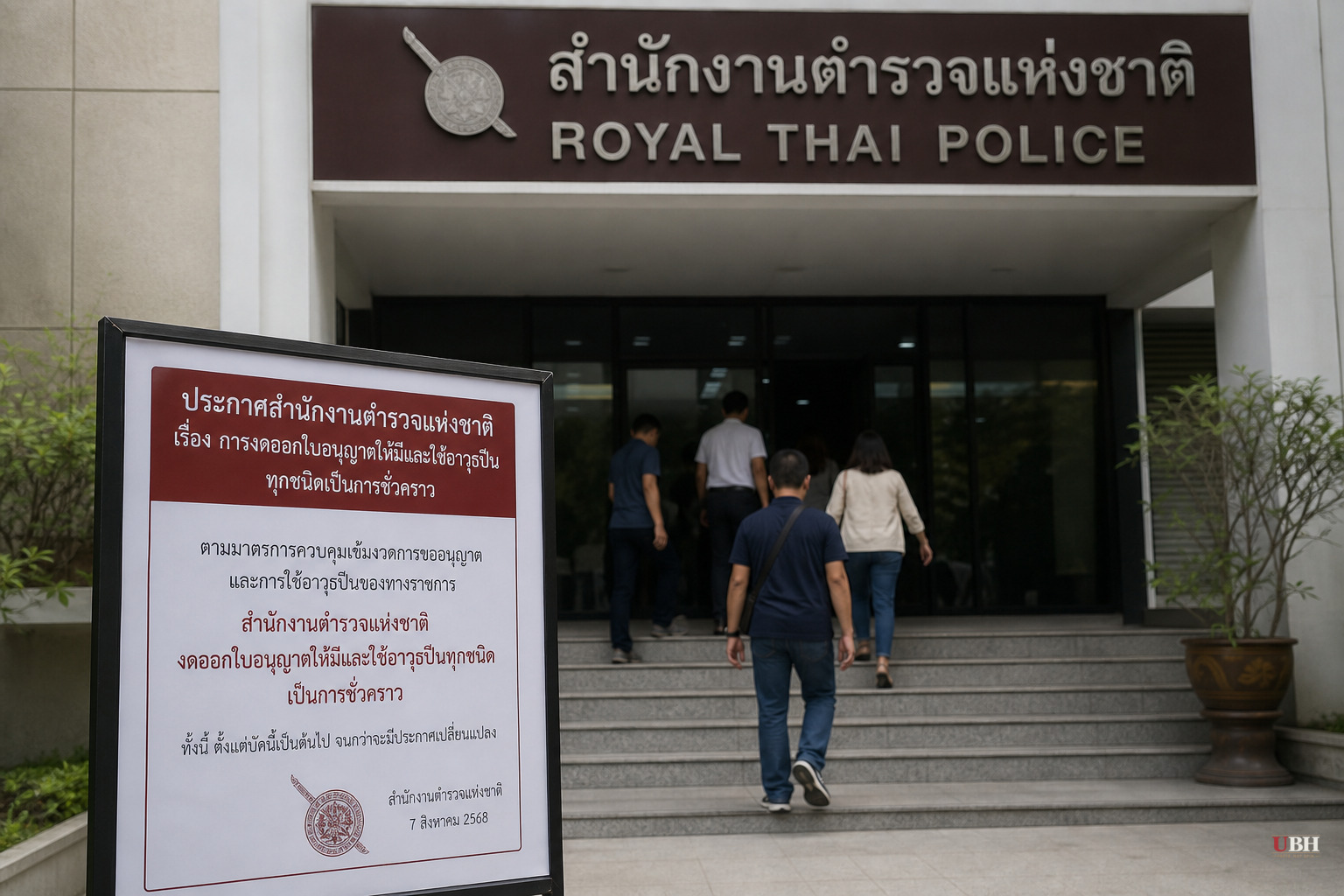
Since the August 7 shooting at Debsirin Nonthaburi School left nine people dead, including the 14-year-old shooter and the grandparents he killed beforehand, Thailand has moved to freeze its gun licensing system nationwide.
Prime Minister Anutin Charnvirakul ordered the interior ministry and national police to stop issuing new licenses to possess, purchase and carry firearms, according to government-run news channel NBT World. He called for "tighter controls and decisive penalties," framing the freeze as temporary until a new gun control law is in place.
The final victim, a 12-year-old seventh grader, died from her wounds days after the attack, bringing the confirmed death toll to eight victims plus the shooter, according to The Associated Press as reported by CBC News. Fourteen people remained hospitalized as of that report, seven in critical condition, most of them between 12 and 14 years old.
Funerals for the victims, conducted according to Buddhist tradition, stretched over multiple days. Relatives claimed the bodies of five school staff, the shooter, and his two grandparents from Bangkok's Institute of Forensic Medicine, according to CBC. The bodies of the shooter and the grandparents he killed at their home before the school attack were cremated this week, according to The Guardian.
A country awash in unregistered guns
The most recent comprehensive count, from the Switzerland-based Small Arms Survey in 2017, put civilian gun ownership in Thailand above 10 million firearms, the highest total in Southeast Asia and a rate of roughly one gun for every seven people, according to The Guardian. More than 4 million of those weapons were unregistered even then.
That gap between paper law and street reality is the core problem. A licensing pause stops new legal purchases. It does nothing about the millions of guns already circulating outside any registry.
The government says it plans to open a window for people to surrender illegal or inherited firearms that cannot be legally transferred, with possible exemption from penalties during that period, according to NBT World reporting cited by The Guardian. No dates for that amnesty program have been announced yet.
Anutin has been here before. As a former interior and health minister, he pushed gun control measures after a 2022 mass shooting and a 2023 shopping mall shooting in which a boy the same age as the Nonthaburi shooter, 14, killed two people with a modified pistol originally designed to fire blanks, reportedly bought online. After the 2023 incident, Anutin ordered a temporary ban on new licenses, import restrictions, and a ban on anyone under 20 from shooting ranges. Those measures did not stop this attack. The Guardian notes plainly that "past promises of tightening gun laws have not prevented recent shootings."
Targeting police guns and online sales
Beyond the licensing freeze, Royal Thai Police Commissioner General Kitrat Phanphet ordered tighter oversight of government-issued police firearms, according to The Guardian. That order points at Thailand's "welfare gun" scheme, which lets eligible public officials buy weapons at steep discounts. The Bangkok Post has reported many of those discounted guns end up resold on the private market, undercutting the entire premise of restricted access.
Deputy Commissioner General Thana Chuwong has been assigned to target illegal weapons trafficking, including sales conducted through social media and other online platforms, the same channel investigators believe supplied the modified pistol used in the 2023 mall shooting.
Schools respond too
The Ministry of Education introduced a new school safety plan that includes stricter entry screening, guards checking for weapons before students enter school grounds, and expanded mental health counseling, according to The Guardian.
None of this addresses the harder question raised by Thailand's own data: how a country with genuinely strict licensing law on paper ended up with an estimated 4 million unregistered guns in private hands even before this year's growth in online black-market sales. The government has not said how it intends to locate those weapons, only that it hopes owners will turn some of them in voluntarily once an amnesty period is announced. Whether that amnesty produces meaningful numbers, or whether the licensing freeze survives contact with Thailand's parliament the way the 2023 measures did, remains unresolved.
Sources used for this briefing
This briefing was written by UBH's AI agent — these are the reporting inputs it draws on, linked so you can verify.


