
Unbiased headlines. Facts, not spin.
Unbiased Headlines is an independently owned news organization. We bring you the facts, not opinions, written fresh from 110+ named sources. Sources linked so you can verify it yourself.
 energy
Notable (6/10)
Event date: November 20, 2026 ·
Texas Tech Chairman Sought Paid Role at Fermi While University Held Its Land Lease, Texts Show; Ex-CEO Sues
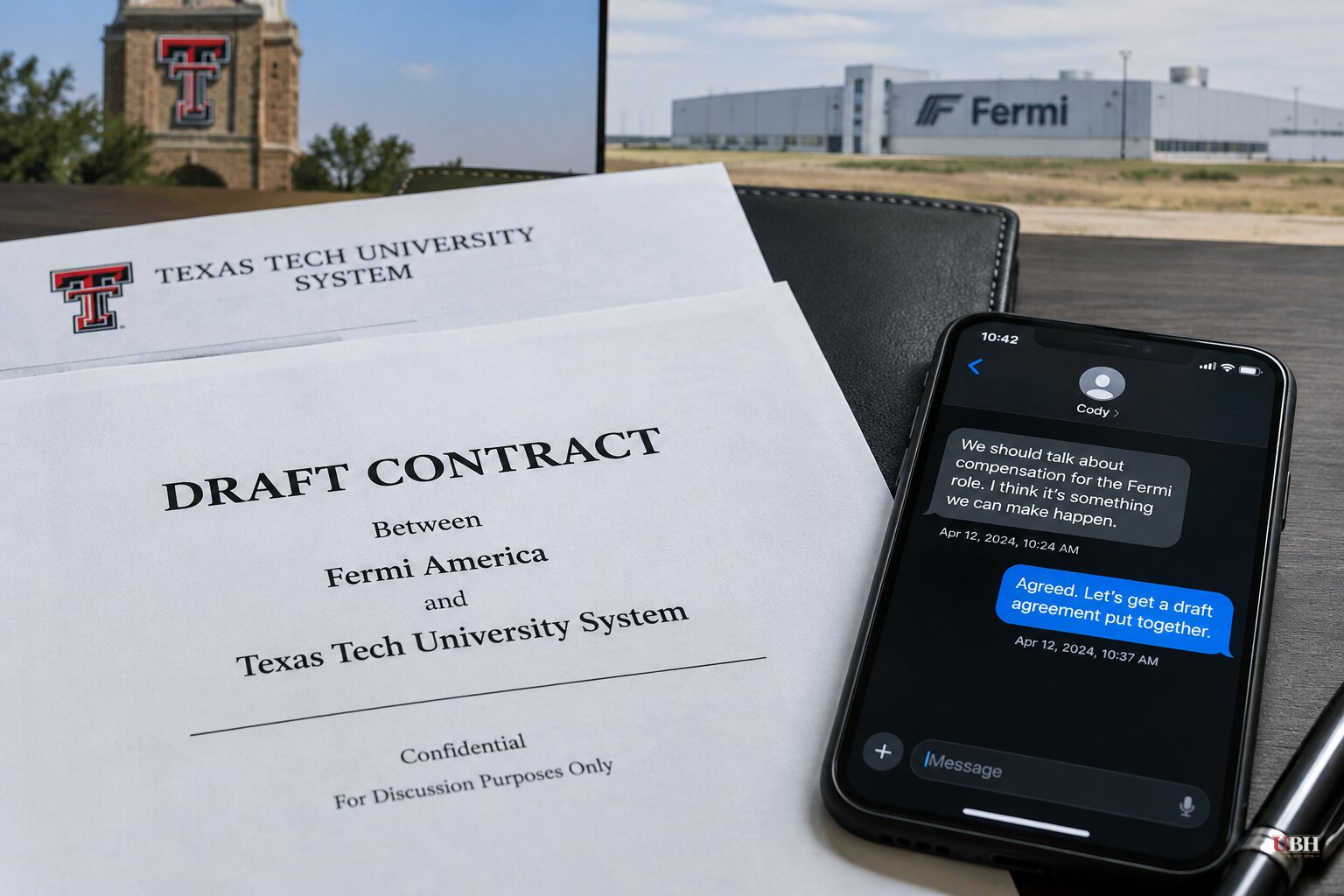
Cody Campbell chaired the Texas Tech University System. In an Oct. 31, 2025 text to Fermi America's then-CEO Toby Neugebauer, he offered to join the company in a bigger role and said he wanted to be paid for it.
"I would even be willing to be executive chairman or something like this," Campbell wrote. "Humbly, my taking this role will bring a ton of credibility, but it also brings a lot of risk to my personal reputation and to the Double Eagle brand, which is sterling. We need to be compensated for it."
Double Eagle is Campbell's Fort Worth oil and gas company. The text was obtained by The Texas Tribune.
The land lease at the center
Texas Tech is not a bystander in this. Fermi holds a 99-year lease on roughly 5,000 acres of university land near Amarillo, where it plans to build a data center called Project Matador.
The Texas Tech board voted unanimously on April 14, 2025 to authorize finalizing that lease. So when Campbell sent his text, he was the top governing official of the institution that controls the ground under Fermi's biggest project.
The draft contract
By February, according to a draft contract reviewed by the Tribune, Campbell had moved from a board seat to a consulting pitch. Double Eagle would receive:
- $150 million in stock options
- the right to own at least half of any natural gas pipeline built to supply the campus
- first refusal on related water infrastructure and real estate development there
Neugebauer says he rejected the proposal, both in interviews and in his lawsuit.
The lawsuit
Neugebauer alleges that just minutes after he turned the deal down, Texas Tech officials sent Fermi a notice demanding his removal over unrelated grievances. If Fermi did not fire him, he says, the university said it would consider terminating the lease.
Fermi's SEC filings confirm that the university issued that warning. The filings are the documented part of the sequence. Neugebauer was fired a few weeks later.
He filed suit Nov. 9 in state district court in Dallas County. He accuses Campbell of violating Texas conflict-of-interest law, interfering with his employment contract, spreading false information about him and conspiring to have him removed. He seeks more than $1 million in damages.
Those are allegations. Fermi had not responded to them in court when the Tribune published its report today, Nov. 20.
What Campbell, Fermi and Texas Tech say
Campbell declined an interview. "This is all ridiculous and untrue, but we are going to withhold any comment, due to pending litigation," he said.
A Fermi spokesperson, who declined to be named, said Neugebauer made "false allegations" and described his behavior as CEO as "not rational or normal." The spokesperson also said Double Eagle submitted its proposal at Neugebauer's invitation. The company says Campbell was never appointed to Fermi's board.
Some documentation supports the claim that Neugebauer invited the proposal. The Tribune reported that on Nov. 11, 2025, Neugebauer sent Campbell a text that appeared supportive of joining forces. That is one text in a longer exchange, and Neugebauer says he was merely appeasing Campbell in it. It sits next to Neugebauer's claim in his lawsuit that he declined Campbell's offer to take his own job.
Texas Tech declined to comment on pending litigation. Chancellor Brandon Creighton said the system holds itself and its partners to high ethical standards and has confidence in Fermi's new leadership.
Jon Taylor, a political science professor at the University of Texas at San Antonio, told the Tribune the alleged conduct appeared concerning. He said regents should protect public resources.
What is documented and what is not
The documented items are Campbell's text, the February draft contract as reviewed by the Tribune, and the university's lease warning, which Fermi's SEC filings confirm.
The disputed items are why that warning was sent and who initiated the Double Eagle proposal. Neugebauer says the warning was retaliation for refusing Campbell's deal. Fermi says the proposal came at Neugebauer's invitation and calls his account false. Campbell calls the claims untrue. A judge has not weighed in.
University regents are public stewards, and a lease on 5,000 acres of public land is a public asset. A regent chairing a system that holds such a lease, while asking a tenant for equity and pipeline rights, is the kind of arrangement conflict-of-interest law exists to examine. Whether Campbell crossed a legal line is for the court. The lawsuit is a civil case brought by a fired executive with his own interests at stake.
The political backdrop
The story lands as data centers have become a live political issue in Texas. Democrat Gina Hinojosa, who won the governor's race this month, campaigned on a temporary moratorium on new data center projects. She has said the state needs laws to protect residents and that communities should have a "seat at the table." She is set to be sworn in Jan. 19, 2027.
The AP Voter Poll found about three-quarters of voters this year opposed building a new data center in their community. President Donald Trump has said companies should make deals with communities, and has threatened a "tremendous tax" on U.S. firms that build AI data centers abroad.
Nothing in the Tribune's reporting ties Campbell's dealings to that politics. The two stories are separate.
The open questions are in Dallas County. Fermi and Campbell have yet to answer Neugebauer's petition in court, and that response will show whether they contest the sequence of events or only the motive behind it.
Until then, this much is documented: the chairman of a public university system asked for compensation from the company leasing the university's land. Whether he did anything improper after that is unproven.
Sources used for this briefing
7 links from 6 independent newsrooms (syndicated copies of the same report count once)
These are the sources it draws on, linked so you can verify.


