
Unbiased headlines. Facts, not spin.
Unbiased Headlines is an independently owned news organization. We bring you the facts, not opinions, written fresh from 110+ named sources. Sources linked so you can verify it yourself.
 politics
Major Story (7/10)
politics
Major Story (7/10)
Texas Federal Judge Strikes Down NFA Registration Requirements for Suppressors and Short-Barreled Guns
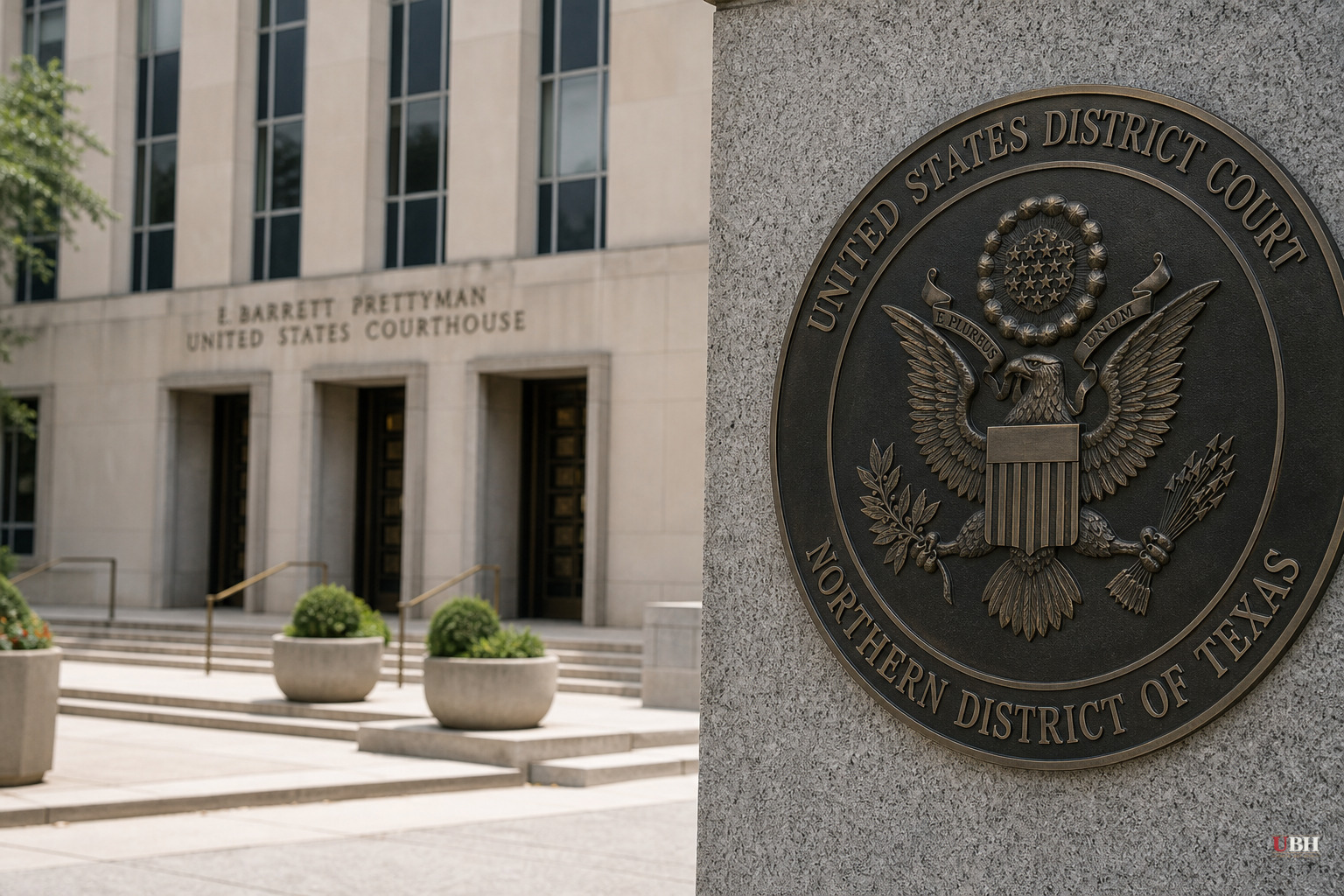
A federal judge in Texas struck down a piece of the National Firearms Act that has stood since 1934, and he did it with tax law, not the Second Amendment.
U.S. District Judge James Wesley Hendrix, of the Northern District of Texas in Lubbock, ruled on the combined cases of Silencer Shop Foundation v. ATF and Jensen v. ATF that the government can no longer enforce NFA registration requirements for suppressors, short-barreled rifles, and short-barreled shotguns. His 66-page opinion, issued Wednesday according to Pew Pew Tactical, found that those registration rules no longer have a constitutional leg to stand on.
The NFA has always been justified as a tax law, not a gun-control law, going back to a 1937 Supreme Court case, Sonzinsky v. United States, which upheld the NFA specifically because the $200 transfer tax "produced some revenue." Congress removed that revenue when President Trump signed the One Big Beautiful Bill on July 4, 2025. Effective January 1, 2026, the tax on suppressors, short-barreled rifles, short-barreled shotguns, and a catch-all category called "Any Other Weapons" dropped to zero. Machine guns and destructive devices still carry the $200 tax and are not affected by this ruling.
Congress zeroed out the tax but left the paperwork: fingerprints, passport photos, address disclosure, background checks, Form 1 and Form 4 filings with the ATF. Judge Hendrix found that's a problem. "Because today's NFA does not generate any revenue from untaxed firearms, its regulatory provisions cannot be upheld under the taxing power," he wrote, according to both Pew Pew Tactical and The Texas Voice. "And there is no sign in the NFA's text, structure, or statutory history that Congress invoked any other power in crafting the NFA provisions at issue." Without a tax to justify it, he ruled, the registration scheme exceeds Congress's enumerated powers.
Not a Second Amendment ruling
Gun rights groups are celebrating, but the ruling is narrower than some headlines suggest. Washington Gun Law President William Kirk, quoted by GunsAmerica, called it "a huge win" but cautioned "it is not unconstitutional under the Second Amendment." Judge Hendrix never reached the Second Amendment question. He resolved the case entirely on the taxing-power argument, meaning the decision doesn't establish a constitutional right to own suppressors or short-barreled firearms free of any regulation. It just says Congress can't keep enforcing a scheme it built exclusively on a tax that no longer exists.
Second Amendment Foundation Executive Director Adam Kraut, whose organization backed the Jensen case, called it validation of a legal theory his group has pushed for months. "The basis for each lawsuit challenging the NFA registration scheme is the same, without the tax, the remaining requirements for the affected arms under the NFA have no constitutional basis," Kraut said in a statement reported by GunsAmerica and Pew Pew Tactical. "And today the first court to rule on the issue has agreed with us." Gun Owners of America, a named plaintiff, called the outcome one of the biggest gun-rights wins ever and credited its lobbying alongside Congress for eliminating the tax in the first place. The National Rifle Association also praised the decision.
Scope of the ruling
Not much has changed yet, and not for everyone. Judge Hendrix stayed his own order for seven days to give the Department of Justice a window to seek appellate review, and as of this writing the DOJ had not filed an appeal. Pew Pew Tactical's breakdown stresses that "nothing has changed" in terms of legal liability while the stay is in place.
Even once the stay lifts, the injunction protects only the named plaintiffs, which in the Jensen case includes Gun Owners of America members. Gun Owners of America is now actively encouraging people to join the organization specifically to fall under that protection, since the judge declined to issue a nationwide injunction. That means most Americans who own or want to buy an unregistered suppressor or short-barreled rifle gain nothing from this ruling unless they're a plaintiff or a GOA member, at least until a broader ruling or a Fifth Circuit decision changes that.
The other side of this fight
This case wasn't uncontested. A coalition of local governments, including Harris County, Texas, filed an amicus brief in December urging the court to uphold the NFA's registration provisions. Then-Harris County Attorney Christian Menefee, who has since left that post to run for Texas Attorney General, argued the case was about preserving "basic, common-sense safety measures that keep dangerous weapons out of the wrong hands." That argument didn't persuade Judge Hendrix on the narrow tax-power question he was deciding, but it reflects a real concern among law enforcement and some local officials that removing registration requirements strips away a tracking mechanism regulators have relied on for nine decades, independent of whether the underlying tax still exists.
The case is expected to head to the Fifth Circuit Court of Appeals, according to The Texas Voice, which could either affirm Hendrix's reasoning circuit-wide or reverse it. Attorney Richard Hayes of Armed Attorneys noted his group "will continue monitoring developments closely as the case proceeds." Until the Fifth Circuit weighs in, or the DOJ decides whether to appeal, the practical reality for most gun owners outside the named plaintiffs is unchanged: NFA registration, fingerprinting, and background checks still apply.
Sources used for this briefing
4 links from 4 independent newsrooms (syndicated copies of the same report count once)
These are the sources it draws on, linked so you can verify.


