
Original briefings. Zero spin.
Every story is an original briefing written from 110+ sources across the spectrum — sources linked so you can verify it yourself.
 politics
Major Story (7/10)
August 23, 2026 at 08:00 PM
politics
Major Story (7/10)
August 23, 2026 at 08:00 PM
Nasser Hospital Strike That Killed AP Journalist Mariam Abu Dagga Gets Fresh Reconstruction. IDF Inquiry Still Open a Year Later
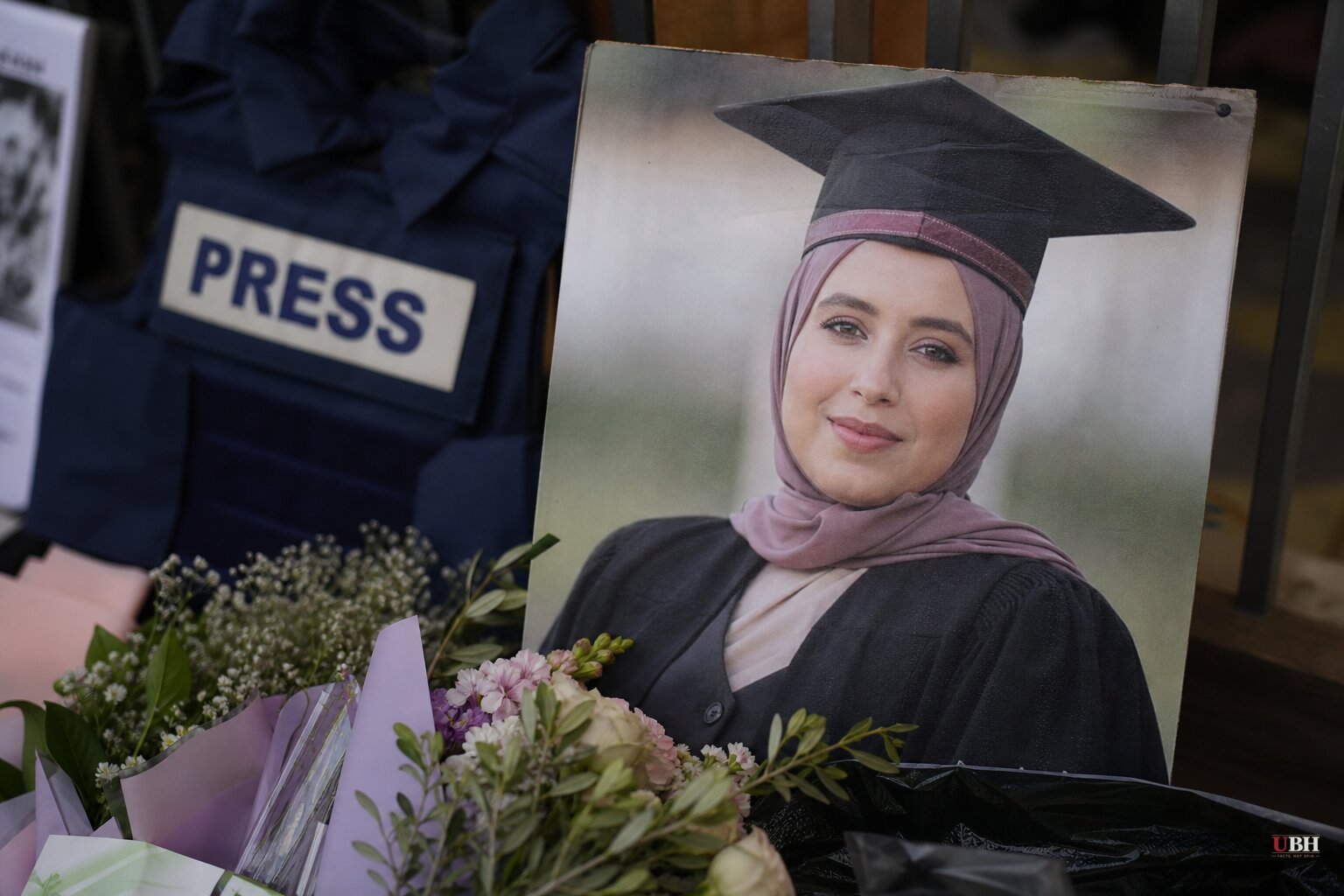
On the morning of August 25, 2025, an Israeli strike hit Nasser Hospital in Khan Younis. A second strike followed roughly eight minutes later, hitting the same spot as rescuers, journalists and medics gathered. Fifteen people were killed, including Reuters cameraman Hussam al-Masri and Associated Press contributor Mariam Abu Dagga, according to reporting from the Independent and Breitbart.
Al-Masri died first, killed while filming a live Reuters feed from the hospital. Abu Dagga, a 33-year-old journalist who also wrote for Independent Arabia, rushed to the scene to cover what had happened to her colleague. She was killed in the second strike, an attack pattern commonly called a double-tap, according to the Independent's reconstruction, which draws on what it describes as dozens of witness testimonies, whistleblower accounts and visual analysis.
The Independent's report, published this week and republished by aggregators including Upstract and shared on Bluesky by the account Carceral Abolition, reconstructs Abu Dagga's final hours. She had spent the morning with her flatmate, fellow journalist Baraa Lafi, working on a story about overcrowding at Nasser Hospital. She had sent her editor at Independent Arabia, Hadi Torfi, a voice note three days earlier warning she might have to flee for a fourth time. Her only son, 14-year-old Ghaith, had been evacuated to the UAE the year before. A companion piece from Yahoo News Canada, drawing on an interview Abu Dagga gave to the Palestinian organization Filastiniyat before her death, describes her son's final phone call to her body at the scene, held to her ear by a family member.
What the IDF has said
The IDF confirmed within hours that its troops had carried out a strike in the area of Nasser Hospital and said the military's Chief of the General Staff ordered an initial inquiry, according to Breitbart. The IDF's statement said it "regrets any harm to uninvolved individuals and does not target journalists as such."
The IDF did not say in that initial statement whether the hospital itself was the intended target. Hospitals carry protected status under international humanitarian law, though that protection can lapse if a hospital is used to stage attacks, a distinction Breitbart's report notes without asserting it applied here.
More than a year after the Nasser Hospital strike, and with the war now having passed the 1,000-day mark since the October 7, 2023 Hamas attacks on Israel, the IDF has opened criminal investigations into a handful of specific incidents, according to the Epoch Times. Those include the January 2024 killing of five members of the Hamada family, including 5-year-old Hind Rajab, and two Palestinian Red Crescent paramedics in Gaza City, and a March 2025 shooting in Rafah that killed 15 people, including paramedics and a UN employee. In the Hind Rajab case, the IDF said the investigation was opened over "alleged failures in the coordination of the movement" of the ambulance that was fired on.
The Epoch Times reported that Hind Rajab's grandmother, also named Hind Rajab, told the Associated Press the IDF's internal probe was not sufficient: "An international investigation is required to uncover the truth and hold all those responsible accountable. We call for justice, not only for Hind, but for all Gaza children." The UN Human Rights Council has said independent experts found the Hamada family and paramedic killings "may amount to a war crime," and human rights groups have filed complaints with the International Criminal Court.
No public findings, charges or disciplinary actions tied to the Nasser Hospital strike itself have been reported in these sources. The inquiry the IDF announced in August 2025 has not produced a public conclusion more than a year later based on available reporting.
A counter-argument on evidence standards
Not every account of Israeli conduct in Gaza survives scrutiny. The Daily Wire's opinion piece argues that a June 2026 UN Commission of Inquiry report alleging Israel used a rifle-equipped drone to target a 10-day-old infant lacked basic verification: no named baby, mother, doctor or hospital, no forensic chain of custody for the bullet images cited, and no operational evidence the alleged weapon exists in that form. The piece traces the claim's origin to British-Palestinian doctor Ghassan Abu-Sittah, whom it says has been a source of previous disputed claims, including about the 2023 Al-Ahli hospital blast.
That critique targets a specific unverified claim in a specific UN report, not the Nasser Hospital strike, which the IDF itself has confirmed involved its own troops firing in the immediate area. Those are two different evidentiary situations. The underlying point is that NGO and UN claims about Israeli conduct sometimes get repeated by major outlets without independent verification. This is a legitimate concern about sourcing standards that deserves scrutiny on its own terms, separate from incidents Israel has already acknowledged.
The open questions on Nasser Hospital are concrete: what did the IDF's inquiry find, why did a second strike hit the same location roughly eight minutes after the first, and will any findings be made public. Reuters, whose employee died in the same strike, has previously pressed for an independent investigation. As of now, none has been announced.
Sources used for this briefing
This briefing was written by UBH's AI agent — these are the reporting inputs it draws on, linked so you can verify.


