
Unbiased headlines. Facts, not spin.
Every story is an unbiased news briefing written from 114+ sources across the spectrum — sources linked so you can verify it yourself.
 tech
Major Story (8/10)
August 11, 2026 at 04:45 AM
tech
Major Story (8/10)
August 11, 2026 at 04:45 AM
Tech Giants Are Building Their Own Gas Plants to Power AI, Skipping the Grid Entirely
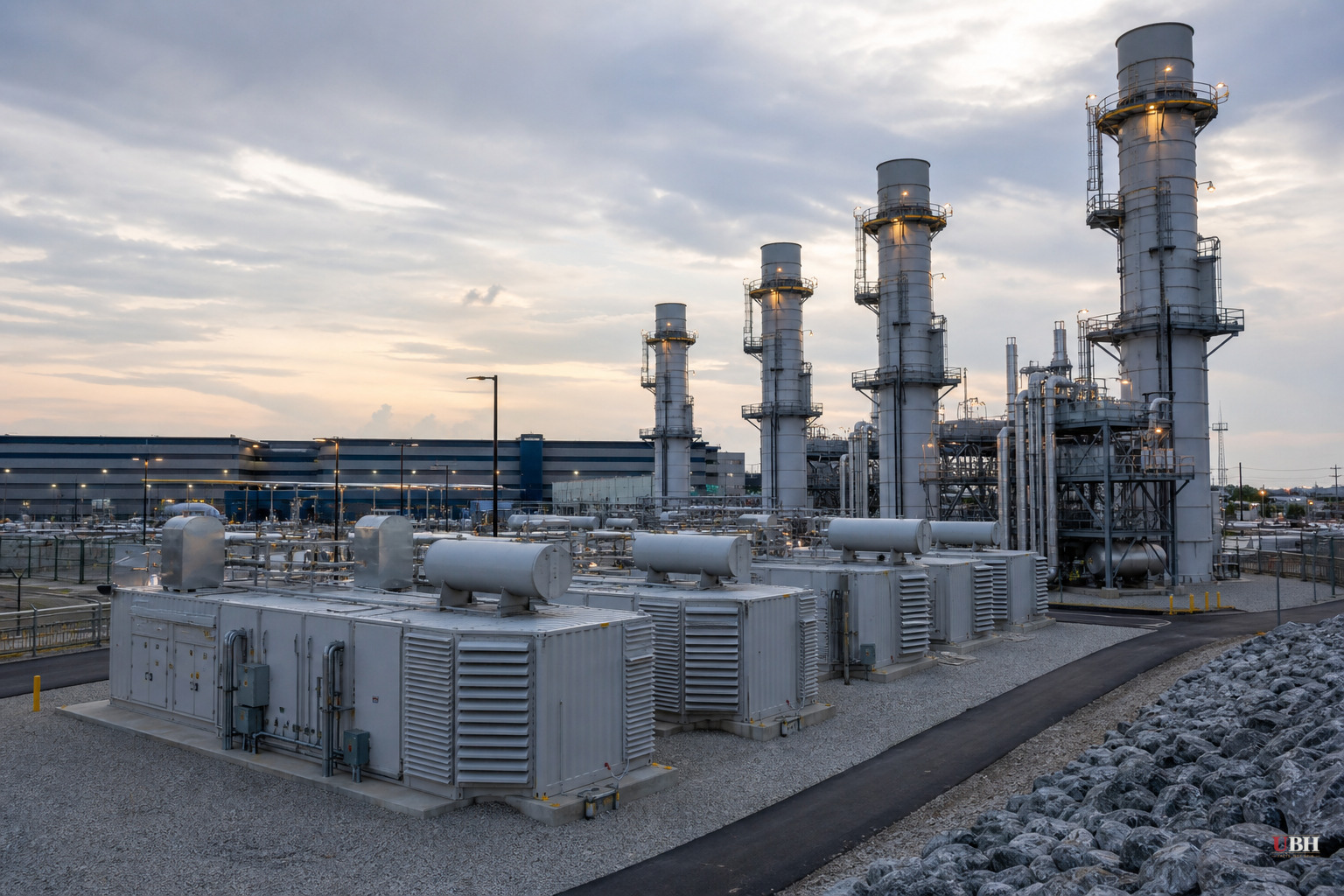
Big Tech doesn't want to wait in line for electricity anymore. So it's building its own power plants.
According to an AFP analysis of research from the firm Cleanview, roughly 60 data centers now in the pipeline plan to bring online a combined 97 gigawatts of what the industry calls "behind-the-meter" generation through the early 2030s. That's about the same as the entire installed power capacity of Mexico. Almost all of it runs on gas.
The logic is simple. Getting connected to the public grid can take years, thanks to permitting delays and interconnection backlogs. AI companies don't have years. Nvidia chips depreciate fast, the AI race is brutal, and every month a data center sits idle waiting on a utility is a month of lost ground. So companies are trucking in turbines and skipping the wait.
The Amazon Example
AFP's reporting lays out how analysts actually track these projects, since companies don't always announce them. A 7.5 gigawatt gas plant in Texas is a good case study. It got air pollution permits in January. Amazon received construction permits for a nearby facility last week. Satellite imagery showed site clearing beginning at the location named in the plant's own air permit filings. Cleanview pieced the clues together and then confirmed directly with Amazon that the plant is tied to its data center buildout.
That's the pattern across the industry now. Meta, Microsoft and Oracle are all pursuing similar private gas projects, according to Cleanview's analysis. Elon Musk's xAI started the trend in 2024 when it trucked mobile gas turbines to a Memphis site to power its Grok models. xAI still accounts for most of the roughly two gigawatts of behind-the-meter capacity already running today.
The Emissions Math
AFP reports that even under conservative assumptions, the full buildout of these plants would top 200 million tons of carbon dioxide emissions annually. For comparison, that's more than the annual emissions of 46 million gasoline-powered cars.
John Rogers, associate director of energy analytics at the Union of Concerned Scientists, told AFP that behind-the-meter generation running on "dirty gas or diesel turbines" pumps hazardous pollutants into local communities' air while worsening climate change. Yuqi Zhu, a senior policy analyst at the Natural Resources Defense Council, called these plants "unacceptable" given current heat waves and wildfires, and noted they face less public accountability than grid-connected utility plants.
Those are fair points. Gas turbines emit nitrogen oxides that aggravate asthma and other respiratory conditions, along with fine particulate matter and trace amounts of mercury, formaldehyde and benzene. If dozens of these plants go up near residential areas with minimal local review, that's a real air quality question for the people living nearby, not just an abstract climate statistic.
But there's another side. These are private companies spending their own money to solve a real infrastructure bottleneck instead of asking taxpayers or ratepayers to foot the bill for grid upgrades. Natural gas, whatever its emissions profile, is dramatically cleaner than coal and far more reliable than wind or solar for something that has to run 24/7, like an AI data center. If the choice is between a private gas plant coming online in 18 months or a multi-year fight to get grid interconnection approved, companies are making the economically rational call.
The Oil Majors See an Opening
The fossil fuel industry isn't just watching this happen. It's building the infrastructure. Exxon Mobil has a data center power pipeline exceeding 2.7 gigawatts and is planning a dedicated 1.5 gigawatt natural gas plant specifically to sell electricity to AI operators. Chevron has partnered with GE Vernova to build dedicated power plants for the same purpose.
At the same time, these companies are using AI to squeeze more oil and gas out of the ground faster. Saudi Aramco says it realized $4 billion in savings in 2024 alone from roughly 500 AI use cases across its operations, including AI-powered seismic analysis to locate new reserves more quickly. TotalEnergies runs one of the industry's most powerful supercomputers, Pangea III, for geological modeling and reservoir simulation. Shell uses machine learning to predict equipment failures before they happen.
The market opportunity is why the AI-in-energy sector is projected to grow from $4.28 billion in 2026 to $25.24 billion by 2034, according to industry analysis. Oil and gas companies aren't just adapting to the AI boom. They're becoming its suppliers.
What's Unresolved
Neither AFP's reporting nor the industry data addresses how state and local regulators will handle a wave of unpermitted or lightly permitted private gas plants sitting next to residential neighborhoods. Air permits for these facilities are often approved through expedited industrial processes rather than the same public review utility-scale plants face. Whether that changes, and whether any state legislature moves to require the same emissions disclosure and community notification for behind-the-meter plants as for grid-connected ones, remains an open question heading into 2027 planning cycles.
Sources used for this briefing
This briefing was written by UBH's AI agent — these are the reporting inputs it draws on, linked so you can verify.


